

There is a moment, just before tears appear, when the world seems to hold its breath. The chest tightens, the throat gathers a quiet ache, and the eyes begin to shimmer as if carrying a small, unspoken truth. Whether the cause is a gentle sadness, a profound grief, a sudden shock, or a moment of overwhelming joy, tears arrive with a certainty that feels both intimate and universal. To follow a tear from the surface of the eye back into the depths of the brain is to trace a delicate thread that connects biology, emotion, culture, and meaning. This article explores why humans cry when feelings rise beyond words, and why these small drops of fluid carry such weight in the human story.
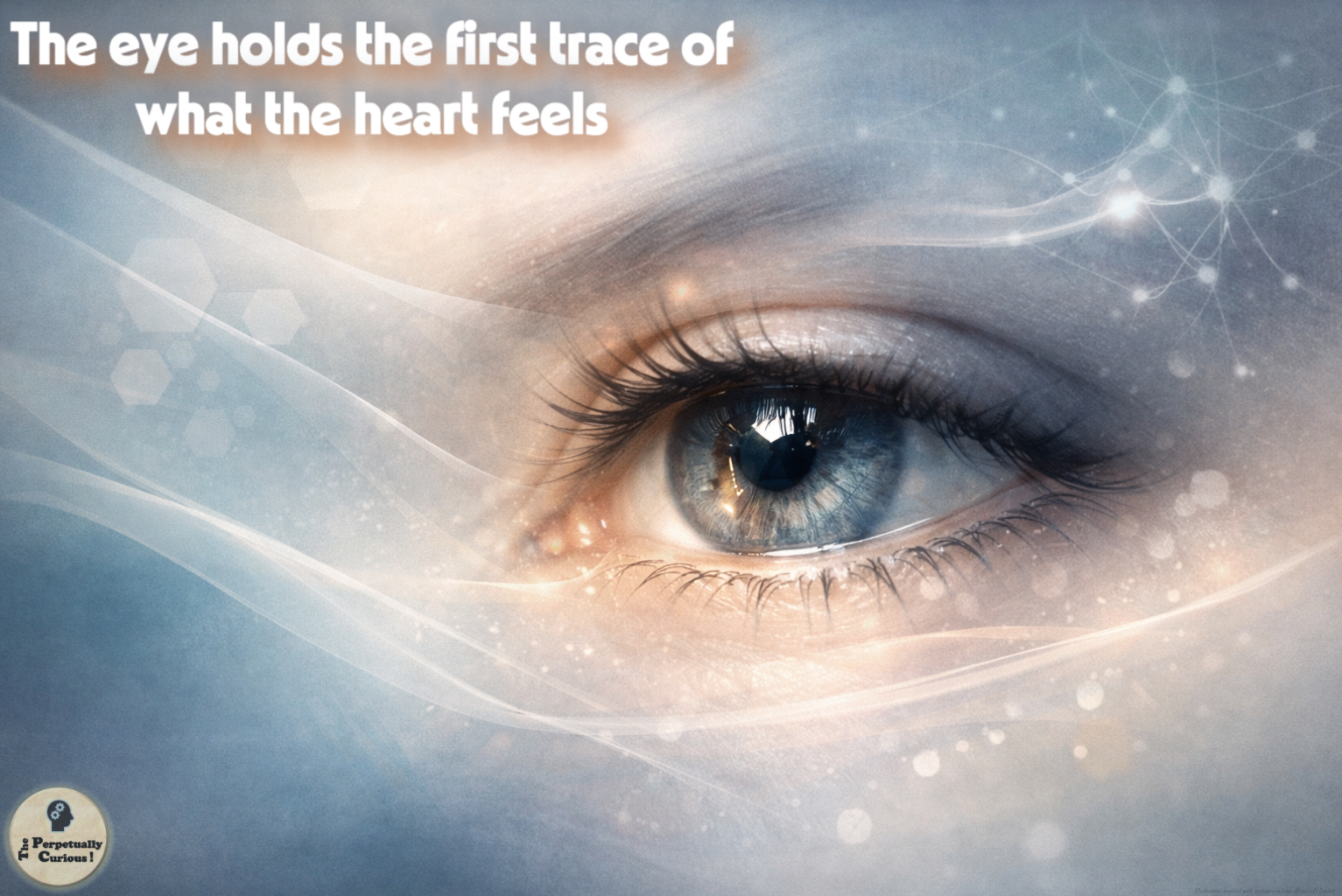
Emotion begins as a sequence of signals moving through deep neural pathways.
A tear forms only when these precise impulses reach the circuits that guide the surface of the eye.
In that small trace of water, the body reveals how feeling becomes visible.
👁️ The surface of the eye and the first purpose of tears
Before emotional tears can be understood, it helps to begin with the tears that protect the eye every moment of the day. The surface of the eye is covered by a thin tear film that is often described in three functional parts. A mucin layer forms the innermost foundation that allows the film to adhere smoothly to the cornea. A middle phase, sometimes called the muco‑aqueous layer in current specialist literature, makes up most of the tear film’s thickness and provides moisture, nourishment, and antimicrobial protection. An outer lipid layer slows evaporation and helps maintain a stable optical surface. Without this constant protection, the cornea would dry quickly, vision would blur, and the eye would become vulnerable to irritation.
When something irritates the eye, such as dust, smoke, or the vapors released when cutting an onion, sensory nerves send signals to the brainstem. The brainstem responds by instructing the lacrimal glands to release a sudden flow of reflex tears. These tears are produced in larger volume than basal tears and help rinse the eye rapidly and effectively.
Once this protective foundation is understood, the next question naturally turns inward. Emotional tears arise from the same glands and travel across the same surface, yet they are triggered by something far deeper. The shift from physical protection to emotional expression marks the beginning of a uniquely human phenomenon.
🧠 How the brain turns emotion into tears
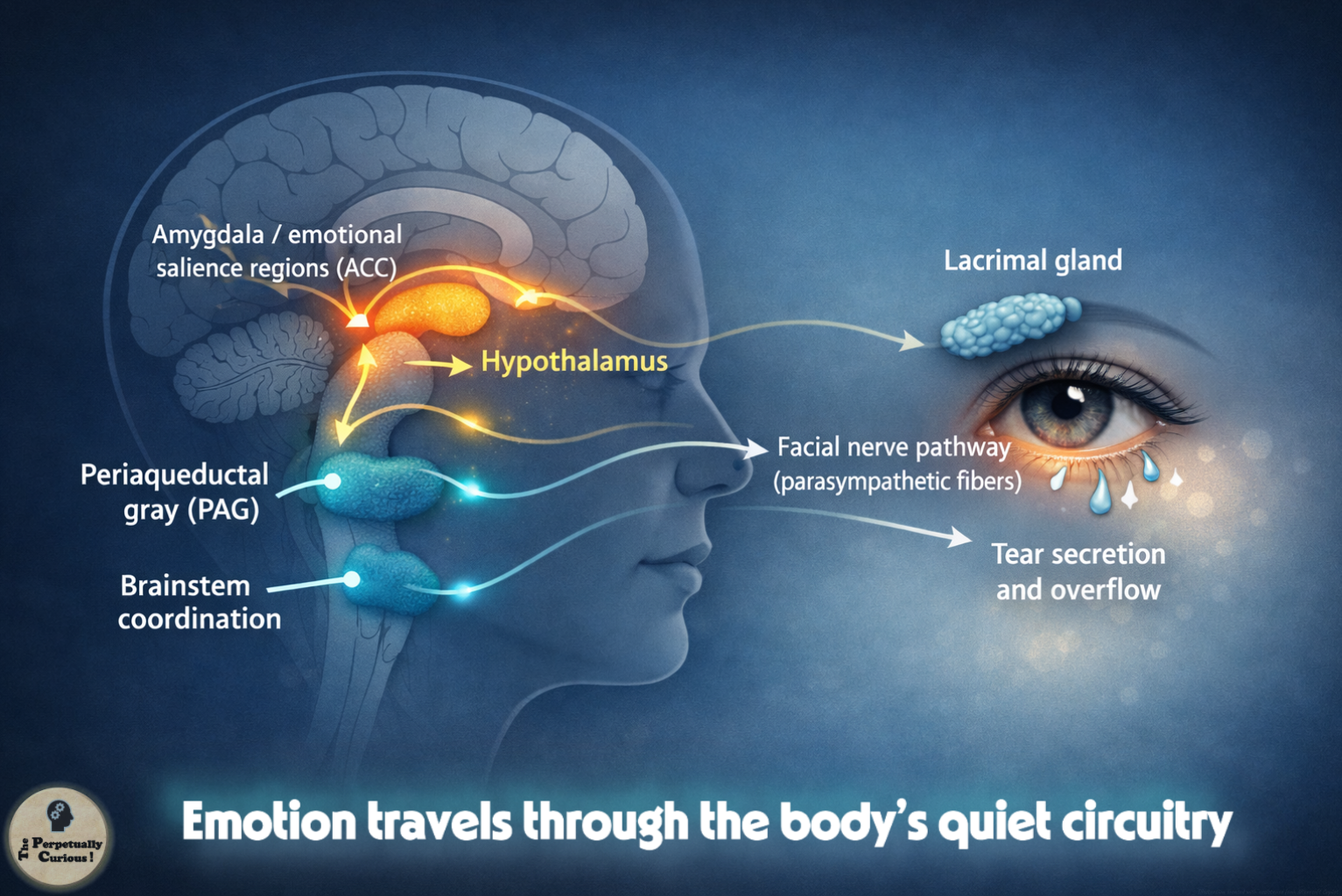
With the surface biology in place, attention moves to the neural pathways that transform emotion into a physical response. Emotional tears begin not in the eye but in the brain regions that interpret and regulate feeling. The amygdala and related limbic structures help evaluate the emotional significance of events. These regions communicate with the hypothalamus and other parts of the central autonomic network, which coordinate involuntary bodily responses. The anterior cingulate cortex also contributes by helping the individual register emotional significance and modulate the resulting reaction.
In moments of intense sadness, grief, or shock, this network may engage midbrain and brainstem regions, including the periaqueductal gray, which helps coordinate emotional expression, vocalization, autonomic responses, and related motor patterns. From there, signals travel to the brainstem nuclei that control the facial nerve, which carries the parasympathetic fibers responsible for stimulating the lacrimal glands. The result is a coordinated pattern that increases tear production, alters breathing, and may change heart rate and facial expression. This helps explain why emotional tears often appear suddenly. Once the emotional threshold is crossed, the autonomic system responds as a whole, and tears may emerge before the person has fully processed the experience.
Some studies and reviews have reported differences in emotional tears, including higher levels of certain proteins, prolactin, adrenocorticotropic hormone, and leucine enkephalin, although the full significance of these findings remains uncertain. Crying may also coincide with the release of endorphins and oxytocin, which can contribute to the sense of calm that sometimes follows a period of tears. The coordinated activity of many distinct neural populations makes emotional crying possible, a complexity that diverse neurons illuminate in greater depth. The brain’s internal environment depends on multiple fluid systems working in concert, and cerebrospinal fluid represents another layer of this intricate biological balance.
With the biological pathway in view, it becomes easier to understand why different emotions, despite their differences, converge on the same tearful outcome.
💔 Sadness, grief, and shock: different emotions, shared pathways
Sadness, grief, and shock are distinct emotional states, yet they often lead to tears through shared physiological pathways. Sadness may arise from loss, disappointment, or a sense of helplessness. It can be quiet and reflective or heavy and consuming. Grief is usually deeper and more enduring. It often follows the loss of a loved one or a profound change in life circumstances. Grief may return in waves, sometimes long after the initial event, and tears may reappear as memories shift and new meanings emerge.
Shock, in contrast, is often associated with suddenness. It may follow unexpected news, a startling event, or a moment when the world feels abruptly altered. Tears in such moments may appear not because the person has fully processed what has happened, but because the emotional and physiological systems have been pushed beyond their usual balance. A person who receives unexpected news may find tears rising before thoughts have fully formed.
Although these states differ in texture and duration, they share certain features. Each can involve a sense of overwhelm, a disruption of expectations, and a need for internal or external support. The brain’s emotional circuits may interpret this combination as a signal that the situation is significant and that the person may benefit from connection or comfort. Emotional tears can be one visible outcome of this shared pathway. Grief, in particular, unfolds across time in waves that reflect the body’s deeper temporal rhythms, patterns that biological clocks explore with greater precision.
Cultural expectations also shape how these emotional states are expressed. Across many studied cultures, adults who identify as women tend to cry more frequently than adults who identify as men, a difference influenced by both hormonal factors, including prolactin levels, and social norms surrounding emotional expression.
Yet tears do not remain a private experience. The moment they appear, they enter the social world.
🤍 Tears as a social language
Emotional tears often function as a form of nonverbal communication. When someone cries, observers rarely need a detailed explanation to understand that something meaningful is occurring. Tears can signal vulnerability, need, sincerity, or deep feeling in a way that words sometimes cannot.
Studies in social and affective neuroscience have found that seeing tears on another person’s face can influence how observers perceive that person. Faces with visible tears are often interpreted as more distressed or more in need of support. Brain imaging research suggests that tears can activate regions associated with empathy and social understanding. Tears may also soften the emotional tone of an interaction, reducing the likelihood of conflict and encouraging gentler responses.
Because tears are so visible, cultures have developed their own interpretations of what they mean. This diversity of interpretation forms the threshold into the broader cultural landscape of crying.
🌍 Culture, context, and the meaning of crying
Although the biological machinery of tears appears to be broadly shared among humans, the meaning attached to crying varies across cultures. In some communities, crying in public may be seen as a natural expression of feeling. In others, it may be discouraged, especially for certain genders or age groups. For example, some cultures encourage open emotional expression during communal mourning, while others emphasize restraint and composure.
These cultural expectations can influence when and where people allow themselves to cry. A person may suppress tears in a professional setting but cry freely in private. Another may feel comfortable crying with close friends but not with family. Over time, these patterns can shape how easily emotional tears emerge and how they are interpreted by others.
Cultural meaning shapes how we cry, yet cultural narratives often focus on sorrow and loss. The fact that tears can also rise from joy or awe reveals that the underlying mechanism is not tied to sadness alone, but to the intensity and significance of the moment.
🌈 When joy and awe bring tears
Tears do not belong only to sadness. Many people have experienced tears in moments of joy, awe, or relief. A long‑awaited reunion, the birth of a child, a piece of music that feels almost too beautiful, or a moment of collective celebration can all bring tears to the surface. These tears may seem paradoxical, yet they fit within the same framework of emotional intensity and regulation.
One hypothesis is that tears in moments of joy or awe may help the nervous system manage extremes of positive emotion. Awe, in particular, can involve a sense of vastness or wonder that challenges ordinary understanding. The body may respond to this intensity with the same autonomic pathways that produce tears during sadness or grief. Tears in such moments may signal that something deeply meaningful is occurring and that the person is moved beyond ordinary language.
These varied expressions of crying reveal how complex the behavior is, which leads to the final question of what science can confidently explain.
🔍 What science knows, and what remains open
Researchers have made significant progress in describing the types of tears, the neural pathways involved in emotional crying, and the social effects of seeing tears. Some studies have reported that emotional tears may differ in composition from basal and reflex tears, and that they can influence how others respond. Emotional crying is also closely tied to the brain’s systems for emotion and autonomic regulation.
At the same time, several questions remain open. Scientists continue to investigate how much the chemical composition of emotional tears contributes to stress relief, and how much of the relief associated with crying comes from social support, cognitive processing, or changes in breathing and muscle tension. Early work by William Frey proposed that emotional tears might help remove stress‑related molecules from circulation, but this idea remains unconfirmed and is now considered one possibility among several. Emotional crying is also difficult to study because it is spontaneous and varies widely among individuals. Some people cry easily, while others rarely cry, and the reasons for this variation likely involve a combination of genetics, personality, history, and cultural learning.
Neural timing shapes how emotional responses unfold, and temporal disruption in the brain reveals how sensitive these processes are to the precise coordination of activity across different regions. These questions touch the boundary between measurable biology and subjective experience, and the nature of mind offers a broader context for understanding how emotional states emerge from the interplay of neural activity and personal meaning.
This combination of established knowledge and open questions is part of what makes the science of tears so compelling. Emotional crying sits at the boundary between what can be measured and what is felt. It invites both careful study and quiet reflection.
Pass this article along to someone curious and let the learning travel.
💡 Did You Know
💡 Did You Know?
🌫️ Emotional tears appear to be largely a human phenomenon. Other animals produce tears to lubricate and protect their eyes, and some recent studies have detected increased tearing in certain mammals during emotionally significant interactions, but whether this represents emotional crying comparable to the human experience remains an open scientific question.
🌧️ Emotional tears may contain higher concentrations of certain stress‑related substances compared with reflex tears. This observation has led to the hypothesis that crying might help the body adjust after intense emotional states, although this idea is still being explored.
🌟 Seeing tears on another person’s face can change activity in brain regions associated with empathy and social understanding. A single tear can function as a powerful social signal.
🌙 Emotional crying is usually more than tear overflow. It can involve facial expression, altered breathing, vocal changes, and posture, which together help observers interpret the moment.
💧 Tears do not simply vanish after coating the eye. They drain through small openings near the inner corners of the eyelids and travel toward the nose through the nasolacrimal system.
🌱 Some studies have reported leucine enkephalin, a natural opioid neuropeptide, in emotional tears, but whether this meaningfully contributes to the calm that sometimes follows crying remains uncertain.
Are emotional tears really different from other kinds of tears?
Some studies have reported that emotional tears may differ in composition from basal and reflex tears. Emotional tears may contain higher concentrations of certain proteins and stress‑related molecules, although the full significance of these differences is still being investigated. These findings suggest that emotional tears may have functions beyond simple eye protection, but the mechanisms remain an active area of research.
Do all humans cry in the same way?
All humans share the basic anatomy and neural circuitry that make crying possible, but there is considerable variation in how often and in what situations people cry. Factors such as personality, life history, cultural norms, hormonal influences, and current context can shape whether a person cries easily or rarely.
Why do some people feel better after crying while others do not?
Many people report a sense of relief or calm after crying, but this is not universal. The emotional outcome of crying may depend on several factors, including whether the person receives understanding or support from others, whether the crying helps clarify thoughts and feelings, and whether the situation that triggered the tears changes afterward. Changes in breathing patterns and the release of endorphins and oxytocin may also contribute to the sense of calm that sometimes follows crying.
Can crying be considered a sign of weakness?
From a scientific perspective, crying is better understood as a complex emotional and social behavior rather than as a simple sign of strength or weakness. Emotional tears can signal vulnerability, invite connection, and reflect deep engagement with meaningful experiences. Researchers studying emotion regulation describe crying as an adaptive behavior that serves communication and social‑bonding functions.
Is emotional crying unique to humans, and do other animals produce tears for emotional reasons?
Animals produce tears for lubrication and protection of the eye, and some recent studies have detected increased tearing in certain mammals during emotionally significant interactions. However, whether this represents emotional crying comparable to the human experience remains an open scientific question. The biology of tear production is broadly shared across species, but the ability to shed tears specifically in response to emotional states is generally considered a distinctively human trait.
Is there a clear evolutionary explanation for emotional tears?
There is no single definitive explanation, but several hypotheses have been proposed. One influential idea is that emotional tears evolved as a social signal that communicates vulnerability and need, encouraging support and reducing aggression within groups. Other hypotheses emphasize the role of tears in regulating intense emotional states.
Why do some people cry more easily than others?
Individual differences in temperament, history, hormonal influences, and cultural learning can influence how readily tears appear. Some people have a lower threshold for emotional arousal, while others may have learned to suppress visible crying.
Does crying have measurable effects on the body?
Researchers continue to study this question. Some studies suggest that crying may influence breathing patterns, muscle tension, and emotional processing, although the effects vary widely among individuals.
Why do onions make the eyes tear?
Cutting an onion releases volatile sulfur compounds that react with the moisture on the eye’s surface to form a mild irritant. Sensory nerves detect this irritation and signal the brainstem, which triggers the lacrimal glands to produce reflex tears that help wash the irritant away.
Why does crying change breathing?
Crying activates autonomic pathways that influence the muscles involved in breathing. The characteristic changes in rhythm, including gasps or irregular breaths, reflect the body’s attempt to regulate emotional arousal and restore physiological balance.
🌱 A gentle invitation to share
If this article offered clarity, comfort, or curiosity, you are welcome to share it with someone who may find value in understanding why humans cry.
“Why We Cry: The Quiet Science of Tears, Sadness, and Grief.” The Perpetually Curious!, May 2026.
https://www.theperpetuallycurious.org/articles/why-we-cry/Continue Exploring
For the curious mind: want to explore this theme through a few questions? Visit the Classic Quiz Studio, nestled under Explorations opens in a new tab ,and see where a few well-placed questions lead: Biology & Health Quizzesopens in a new tab
For what comes next
Site Updates gathers occasional notes, new additions, and ways to keep in touch. RSS brings new publications to your feed reader in chronological order.
Choose the path that speaks to you, and let the next curiosity find you wherever your wondering takes you.