

The bael tree, known scientifically as Aegle marmelos, often stands in places where the air is warm, the soil is tired, and the seasons move with long, dry patience. It may appear unassuming at first glance, yet it carries centuries of cultural memory and ecological resilience. When sunlight filters through its trifoliate leaves, the tree seems to hold a quiet presence that invites both observation and reflection. A reader who is curious about how trees shape and are shaped by their environments may also find value in the way the wood wide web reveals the subtle connections that link forest communities.
This article follows the bael tree from its physical form through habitat, culture, pollination, fruit, and climate resilience, tracing how one species can bridge ecology and heritage.
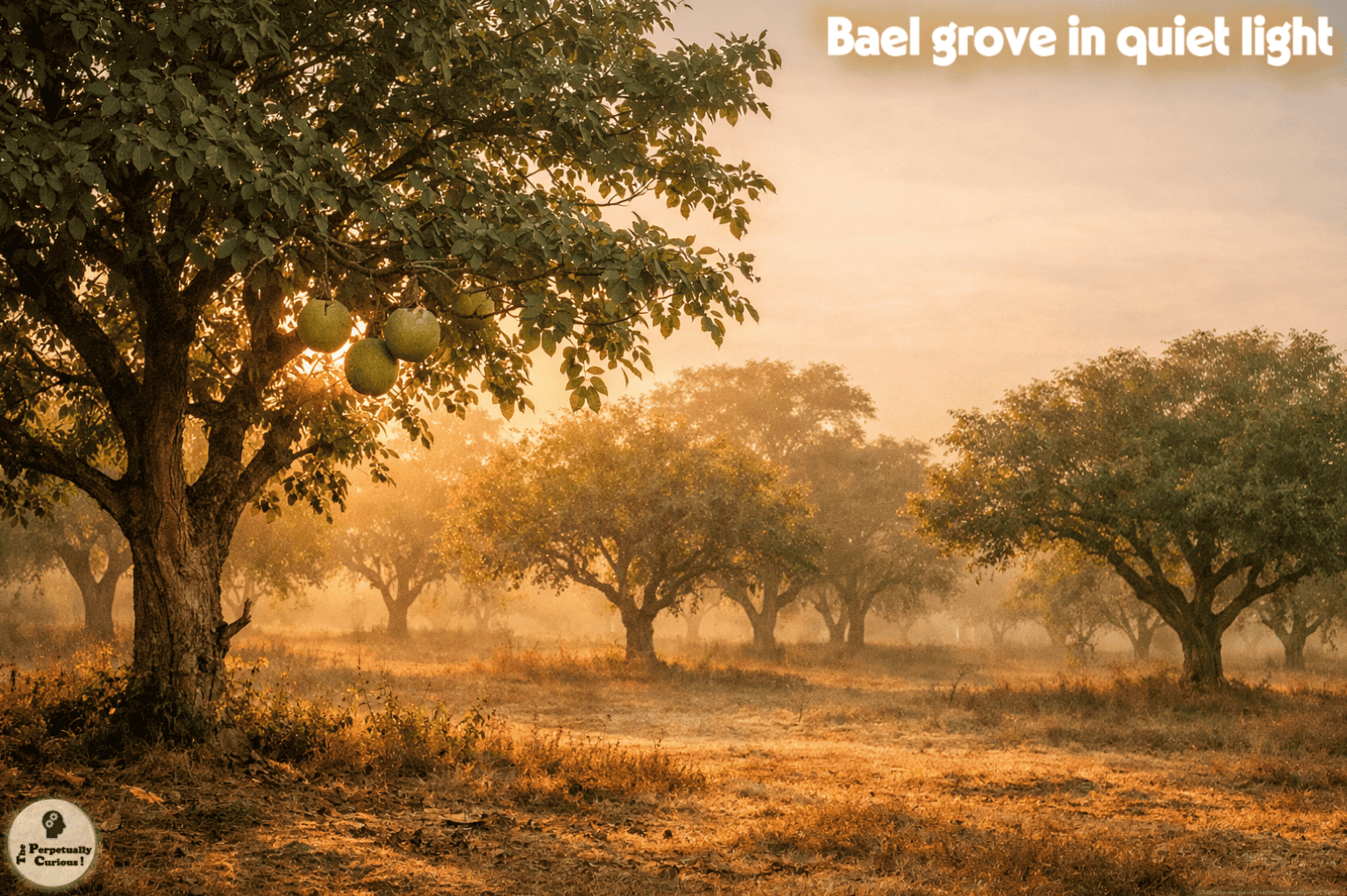
In the stillness of their branches, the long memory of seasons gathers, held in leaf, flower, and fruit as a quiet record of the landscapes that shaped them.
🌳 A tree of quiet resilience
Bael typically grows as a small to medium sized deciduous tree, often reaching about 15 to 33 feet (5 to 10 meters) in height, though larger specimens occur. Branches bear short, sharp thorns that are most prominent on younger growth; while the spines persist on mature specimens, they tend to be less numerous with age, and some cultivated varieties have been selected for reduced spininess. The bark is pale brown or gray, sometimes finely fissured, and may exude a clear gum when injured.
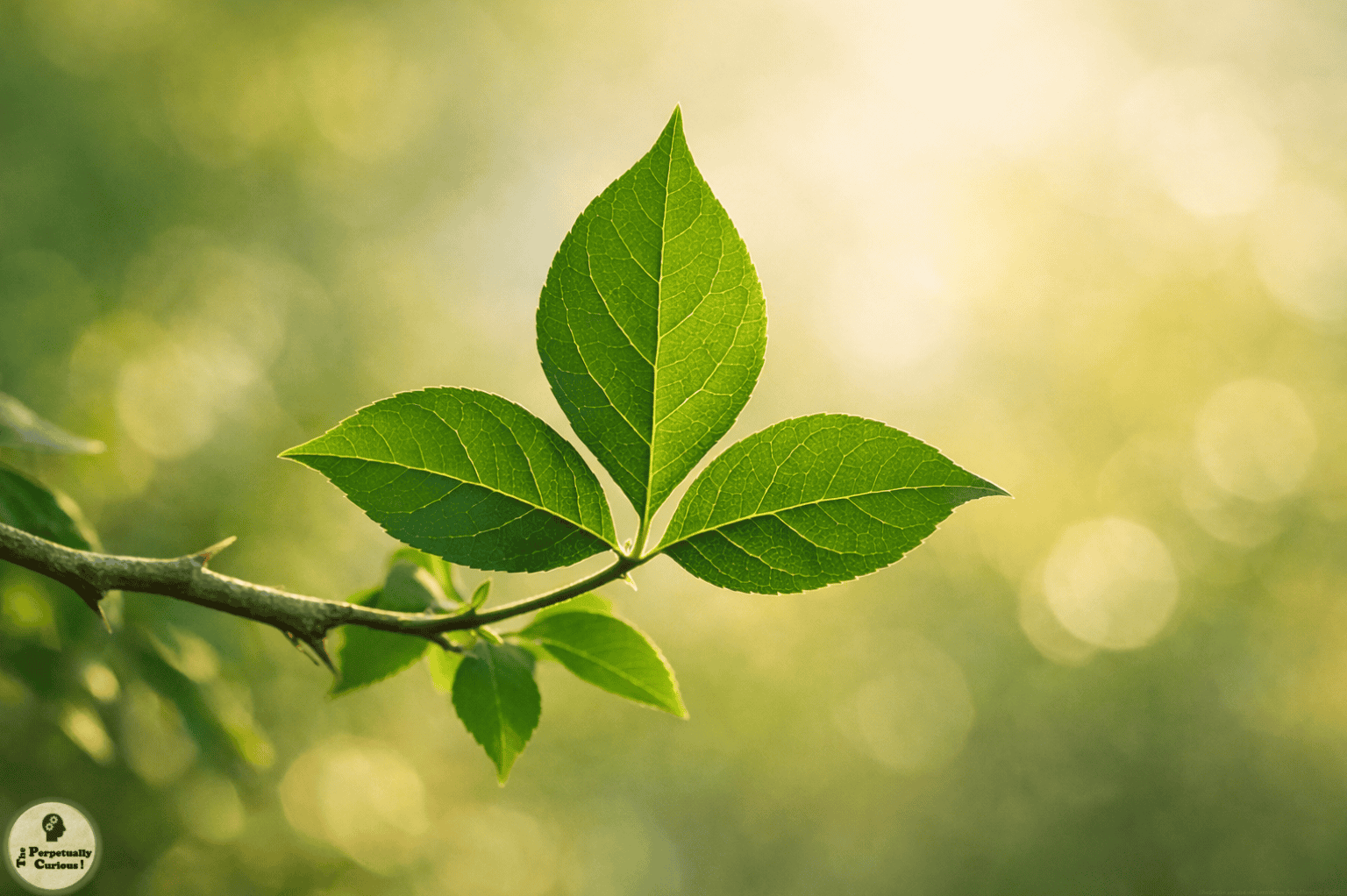
The leaves are trifoliate, with each leaflet measuring about 2 to 5 inches (5 to 14 centimeters) in length. Young leaves may appear pinkish or copper toned before deepening into a rich green. This trifoliate form has long shaped cultural interpretations and contributes to the tree’s distinctive appearance. Readers who wish to explore how other trees develop characteristic leaf forms may find insight in the structure of the peepal tree, which also carries deep cultural and ecological significance. Beyond its distinctive leaf form, Bael belongs to the rue family, Rutaceae, the same botanical family as the citrus lineage that includes mandarins, pomelos, citrons, oranges, lemons, and limes.
By grounding ourselves in the tree’s physical form, we gain a foundation for understanding how it thrives in the landscapes that shaped it.
🌍 Native range and ecological setting
Bael is native to the Indian subcontinent. It is also widely cultivated, and in some places naturalized, across other parts of South and Southeast Asia.
In the wild, bael often inhabits dry deciduous forests, rocky hillsides, and plains where seasonal drought is common. It thrives in soils ranging from sandy loam to lateritic substrates and can tolerate a broad spectrum of conditions, including acidic to alkaline soils and, under suitable management, stony and degraded substrates. A broader view of how trees adapt to challenging landscapes can be found in the remarkable drought tolerance of the baobab tree, which offers a striking ecological parallel.
This ecological resilience also helps explain why the bael tree became so deeply woven into human life, both practical and symbolic.
🕉️ Sacred leaves and living traditions
In many South Asian traditions, bael is regarded with reverence. Its trifoliate leaves are closely associated with Shaivite worship, where they are offered in rituals dedicated to Lord Shiva. The three leaflets have been interpreted symbolically in various ways, although meanings differ by region and community.
Beyond its central role in Shaivite Hindu practice, bael also appears in broader South Asian spiritual and ceremonial contexts, and in local seasonal celebrations tied to the rhythms of the year. In some regions, the fruit is prepared as a cooling drink during the warmest months, becoming part of the sensory memory of summer. In others, the leaves are used in household rituals or festival offerings, linking the tree to cycles of time and community. A reader who wishes to explore how other trees become woven into cultural and spiritual life may find resonance in the long history of the arjuna tree, which holds its own place in regional traditions.
These cultural roles emerge from the same biological features described earlier. The tree’s leaves, fruit, and resilience have shaped how people interact with it, and they form a natural bridge to the ecological processes that sustain it.
🐝 Flowers, fragrance, and pollinators
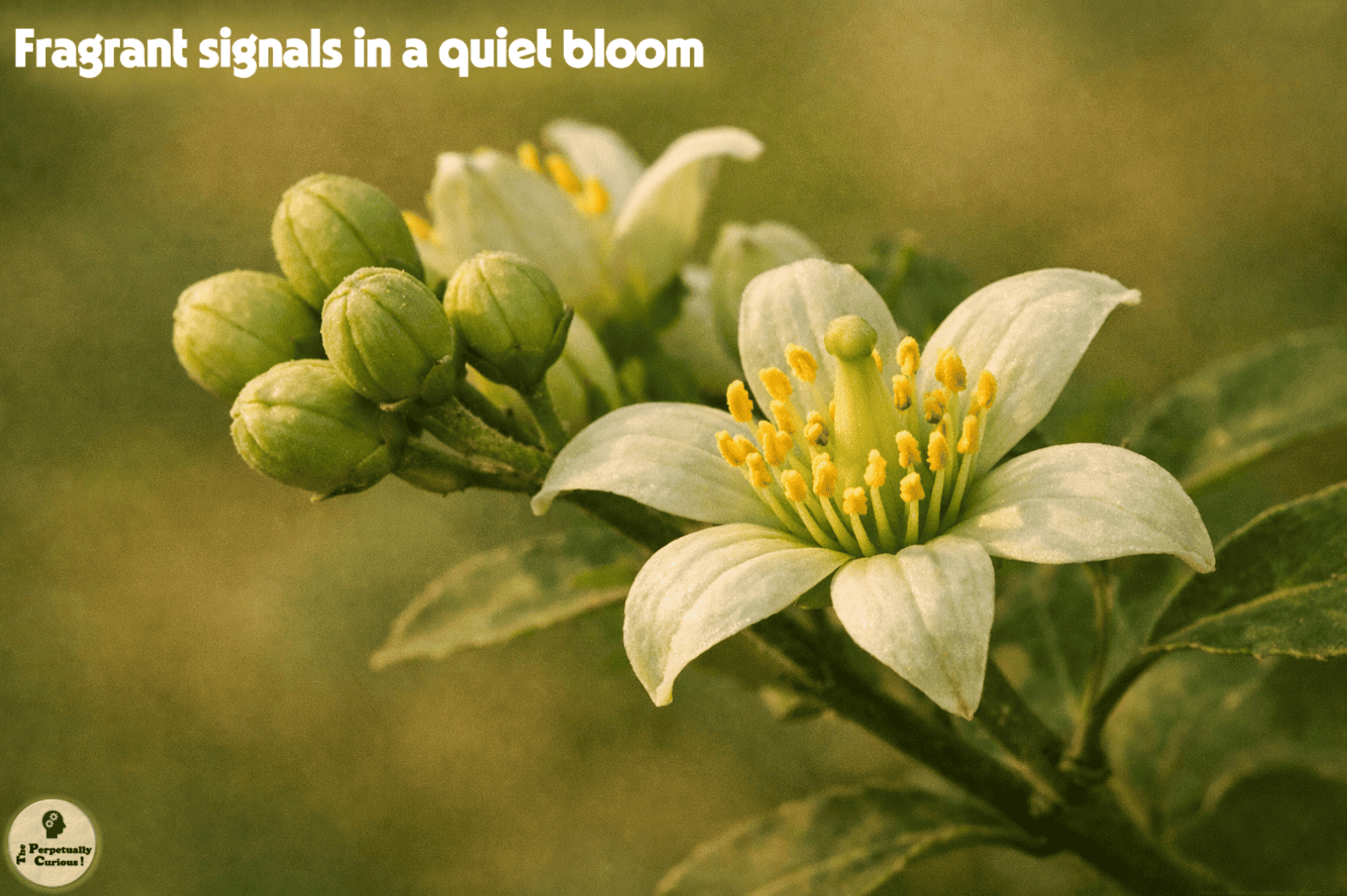
Bael flowers are small, usually about 0.6 to 0.8 inches (1.5 to 2 centimeters) across, with white to pale greenish white petals and a sweet fragrance. They often appear alongside new leaves, forming a subtle but important seasonal marker. In many Indian growing conditions, flowering occurs from spring into early summer, often around April to June, although timing can shift earlier or later depending on region, variety, and local climate, and it generally aligns with the emergence of new foliage.
Pollination studies indicate that honey bees are the principal effective pollinators of bael flowers. Butterflies, beetles, and flies may also visit, but bees are most frequently observed transferring pollen between blossoms. Nectar production and floral scent help attract these insects, and successful pollination is essential for fruit development. Readers who wish to explore the broader ecological importance of these interactions may find a deeper perspective in the role of pollinators across global ecosystems.
By examining pollination after exploring cultural significance, we see how ecological and cultural dimensions intertwine. The same tree that appears in rituals also depends on small, everyday interactions with insects, and these relationships make the fruit that follows all the more remarkable because it is the direct product of every quiet interaction described above.
🍊 The fruit: hard shell, fragrant heart
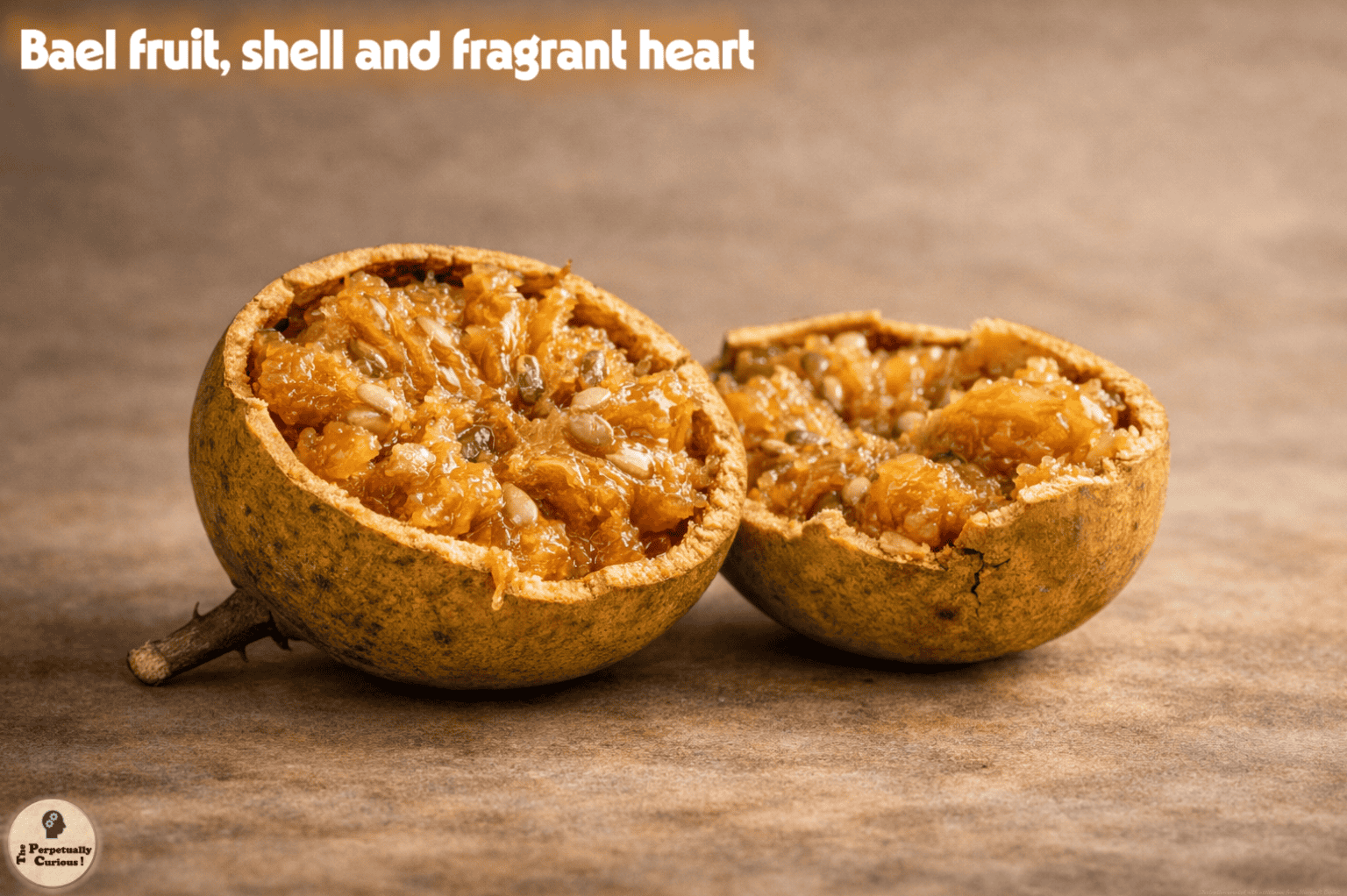
The bael fruit is distinctive, with a hard, woody rind that remains intact even when fully ripe. It is usually round or slightly pear shaped, typically measuring about 2 to 4 inches (5 to 10 centimeters) in diameter, though larger fruits occur. The shell must be cracked or cut open to reveal the soft, aromatic pulp inside.
The pulp is golden to orange, divided into segments filled with seeds surrounded by a sticky, mucilaginous material. The aroma is sweet and slightly floral, and the flavor is often described as sweet with a mild tang and occasional astringency. The timing of ripening varies by region, cultivar, and growing conditions, and the fruit develops over many months on the tree.
Bael pulp contains dietary fiber, vitamin C, pectin, and diverse phytochemicals such as tannins and coumarins, though levels vary by fruit stage and study. Understanding the fruit’s structure and chemistry helps explain why it has played such an important role in both daily life and cultural practice, and it also helps clarify why researchers have examined this species closely as climate pressures reshape the landscapes it inhabits.
🌱 Bael in a changing climate
Because bael tolerates heat, drought, and variable soils, researchers have explored its potential role in climate resilient horticulture. Studies have examined its performance under water stress and its suitability for agroforestry systems in semi arid regions, where reliable fruiting under limited water can be an important advantage.
There is also ongoing work on germplasm conservation and breeding programs that aim to preserve genetic diversity. Traditional knowledge continues to inform these efforts, while modern research emphasizes the need for careful evaluation of health-related claims and cultivation practices. Readers who are interested in how other resilient species adapt to environmental pressures may find a useful comparison in the growth strategies of asian bamboo, which thrives in a wide range of climates.
With these scientific and cultural threads in place, the narrative returns to the tree itself, inviting a reflective pause.
🌿 A quiet companion across time
When one returns to the bael tree after learning about its form, habitat, fruit, cultural roles, and ecological relationships, it may appear transformed. The trifoliate leaves carry both botanical purpose and symbolic meaning. The hard-shelled fruit reflects ecological adaptation and human ingenuity. The tree stands as a reminder that resilience often appears in quiet forms. A reader who is curious about how trees shape their environments over long periods may appreciate the enduring presence of living root bridges, which demonstrate how patient growth can become part of human landscapes.
As the light shifts through its branches, the bael tree becomes a companion across time, linking past landscapes with future possibilities. Its quiet presence invites a slower way of seeing, and it brings the story back to the reflective stillness that opened this journey.
Pass this article along to someone curious and let the learning travel.
💡 Did You Know
🍈 Bael fruit can remain edible for extended periods at room temperature because its hard shell slows moisture loss and microbial activity. Readers who enjoy exploring how plants adapt to seasonal changes may also appreciate the patterns of seasonal leaf color in temperate forests.
🌿 Bael trees often grow slowly, and seedling trees may take several years to reach fruiting maturity, which shapes how they are cultivated and managed.
🍃 The leaves contain essential oils that vary in composition depending on season and region, which influences their fragrance and traditional uses.
🥣 The fruit’s high pectin content has made it useful in traditional preserves and confections, and it continues to be valued in regional food cultures.
🕰️ Bael fruit develops over a long period on the tree, often maturing over many months before harvest, which contributes to its distinctive texture and flavor.
🌱 Bael is sometimes cultivated in dry regions because of its ability to withstand limited water, and readers who are curious about how plant form and structure can be shaped over time may find interest in the practice of bonsai cultivation, which explores growth and architecture on a miniature scale.
🍵 In some regions, bael drinks are prepared during the warmest months, and readers who enjoy exploring plant-based beverages may find a parallel in the cultural journey of the tea plant.
How long does a bael tree live?
Bael trees may live for several decades under suitable conditions, and some individuals persist even longer in protected environments.
When does the bael tree flower?
Flowering commonly occurs between spring and early summer, often around April to June in many Indian growing conditions, although timing can be earlier or later depending on climate, elevation, and variety.
Are wild and cultivated bael trees different?
Wild bael trees may produce smaller fruits with thicker shells, while cultivated varieties are often selected for larger fruits and higher pulp content.
How long does it take for a bael tree to bear fruit?
Seedling trees may take roughly six to ten years to begin bearing fruit, while budded or grafted trees often produce earlier, sometimes within five to seven years, though results vary considerably with climate, soil, and management.
What type of soil does bael prefer?
Bael can grow in a wide range of soils, including sandy loam and lateritic substrates, and it tolerates acidic to alkaline conditions under suitable management.
Is bael used in traditional medicine?
Bael has a long history of use in traditional medical systems, particularly for digestive purposes. Modern research continues to examine its phytochemicals, although many traditional uses require further clinical evaluation. Readers who wish to explore another culturally significant medicinal species may find value in the long history of the neem tree.
Which animals or insects pollinate bael flowers?
Honey bees are frequently reported as the principal effective pollinators, with butterflies, beetles, and flies also visiting the flowers. Readers who wish to explore the broader ecological importance of these interactions may find a deeper perspective in the role of pollinators across global ecosystems.
Is bael related to any other culturally significant trees?
Bael is often mentioned alongside other sacred or historically important species, and readers who wish to explore these connections may appreciate the cultural depth of the arjuna tree, which holds its own place in regional traditions and ecological memory.
Does bael play a role in ecological restoration?
Bael is sometimes planted in semi-arid regions because of its tolerance for heat and limited water, and readers who are interested in other ecologically resilient trees may find a useful parallel in the remarkable drought endurance of the baobab tree, which employs different but equally striking adaptations to water scarcity.
How does bael compare to other drought tolerant species?
Bael shares several traits with other resilient trees, and readers who wish to explore additional examples may find interest in the surprisingly wide ecological range of asian bamboo, which has adapted to environments ranging from tropical lowlands to cooler upland climates.
🌸 A gentle invitation to share
We kindly invite you to share and spread the word. By passing this article along to friends, colleagues, and fellow nature enthusiasts, you help more people encounter the quiet story of the bael tree and the landscapes it inhabits. Your support is deeply appreciated and helps thoughtful, evidence-based storytelling reach a wider audience.
“Bael Tree: Ecology, Sacred Groves, and Cultural History.” The Perpetually Curious!, May 2026.
https://www.theperpetuallycurious.org/articles/bael-tree/Continue Exploring
For the curious mind: want to explore this theme through a few questions? Visit the Classic Quiz Studio, nestled under Explorations opens in a new tab ,and see where a few well-placed questions lead: Botanical Wonders Quizzesopens in a new tab
For what comes next
Site Updates gathers occasional notes, new additions, and ways to keep in touch. RSS brings new publications to your feed reader in chronological order.
Choose the path that speaks to you, and let the next curiosity find you wherever your wondering takes you.