
An exploration of coastal sands and the quiet forces that shape them
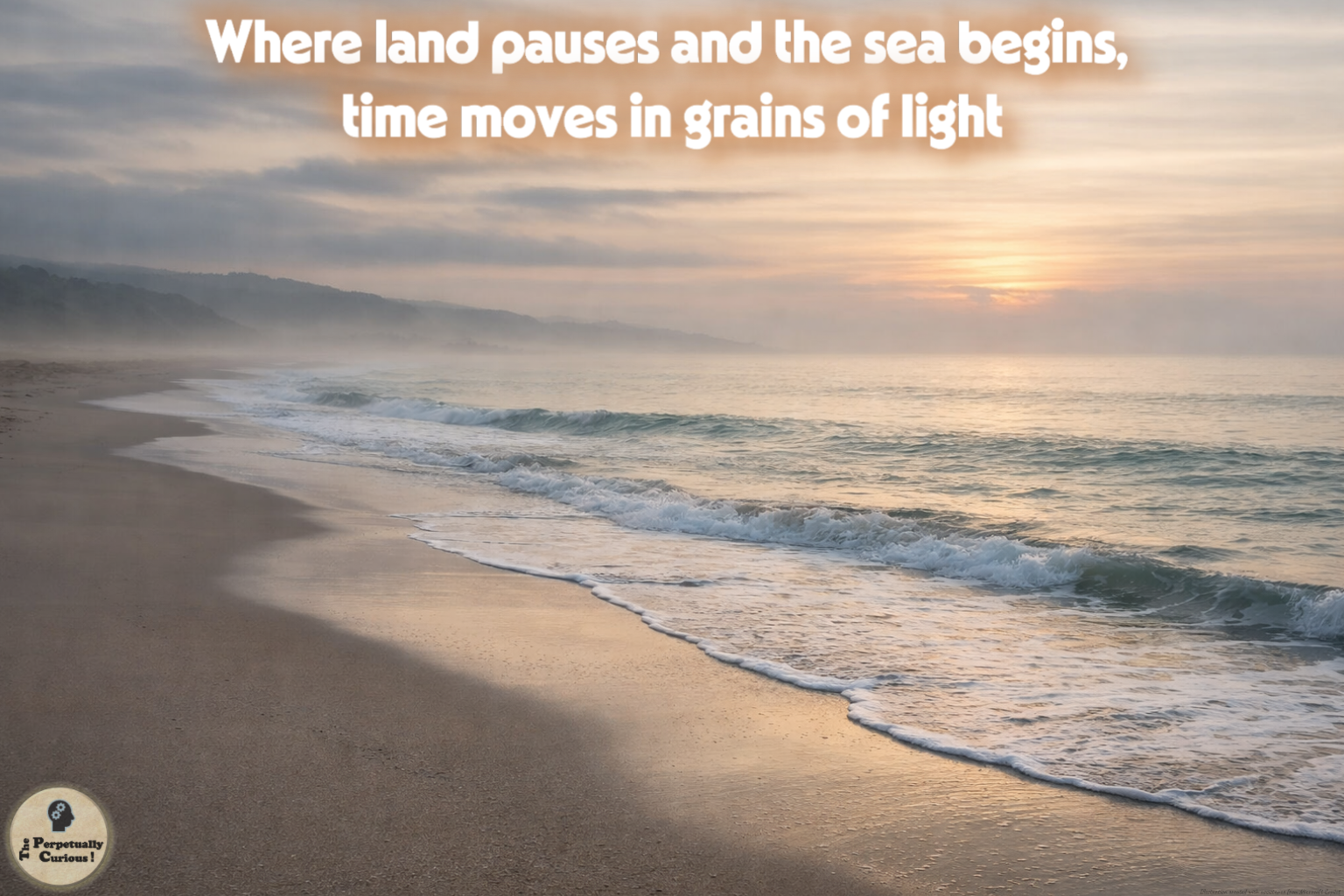
The shoreline often feels like a place where time slows and the world opens. Waves arrive in steady succession, each one shaping the edge of the land as if writing and rewriting a story that has no final draft. Many visitors feel the softness of sand beneath their feet and wonder why beaches carry sand at all. The answer begins far from the water’s edge, in landscapes shaped by weather, rivers, and time. Only after this long journey does sand meet the sea, where waves and currents continue the work that began inland. That familiar ribbon of sand along the coast is where geology and motion collaborate in ways that are both subtle and profound.
⛰️ The Birth of Sand
Much beach sand begins its life as part of a larger rock. Mountains, cliffs, and ancient bedrock slowly break down through the combined effects of mechanical and chemical weathering. Mechanical weathering includes processes such as freeze‑thaw cycles, abrasion, and the grinding action of moving water. Chemical weathering involves reactions that dissolve or weaken minerals, allowing them to break apart more easily.
On many beaches, sand does not come only from the rocks directly beside the sea. Instead, it often begins far inland. Rivers carry weathered fragments from mountains and hills, transporting them over long distances. Along the way, grains collide, tumble, and gradually become smaller and smoother. In some regions, coastal cliffs also contribute sand through wave erosion, and in tropical areas, biological sources such as coral and shells add their own fragments to the mix. A similar process shapes the shores of large inland water bodies, and readers interested in how vast freshwater systems influence sediment may appreciate the role of inland seas in sculpting their own coastlines.
The time scale of this transformation varies widely. Breaking down a large rock into sand‑sized grains may take long periods that depend on rock type, climate, and environmental conditions. Transport from mountains to the sea may take decades, centuries, or far longer, depending on river systems, sediment storage, and the distance involved. Once the grains reach the coast, waves continue to shape them through repeated abrasion and movement. Sand is therefore both ancient and ever‑changing, a product of long histories and ongoing motion.
🌬️ The Coastal Conveyor Belt
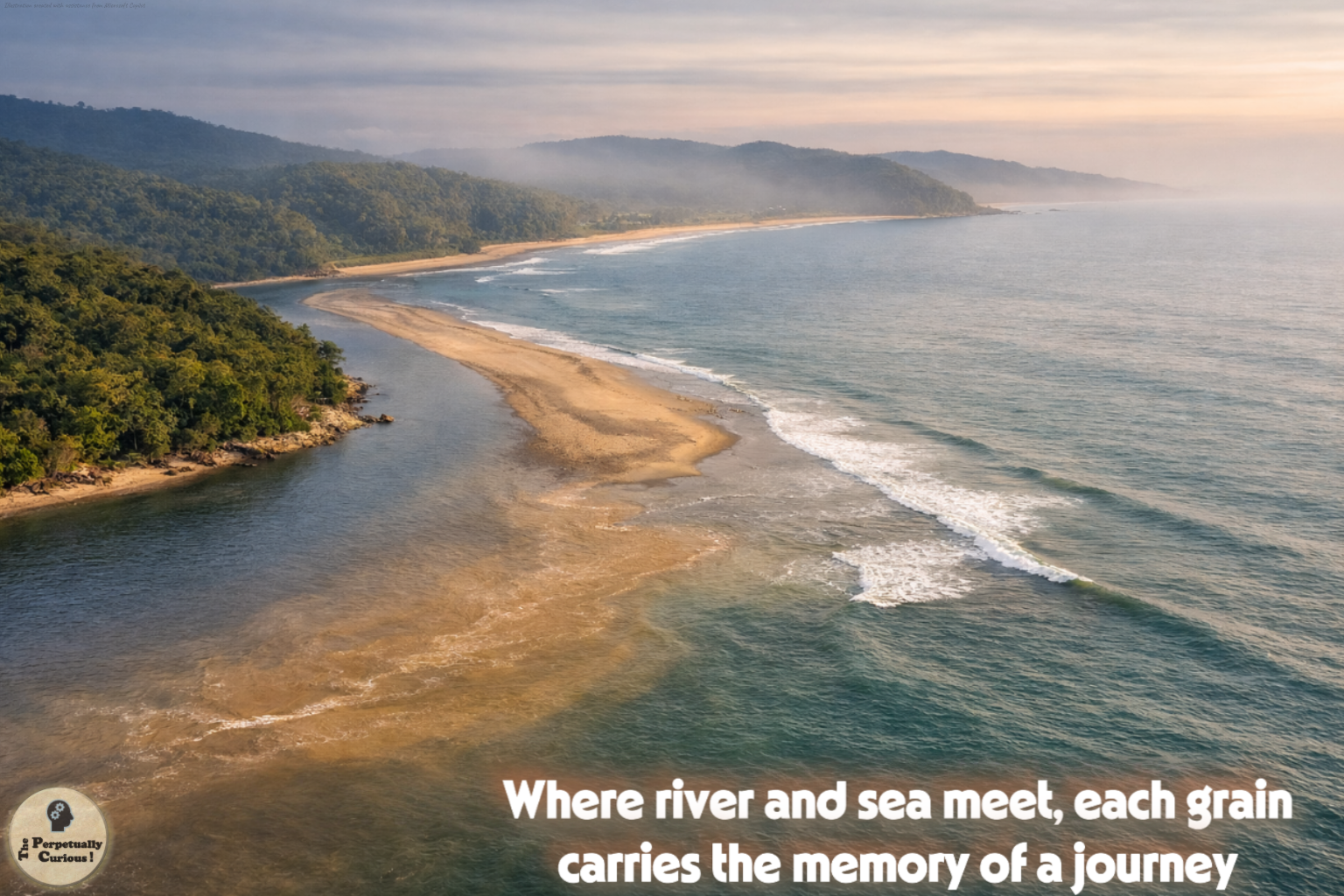
Once sand reaches the sea, it does not remain at the river mouth. Instead, the coastline acts as a conveyor belt that redistributes sediment far beyond its point of entry. Waves approach the shore at an angle, creating a sideways movement of water known as longshore drift. This motion picks up sand delivered by rivers and carries it along the shoreline, sometimes for tens or even hundreds of miles. Readers who wish to understand how extreme ocean waves differ from the everyday wave patterns that shape beaches may find additional insight in the behavior of tsunamis, where ocean energy reaches the shore under exceptional circumstances. This process explains why long stretches of coastline may be sandy even if the river mouth itself is not a beach. River mouths are often turbulent, muddy, or deep, and they may not resemble the calm, open beaches that form farther along the coast. The river provides the sediment, but the waves and currents determine where that sediment ultimately settles. In this way, a single river can supply sand to a very long stretch of shoreline, shaping beaches far from where the grains first entered the ocean.
⚖️ Why Sand Stays While Other Sediments Drift Away
Once sand is distributed along the coast, wave energy determines what remains and what is carried away. Sand grains, which typically measure between about 0.0025 and 0.08 inches (0.0625 to 2 millimeters), are heavy enough to settle quickly but light enough to be moved and reshaped by waves. The swash and backwash of the shoreline continually lift and reposition these grains, yet they remain within the active zone of the beach. The influence of nor’easters can intensify this movement, revealing how powerful weather systems reshape shorelines through sudden bursts of energy.
In contrast, silt and clay particles are much smaller and more cohesive. They remain suspended in water until they reach areas where the water is calm. Mud forms in environments such as tidal flats, marshes, and sheltered bays, where the energy of the water is low enough for fine particles to settle. Beach slope also plays a role, since coarser grains are often associated with steeper beach profiles, while finer sands more often form broader, gentler beaches when local wave conditions allow.
This distinction between sand and mud is not only a matter of size but also a reflection of the environment in which each material forms. Beaches are shaped by more active movement, while mudflats and marshes often form where water is calmer.
🏖️ The Character of Beach Sand
Beach sand varies widely in color, texture, and composition. Many beaches contain quartz, a mineral that is resistant to weathering and often appears pale or translucent. Quartz survives long journeys because it is harder than many other minerals. Other beaches may contain fragments of shells, coral, volcanic rock, or minerals such as feldspar or magnetite. In tropical regions, biogenic sands composed of coral and shell fragments may dominate, creating beaches that appear white or pink.
Sand color varies because different minerals, rock fragments, biological remains, and chemical coatings contribute different hues.
- White sands often form from nearly pure quartz or coral fragments.
- Beige or golden sands may contain feldspar, iron‑bearing minerals, or weathered granite.
- Black sands typically originate from volcanic basalt that has broken down into fine grains.
- Green sands may contain olivine; a mineral found in certain volcanic regions.
- Pink sands often include tiny fragments of foraminifera, microscopic single‑celled marine organisms whose shell‑like tests may be pink or reddish.
These colors reflect the geological stories of the landscapes that feed each shore. In some regions, wind carries fine beach sand inland to form dunes, creating landscapes that continue the story of each grain far beyond the shoreline.
🌊 Why Beach Sand Differs from River Sand
Although rivers supply much of the sand that reaches many coastlines, river sand and beach sand often differ because they are shaped by different kinds of motion.
- Shape and Texture: River sand may be less rounded or less uniformly shaped than mature beach sand, although this varies with transport distance and river energy. Beach sand is often smoother and more rounded because waves repeatedly lift, roll, and abrade the grains.
- Sorting and Uniformity: River sand commonly contains a wider mixture of grain sizes. Beach sand is often better sorted because waves and currents winnow and redistribute particles according to size, density, and prevailing wave conditions.
- Mineral Composition: Rivers can carry quartz, feldspar, mica, clay, rock fragments, and heavy minerals from many parts of a watershed. Along the coast, repeated reworking tends to favor more durable grains, especially quartz in many non‑tropical settings, although local geology can produce very different sands.
- Chemical and Physical Weathering in Coastal Settings: In coastal environments, repeated wetting, abrasion, and chemical exposure can weaken some minerals, but sorting and physical reworking usually play the larger visible role in shaping the composition and appearance of beach sand.
- Longshore Drift: As sand moves along the coast, it is repeatedly reworked. This ongoing motion can enhance rounding, sorting, and mineral selection, helping create the distinctive texture many people associate with beach sand.
🌍 Beaches Around the World and the Grains They Carry
Beaches across the world reveal how grain size and composition reflect local geology and wave energy.
- North America: Cannon Beach, Oregon Darker, mineral‑rich sand shaped by strong Pacific waves and the long‑term erosion of ancient basaltic headlands.
- South America: Lençóis Maranhenses, Brazil A coastal dune field bordering the Atlantic, where fine, pale quartz sand carried by coastal currents and the Parnaíba River is shaped into sweeping dunes by persistent seasonal winds.
- Europe: Reynisfjara, Iceland Black basaltic sand created by volcanic activity and the rapid cooling of lava.
- Africa: Moroccan Atlantic Coast Golden, quartz‑rich sand carried by ancient river systems and shaped by steady surf.
- Asia: Havelock Island, India Bright white biogenic sand composed largely of coral fragments.
- Australia and Oceania: Hyams Beach, Australia Known for exceptionally fine, nearly pure quartz sand.
These examples illustrate how beaches differ not only in appearance but also in the geological histories that shape them. Just as wave energy and local geology determine the character of tropical and temperate beaches, extreme cold and glacial erosion shape the typically rocky or gravelly shores of antarctic landscapes in distinct ways. The distinct geomorphology of arctic regions offers another example of how extreme environments influence coastal form.
💧 Sand, Mud, and the Energy of Place
The forces that shape a beach also help explain how different sediments form in calmer environments. Mud forms where water is calm enough for the smallest particles to settle. These environments often support unique ecosystems that thrive in low‑oxygen, fine‑grained sediment. River sand, on the other hand, is shaped by flowing water and may be more angular or mixed in size because it has not been sorted as thoroughly by wave action. Beaches are shaped by more active movement, while mudflats and marshes often form where water is calmer. Each type of sediment tells a story about the forces that shaped it, and together they reveal the diversity of Earth’s landscapes.
Pass this article along to someone curious and let the learning travel.
💡 Did You Know
🔍 Some beaches contain sand that is nearly pure quartz, while others are composed largely of shell fragments or volcanic minerals.
🌋 Some green sand beaches owe much of their color to olivine, a mineral found in certain volcanic regions.
⏳ It may take thousands to millions of years for sediment to complete its journey from an inland mountain range to the shoreline, depending on river systems, climate, and the distance involved.
🏝️ Not all beaches are sandy. Some are made of pebbles, cobbles, or even fragments of coral, depending on local geology and wave energy.
🌬️ Wind can shape dunes far inland, carrying beach sand into desert‑like formations that continue the story of each grain.
🧪 Some sands contain tiny magnetic minerals that respond to a magnet.
🔆 Some mineral‑rich sands sparkle or appear brighter in direct or low‑angle light, as flat reflective grains such as mica catch and scatter the light.
🌊 The seafloor beneath many coastlines is mapped using sonar mapping, which reveals how underwater landscapes influence the movement of sediment.
Why do beaches have sand instead of mud?
Many open, wave‑active beaches are sandy because waves and currents tend to remove or keep fine silt and clay in suspension, leaving larger grains that settle more readily.
Where does beach sand come from?
Beach sand often originates from the weathering of rocks inland. Rivers transport the sediment to the coast, where waves continue to shape and sort the grains.
Why are many beaches light in color?
Many beaches contain quartz, a mineral that is pale or translucent. The color of beach sand depends on the minerals present in the region.
Why is mud found in marshes and tidal flats?
Mud forms in calm environments where fine particles can settle. These areas have low‑energy water conditions, which allow silt and clay to accumulate.
How is river sand different from beach sand?
River sand is shaped by flowing water and may be more angular or mixed in size. Beach sand is shaped by waves and is often more rounded and uniform.
Do beaches change over time?
Beaches may shift gradually or rapidly due to storms, tides, and seasonal patterns. Sand may be added or removed depending on local conditions.
How long does it take for a beach to form?
The formation of a natural beach may take years, decades, centuries, or far longer, depending on sediment supply, wave energy, sea‑level history, storms, and regional geology.
Why do some beaches have coarse sand?
Coarse sand often forms where wave energy is high enough to remove finer grains, leaving behind heavier particles that settle more quickly.
Are sandy beaches permanent?
Sandy beaches are dynamic environments. They may grow, shrink, or shift depending on natural processes such as storms, tides, and sediment supply.
Why do some beaches form dunes while others do not?
Dunes form where there is abundant dry sand and consistent wind. Beaches without these conditions may not develop dune systems.
Can beach sand come from living organisms?
Yes. In some tropical and reef environments, sand may include fragments of coral, shells, calcareous algae, or foraminifera rather than only weathered rock.
The shore holds the memory of distant mountains carried grain by grain to the edge of the sea. Each wave lifts the past into motion and sets it down again in a quiet rhythm that never repeats itself. In this meeting of land and water, every grain rests for a moment in the long story of the Earth.
Related articles
A wider collection of Earth‑focused essays is available for readers who wish to explore the shifting landscapes, forces, and histories that shape our planet.
If you would like to keep up with what unfolds here, the Updates page is the best place to begin.
🌟 A Gentle Invitation to Share
We kindly invite you to share and spread the word.
Under this gentle and poetic reflection, we encourage you to help us reach a wider audience by sharing this piece with your friends and colleagues. Your support in spreading the message is greatly appreciated.