Explore by topic, question, or idea. Find articles, reflections, videos, puzzles, and curiosity pathways gathered across the site.
Press Enter or select Search. A newly typed query starts globally; filters are applied only through the visible rail.
8 results for “beaches pandiculation”
- The Perpetually Curious! › Canonical › Planet EarthArticle
🌊 Where the Waves Leave Their Footprints: Why Beaches Carry Sand
From section: 🌍 Beaches Around the World and the Grains They CarryBeaches across the world reveal how grain size and composition reflect local geology and wave energy.
- The Perpetually Curious! › Archives › Planet EarthArticle
🌊 Why Beaches Have Sand
Beaches often appear simple at first glance. They seem like a narrow place where land and water meet. Yet the presence of sand along so many coastlines is the result of long journeys, slow transformations, and the combined work of rivers, weather, and waves.
- The Perpetually Curious! › Canonical › Biology & HealthArticle
🌿 Why We Stretch When We Wake: The Quiet Reflex that Resets the Body
From section: 👶 The developmental arc of pandiculationThis early presence may support the formation of proprioceptive maps, helping infants develop awareness of their bodies. The reflex may also assist in regulating muscle tone during early growth. These developmental layers highlight the deep roots of pandiculation in human physiology.
- The Perpetually Curious! › Archives › Biology & HealthArticle
🌅 Pandiculation: How the Waking Stretch Restores Body Awareness
Before the eyes fully focus or the mind has assembled the day, the body may begin moving on its own. The arms rise, the chest opens, the back lengthens, and several muscles tighten before easing into release. This familiar sequence has a scientific name: pandiculation.
- The Perpetually Curious! › Canonical › Environment & SustainabilityArticle
🔄 Tides of Plastic: Microplastic Pollution in the Oceans and Its Journey Back to Us
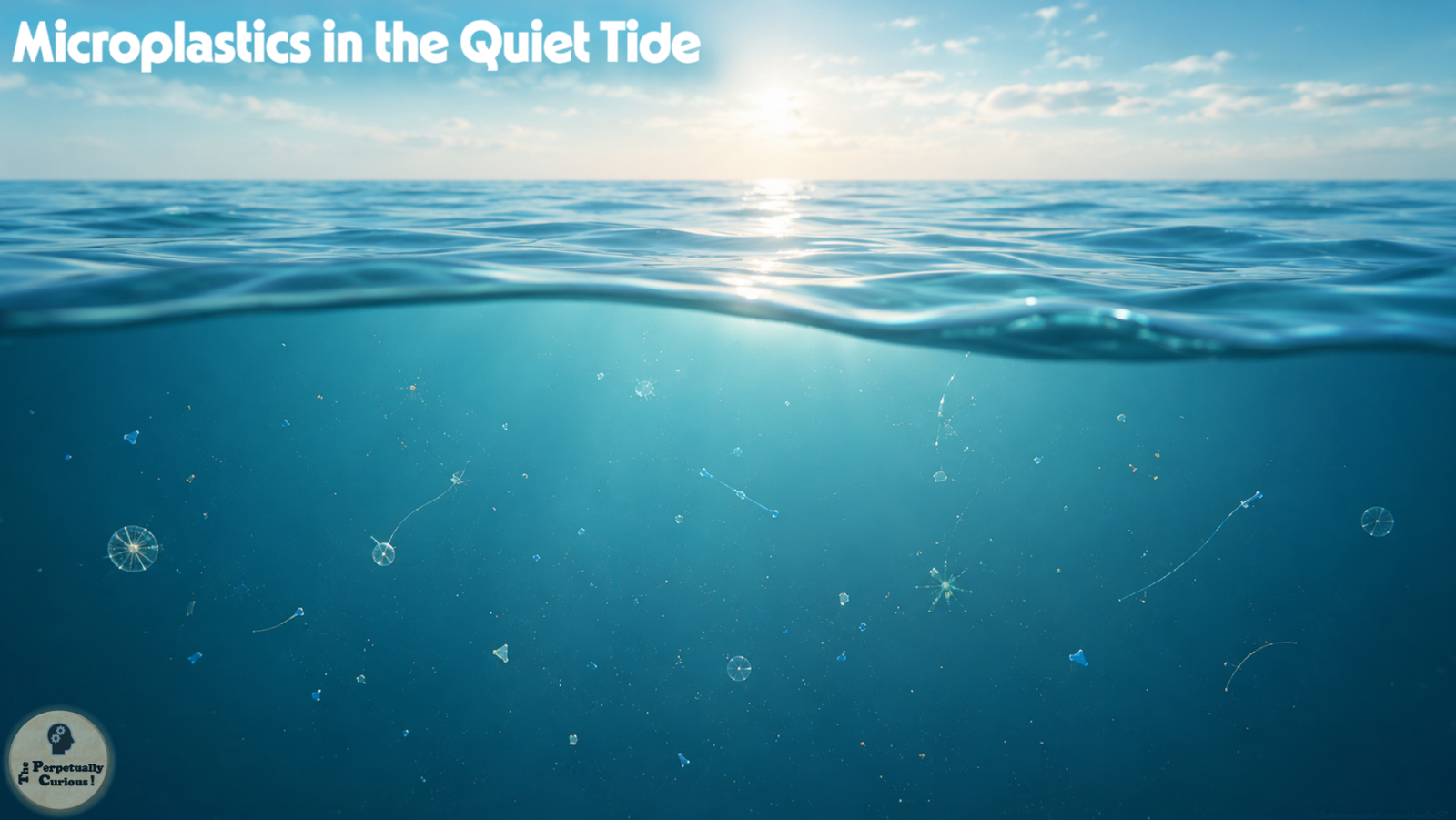
From section: 🌊 From land to sea: how microplastics enter and move through the oceansMicroplastics reach the ocean through many pathways. Mismanaged plastic waste may fragment on beaches, roadsides, and coastal land, with wind and runoff carrying pieces into rivers and estuaries. Urban stormwater can transport tire wear particles and synthetic fibers from roads, drains, and laundry effluent. …
- The Perpetually Curious! › Canonical › Planet EarthArticle
🌍 Why Mud Is Brown or Black: Where Earth Turns to Quiet Ink
From section: 🧪 Mud, sand, and why their colors divergeMud and sand often coexist along coasts and rivers, yet they frequently differ in color. Sandy beaches are commonly light beige or pale yellow, while nearby mudflats may appear dark brown or black. This contrast arises from differences in grain size, composition, and the ability to hold water and organic matter.
- The Perpetually Curious! › Archives › PhysicsArticle
⚗️ The Invisible Revolution: Understanding the Ancient Art and Modern Science of Glass Manufacturing
From section: Where Sand Becomes Transparent 🏛️The ancient Roman historian Pliny the Elder recounted a legendary story of Phoenician merchants accidentally discovering glass when cooking fires on sandy beaches fused sodium-rich plant ashes with silica.
- The Perpetually Curious! › Archives › Environment & SustainabilityArticle
🌊 Microplastics in the Ocean: How Tiny Fragments Travel
Once plastic reaches rivers, beaches, storm drains, or coastal waters, sunlight, abrasion, waves, and time can break larger items into particles smaller than about 5 millimeters.