Explore by topic, question, or idea. Find articles, reflections, videos, puzzles, and curiosity pathways gathered across the site.
Press Enter or select Search. A newly typed query starts globally; filters are applied only through the visible rail.
60 results for “brachistochrone distance”
- The Perpetually Curious! › Archives › MathematicsArticle
⚡ The Curve That Seemingly Defies Gravity: The Brachistochrone and the Fastest Path Down
Gravity pulls everything straight down. Or so it seems. Drop a stone and it falls vertically. Pour water and it seeks the most direct path downhill. Our intuition tells us that the shortest route is always the fastest.
- The Perpetually Curious! › Archives › Planet EarthArticle
🌊 Underwater Sound: How Echoes Measure Distance
From section: How echo timing becomes distanceHow echo timing becomes distance An active SONAR pulse has to make a round trip.
- The Perpetually Curious! › Canonical › Engineering & TechnologyArticle
🚂 Echoes of Steam, Currents of Steel: Train Engines and the Rise of High-Speed Motion
From section: 🔥 Steam awakens: the birth of the locomotiveAs designs improved, locomotives gained stronger boilers, better wheels, more reliable running gear, and greater control over power delivery. What began as an experiment on rails became a practical signal that steam could transform transport, industry, and distance itself.
- The Perpetually Curious! › Canonical › Planet EarthArticle
🌈 When Sunlight Paints the Rain: The Quiet Geometry of Rainbow Formation
Rainbows often arrive with a sense of gentle timing, appearing just as a storm begins to loosen its hold on the sky. Sunlight returns through thinning clouds, rain still hangs in the distance, and an arc of color seems to gather between them.
- The Perpetually Curious! › Archives › Cosmic ExplorationArticle
🌍 Why Earth Has a Living Atmosphere
A Cosmic Story of Gravity, Distance, and the Long Evolution of Air 🔭 Opening the Question Every planet carries a story in the sky above it. Some worlds hold thick blankets of gas, others keep only a faint whisper, and many have none at all.
- The Perpetually Curious! › Archives › Cosmic ExplorationArticle
🌌 When Worlds Shine: Why Some Planets Outglow Others in Our Night Sky
The night sky often feels calm and timeless, yet the brightness of the planets tells a dynamic story of light, distance, geometry, and illumination. When Venus blazes in the evening or morning sky, it can appear almost unreal, while Mars, Jupiter, and Saturn each take turns as…
- The Perpetually Curious! › Archives › Cosmic ExplorationArticle
💫 When Galaxies Feast: The Quiet Art of Cosmic Cannibalism
Galaxies often appear serene when viewed from a distance, as if they drift through the universe in gentle isolation. Yet their histories are shaped by encounters that unfold over immense spans of time. These encounters are not always dramatic or violent.
- The Perpetually Curious! › Archives › Cosmic ExplorationArticle
The Oort Cloud: Where Long-Period Comets Begin 🌌
🌠 A frontier written in motion Far beyond the last planet, the solar system does not end with a line. It thins into distance, and familiar orbits give way to a region that feels less like a neighborhood and more like a horizon.
- The Perpetually Curious! › Archives › Wilderness & Homestead CreaturesArticle
🕊️ Soaring Beyond Horizons: The Remarkable Albatross
Across the vast oceans, where winds sweep unbroken for thousands of miles, one bird reigns supreme: the albatross. Belonging to the family Diomedeidae, these seabirds have evolved into some of Earth’s most extraordinary long-distance travelers.
- The Perpetually Curious! › Archives › Planet EarthArticle
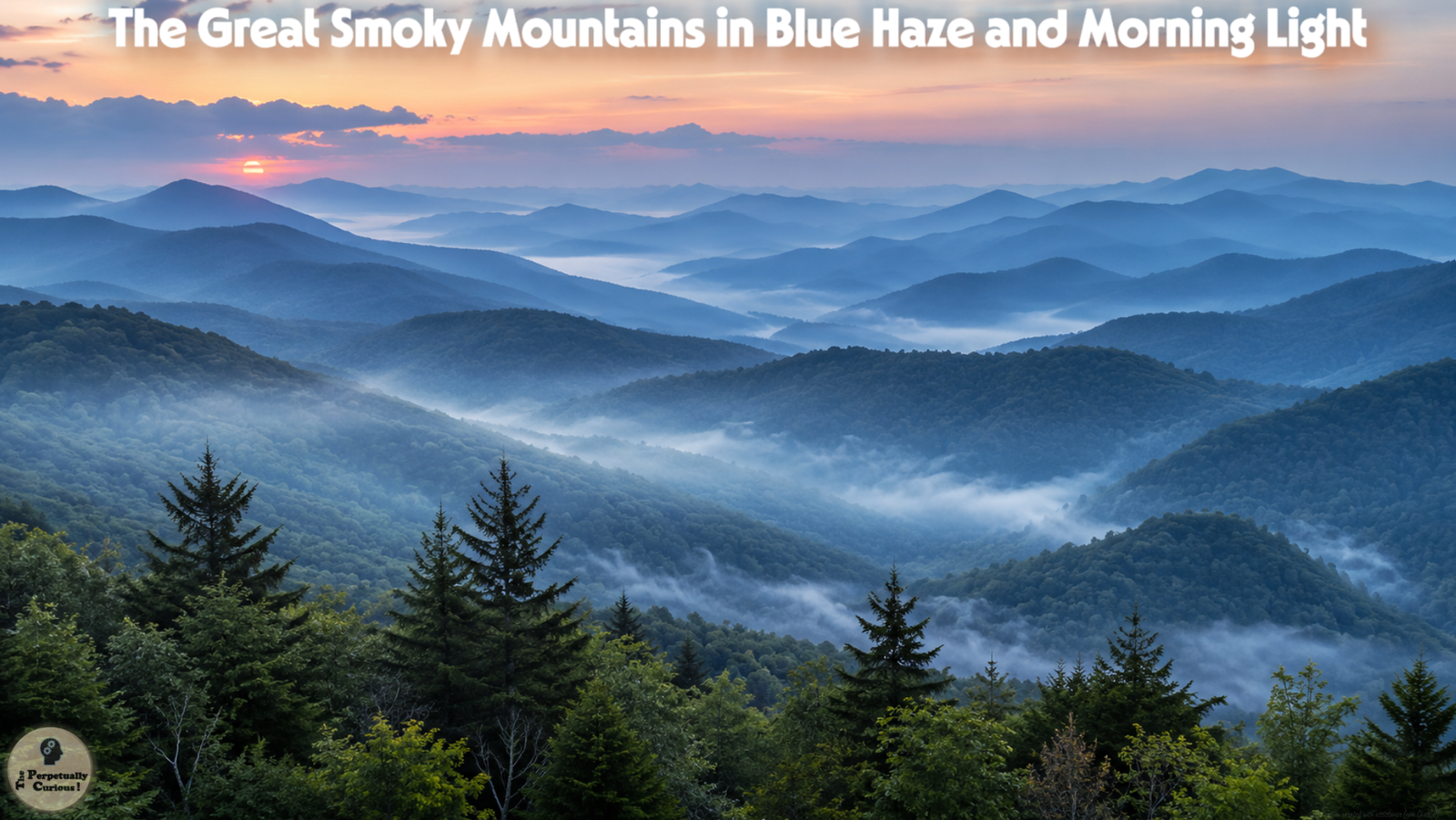
🌫️ Why the Great Smoky Mountains Fade into Blue Haze
At dawn, the Great Smoky Mountains can appear less like a wall of peaks than a sequence of blue shadows. Ridge after ridge fades into the distance, while the valleys seem to hold smoke even when no fire is burning.