Explore by topic, question, or idea. Find articles, reflections, videos, puzzles, and curiosity pathways gathered across the site.
Press Enter or select Search. A newly typed query starts globally; filters are applied only through the visible rail.
138 results for “each stand”
- The Perpetually Curious! › Archives › Wilderness & Homestead CreaturesArticle
🦩 Why Do Flamingos Stand on One Leg? The Science Behind Their Iconic Pose
Flamingos are instantly recognizable for their vivid pink plumage, long slender legs, and graceful presence in shallow lakes and lagoons. Among their most distinctive traits is the habit of standing on one leg, a posture that often appears serene and effortless. This behavior is…
- The Perpetually Curious! › Archives › Botanical WondersArticle
🎨 The Colorful World of Grapes: What Makes Each Variety Unique
From section: 🍇 Red, Green, or Black: What Sets Grapes Apart?Each variety carries its own blend of phytonutrients, pigments, and subtle nutritional qualities that shape both taste and potential health benefits.
- The Perpetually Curious! › Archives › Botanical WondersArticle
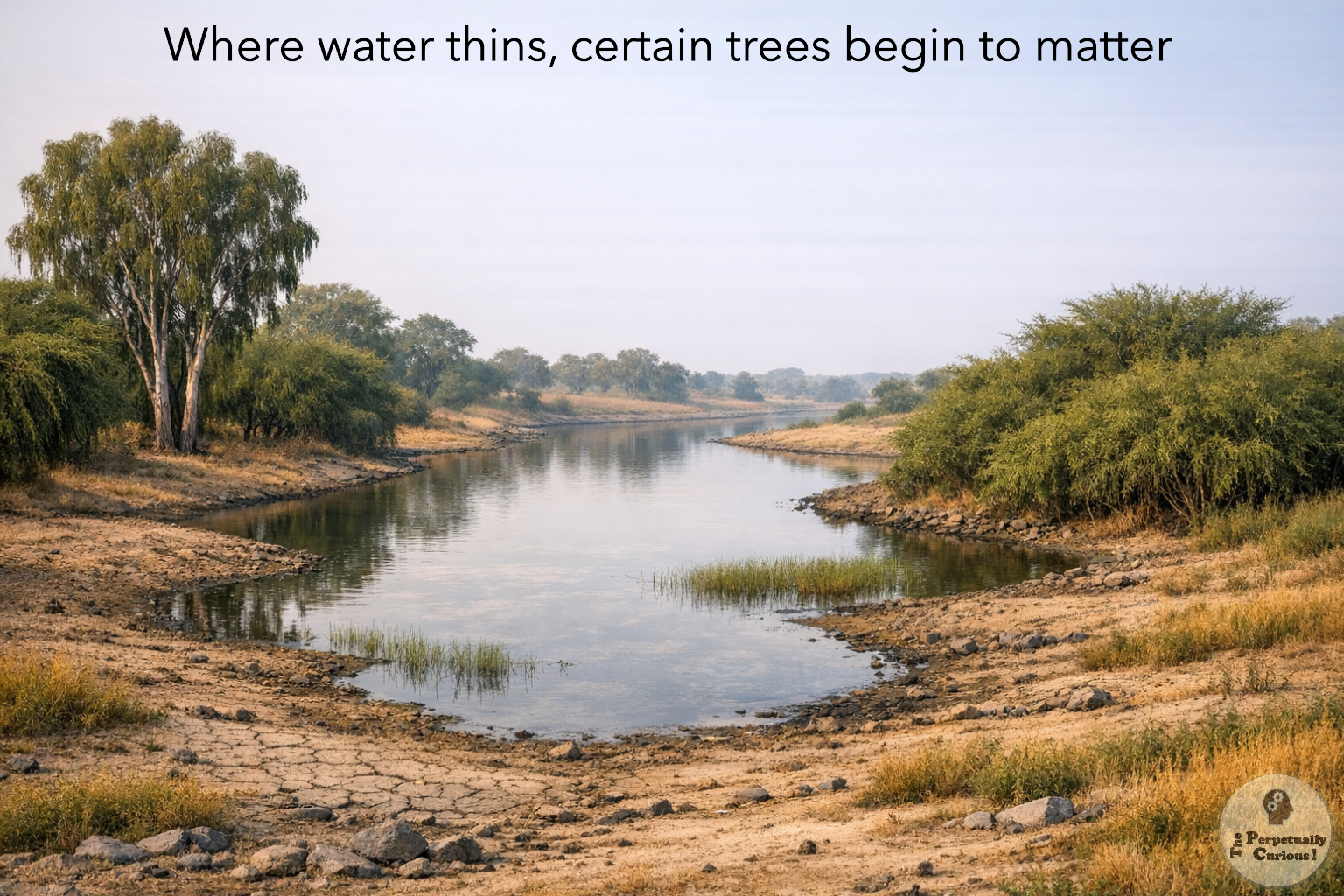
💧 Seasonal Ponds and Root Depth in South India
Seasonal ponds often look still from a distance, yet their edges can hold some of the most active negotiations in a dry landscape. In parts of South India, stored rainwater, shallow aquifers, dry soil, and plant roots meet in a narrow zone where each season leaves its mark.
- The Perpetually Curious! › Archives › PhysicsArticle
Why Starlight Does Not Mix: How the Night Sky Keeps Each Star’s Signature Intact ✨🌌
Step outside on a clear night and look up. Light arrives from so many distant suns that the sky can feel like a single luminous fabric, stitched from countless journeys. It is natural to wonder what happens along the way.
- The Perpetually Curious! › Archives › ChemistryArticle
What Makes Each Element Unique? 🧪 The Power of Atomic Numbers 🔬
🔢 (Periodic Table Series, Part 1) 🌱 A Simple Beginning At first glance, the periodic table seems static, a grid of symbols and numbers. Yet hidden within its structure is a story as dynamic as the universe itself, written not in words but in numbers.
- The Perpetually Curious! › ArchivesGateway
TPC8‑QH‑AR‑009 🧩 Analytical Reasoning | 🧮 Ordering, Elimination & Layered Deduction (Advanced VI)
From section: 4️⃣ Three friends A, B, and C stand in a line by height. A is taller than B. C is shorter than A but taller than B. Who is in the middle?Therefore, C is in the middle."> 4️⃣ Three friends A, B, and C stand in a line by height.
- The Perpetually Curious! › Archives › Planet EarthArticle
❄️ Antarctica: Southernmost Continent’s Frozen Symphony of Silence and Light
From section: ❓ FAQ… The 11,000-mile (18,000-kilometer) tropical barrier prevents natural migration between poles. Each species adapted to its specific polar ecosystem, and introducing either to the opposite pole would disrupt existing ecological balances.
- The Perpetually Curious! › Archives › Botanical WondersArticle
The Coffee Odyssey: A Bean's Scientific Journey from Soil to Soul ☕
The morning ritual of brewing coffee connects us to an ancient agricultural symphony that spans continents and centuries. Each aromatic sip represents the culmination of precise botanical processes, meticulous human craftsmanship, and transformative chemistry.
- The Perpetually Curious! › Archives › Cosmic ExplorationArticle
🌌 When Worlds Shine: Why Some Planets Outglow Others in Our Night Sky
The night sky often feels calm and timeless, yet the brightness of the planets tells a dynamic story of light, distance, geometry, and illumination. When Venus blazes in the evening or morning sky, it can appear almost unreal, while Mars, Jupiter, and Saturn each take turns as…
- The Perpetually Curious! › Archives › PhysicsArticle
🌍 When Worlds Pull: Gravity Across the Planets and What It Reveals About Them
Gravity is the quiet sculptor of the cosmos. It shapes the paths of planets, guides the drift of moons, and anchors every step taken on the surface of a world. When we compare gravity across the Solar System, we begin to see how each planet carries its own gravitational signature.