Explore by topic, question, or idea. Find articles, reflections, videos, puzzles, and curiosity pathways gathered across the site.
Press Enter or select Search. A newly typed query starts globally; filters are applied only through the visible rail.
16 results for “each stand”
- The Perpetually Curious! › Canonical › Planet EarthArticle
🌧️ When Clouds Let Go: Why It Rains and How Raindrops Are Born
From section: 💧 From drizzle to downpour: how raindrops reach the groundEach raindrop therefore carries the history of its journey, shaped by some combination of condensation, collisions, coalescence, freezing, melting, evaporation, gravity, and drag from the surrounding air.
- The Perpetually Curious! › Canonical › Planet EarthArticle
🌈 When Sunlight Paints the Rain: The Quiet Geometry of Rainbow Formation
From section: 🌍 A shared sky, a personal rainbowPerhaps this is part of what gives a rainbow its reflective power. It reveals a pattern governed by the same physical laws for everyone while reminding us that each view of that pattern is assembled along a slightly different path.
- The Perpetually Curious! › Canonical › Planet EarthArticle
🌍🌑 Where Two Soils Part Ways: Earth, Moon, and the Stories Written in Dust
From section: 🌋 From a Shared Beginning to Divergent WorldsThe Moon also cooled more quickly, forming a thick crust and limiting long‑term volcanic activity compared to Earth, with most lunar volcanism ceasing within the first few billion years of solar system history. These differences set the stage for the very different soils that formed on each surface.
- The Perpetually Curious! › Canonical › Planet EarthArticle
🌧️ When Earth Begins to Breathe: Why Rain Smells the Way It Does
From section: 🌾 How cultures describe the smell of rainThese expressions show that the scent of rain is not only a chemical phenomenon but also a cultural and emotional one. Each term reflects the landscapes, climates, and lived experiences of the communities that use it, and many of these phrases vary across regions and dialects. …
- The Perpetually Curious! › Canonical › Planet EarthArticle
🌍 Why Mud Is Brown or Black: Where Earth Turns to Quiet Ink
From section: 🧱 Minerals, organic matter, and the palette of mudMud is usually made of three main components: mineral particles, organic matter, and water. Each contributes to color in a different way, and together they create the familiar spectrum from light brown to nearly black.
- The Perpetually Curious! › Archives › Planet EarthArticle
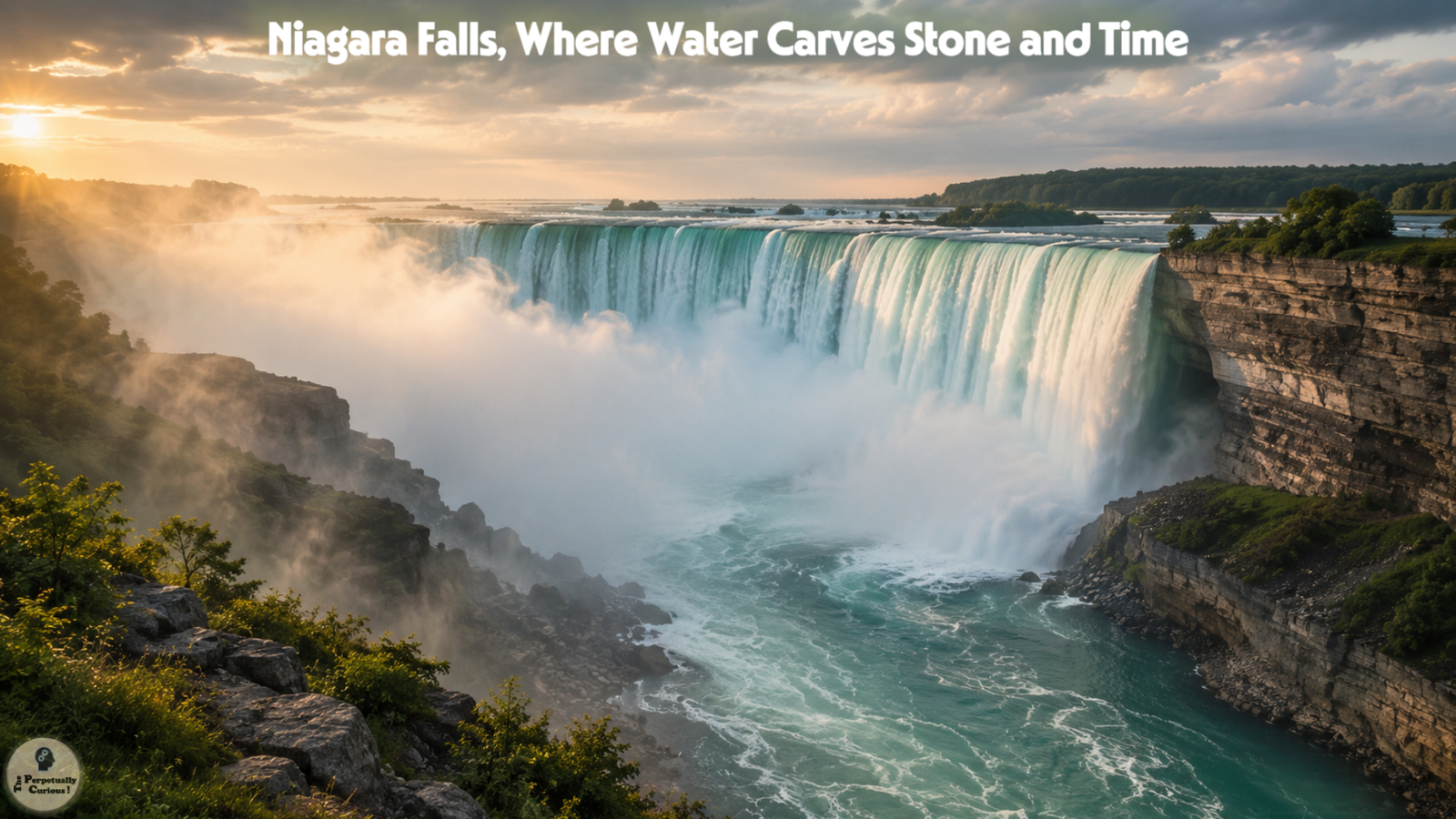
🌊 Niagara Falls Facts: How Water Turns Stone Into Time
From section: Why the falls keep movingEach exposed layer, overhang, talus pile, and bend in the channel carries evidence of the same patient exchange between water and stone.