Explore by topic, question, or idea. Find articles, reflections, videos, puzzles, and curiosity pathways gathered across the site.
Press Enter or select Search. A newly typed query starts globally; filters are applied only through the visible rail.
4 results for “teach darkness”
- The Perpetually Curious! › Canonical › Planet EarthArticle
🌇 When the Sky Becomes a Painting: Why Clouds Glow Red and Orange at Sunset on Earth
From section: Frequently Asked Questions+Why does the sky darken so quickly after astronomical twilight? Because the Sun’s light no longer reaches the upper atmosphere, a transition that mirrors the deep darkness associated with the darkness of space.
- The Perpetually Curious! › Canonical › Planet EarthArticle
🌍🌑 Where Two Soils Part Ways: Earth, Moon, and the Stories Written in Dust
From section: 💡 Did You Know🌡️ Lunar regolith experiences temperature swings of several hundred degrees Fahrenheit between sunlight and darkness, with equatorial surface conditions often ranging from about +250°F (+121°C) in daylight to about –208°F (–133°C) after nightfall, while colder shadowed regions can fall much lower.
- The Perpetually Curious! › Canonical › Planet EarthArticle
🏔️ Mount Kailash: A Summit Where Water, Story, and Sky Converge
From section: 💡 Did you know?🌗 Shadow patterns on Mount Kailash shift throughout the day, creating alternating bands of light and darkness that have inspired symbolic interpretations in several traditions.
- The Perpetually Curious! › Archives › Planet EarthArticle
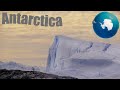
❄️ Antarctica: Southernmost Continent’s Frozen Symphony of Silence and Light
From section: ❓ FAQWhen is the best time to see the aurora australis? The Southern Lights are most visible during the Antarctic winter (March to September) when darkness prevails. Peak viewing occurs during geomagnetic storms when solar particles, guided by Earth's magnetic field, collide with gases high in the atmosphere. …