Explore by topic, question, or idea. Find articles, reflections, videos, puzzles, and curiosity pathways gathered across the site.
Press Enter or select Search. A newly typed query starts globally; filters are applied only through the visible rail.
10 results for “when a breath becomes a yawn why we yawn and what this quiet reflex may reveal”
- The Perpetually Curious! › Archives › Cosmic ExplorationArticle
💫 When Galaxies Feast: The Quiet Art of Cosmic Cannibalism
Galaxies often appear serene when viewed from a distance, as if they drift through the universe in gentle isolation. Yet their histories are shaped by encounters that unfold over immense spans of time. These encounters are not always dramatic or violent.
- The Perpetually Curious! › Archives › Cosmic ExplorationArticle
Where the Solar System Whispers Its Secrets: A Journey to the Kuiper Belt 🌌
Beyond Neptune's azure gaze lies a realm where sunlight becomes memory and ice sculptures orbit in eternal twilight. The Kuiper Belt, stretching from approximately 2.8 billion to 4.6 billion miles (4.5 to 7.4 billion kilometers) from our Sun, harbors more than distant worlds of…
- The Perpetually Curious! › Archives › Cosmic ExplorationArticle
☀️ Solar Eclipses Explained: The Dance of Shadow and Light
Solar eclipses are among the most captivating events in the sky. They reveal how a rare alignment of Sun, Moon, and Earth can transform the ordinary daylight landscape into something unfamiliar and striking. Daylight softens, shadows sharpen, and the familiar world takes on a new character.
- The Perpetually Curious! › Archives › Cosmic ExplorationArticle
🌌 The Cosmic Silence: Unraveling the Fermi Paradox in an Age of Discovery
In 1950, physicist Enrico Fermi posed a question that still feels disarmingly direct: “Where is everybody?” It was not a claim about what must exist, but a moment of clear reasoning in a universe that seems generous with stars and unexpectedly quiet with replies.Read more »
- The Perpetually Curious! › Archives › Cosmic ExplorationArticle
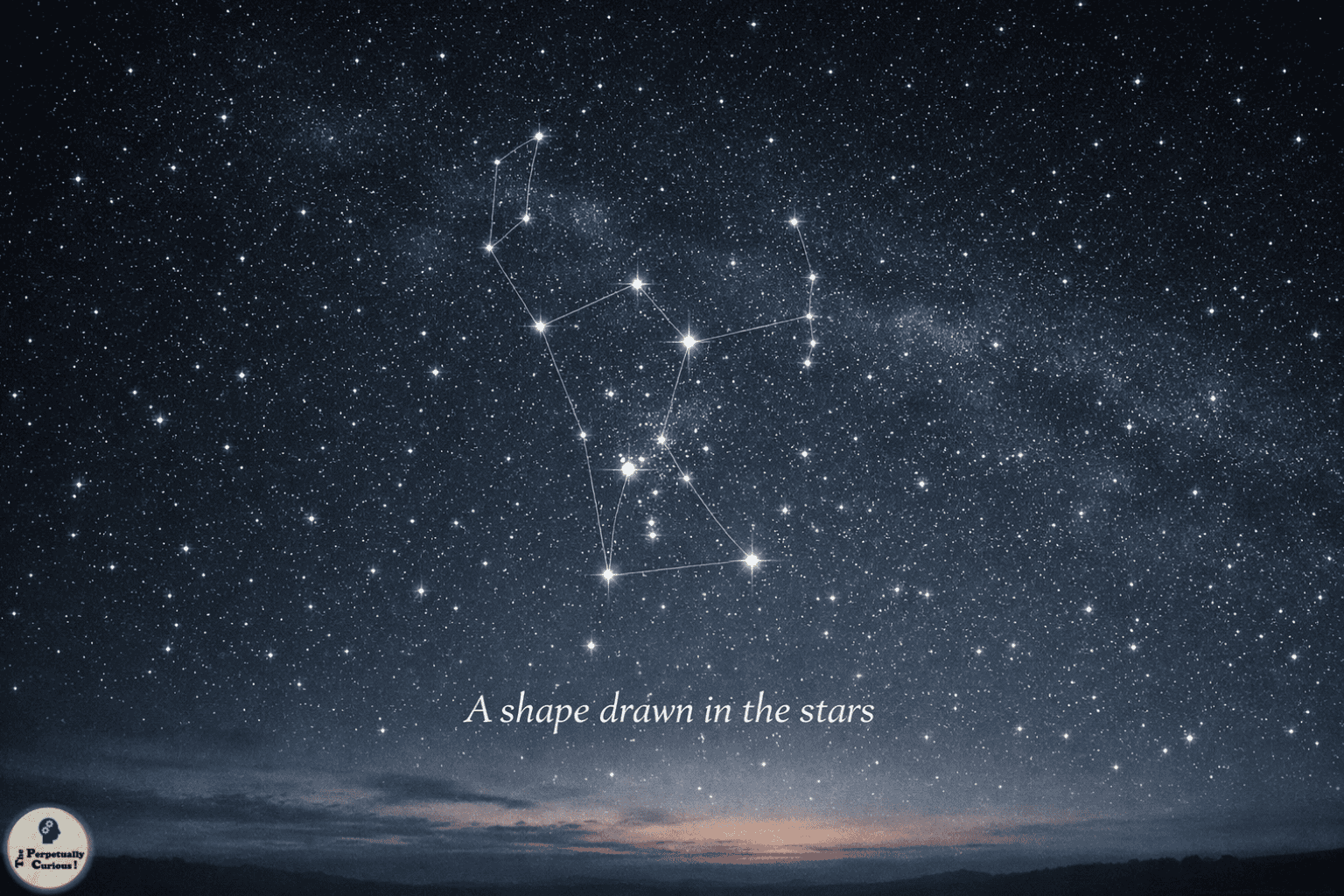
🌌 Constellations: How Star Patterns Help Us Find Our Way
From section: The quiet usefulness of an imperfect patternThey show how people turn perception into knowledge, and how knowledge becomes part of culture.
- The Perpetually Curious! › Archives › Cosmic ExplorationArticle
🌌 When Worlds Shine: Why Some Planets Outglow Others in Our Night Sky
When these ideas come together, the familiar points of light become characters in a quiet celestial drama.Read more »
- The Perpetually Curious! › Archives › Cosmic ExplorationArticle
🌌 When Stars Become Worlds: A Journey Through the Largest Stars We Know
The largest stars in the universe are not simply scaled-up versions of the Sun. They are vast, unstable, and luminous structures whose outer layers drift in slow, turbulent motion. Their atmospheres are so extended that the idea of a clear surface begins to dissolve into gradients of thinning gas.
- The Perpetually Curious! › Archives › Cosmic ExplorationArticle
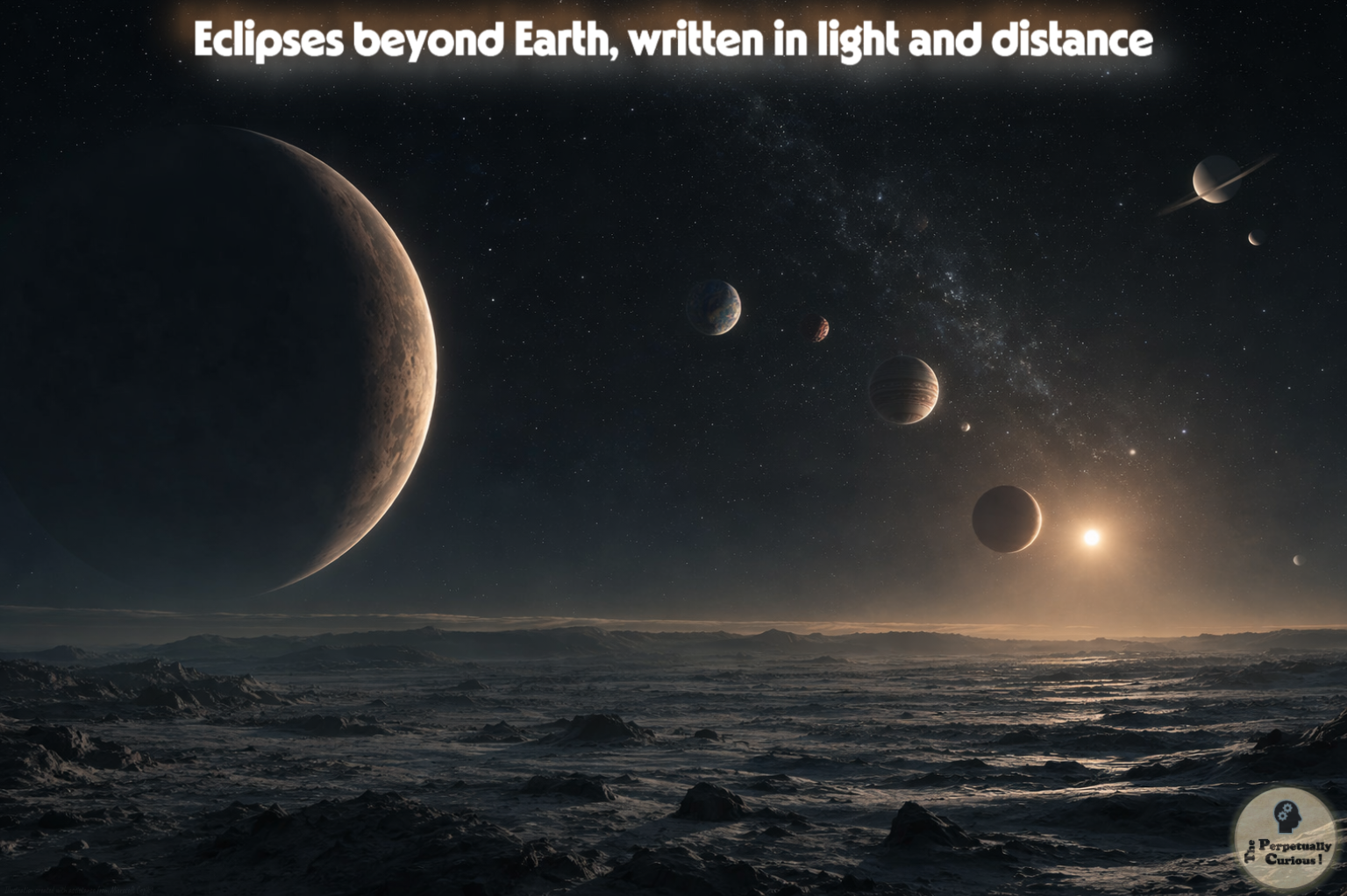
🌘 Eclipses Across the Solar System: When Shadows Travel
From section: Atmosphere, rings, and distanceAtmosphere, rings, and distance Eclipses also reveal the medium through which light travels.
- The Perpetually Curious! › Archives › Cosmic ExplorationArticle
The Universe's Ancient Whisper: Decoding the Cosmic Microwave Background 🌌
When Static Revealed Creation 📡 In 1964, two radio astronomers at Bell Labs faced an irritating problem. Arno Penzias and Robert Wilson could not eliminate a persistent hiss from their horn antenna, no matter how meticulously they cleaned it or removed the pigeons nesting inside.
- The Perpetually Curious! › Archives › Cosmic ExplorationArticle
The Cosmic Clock: How Stars Age Through Billions of Years ⏰
When we gaze at the night sky, the stars appear eternal and unchanging. Yet our Sun offers the perfect window into stellar aging. Currently 4.6 billion years old and middle-aged by stellar standards, it demonstrates the stable hydrogen burning that characterizes stellar prime.