
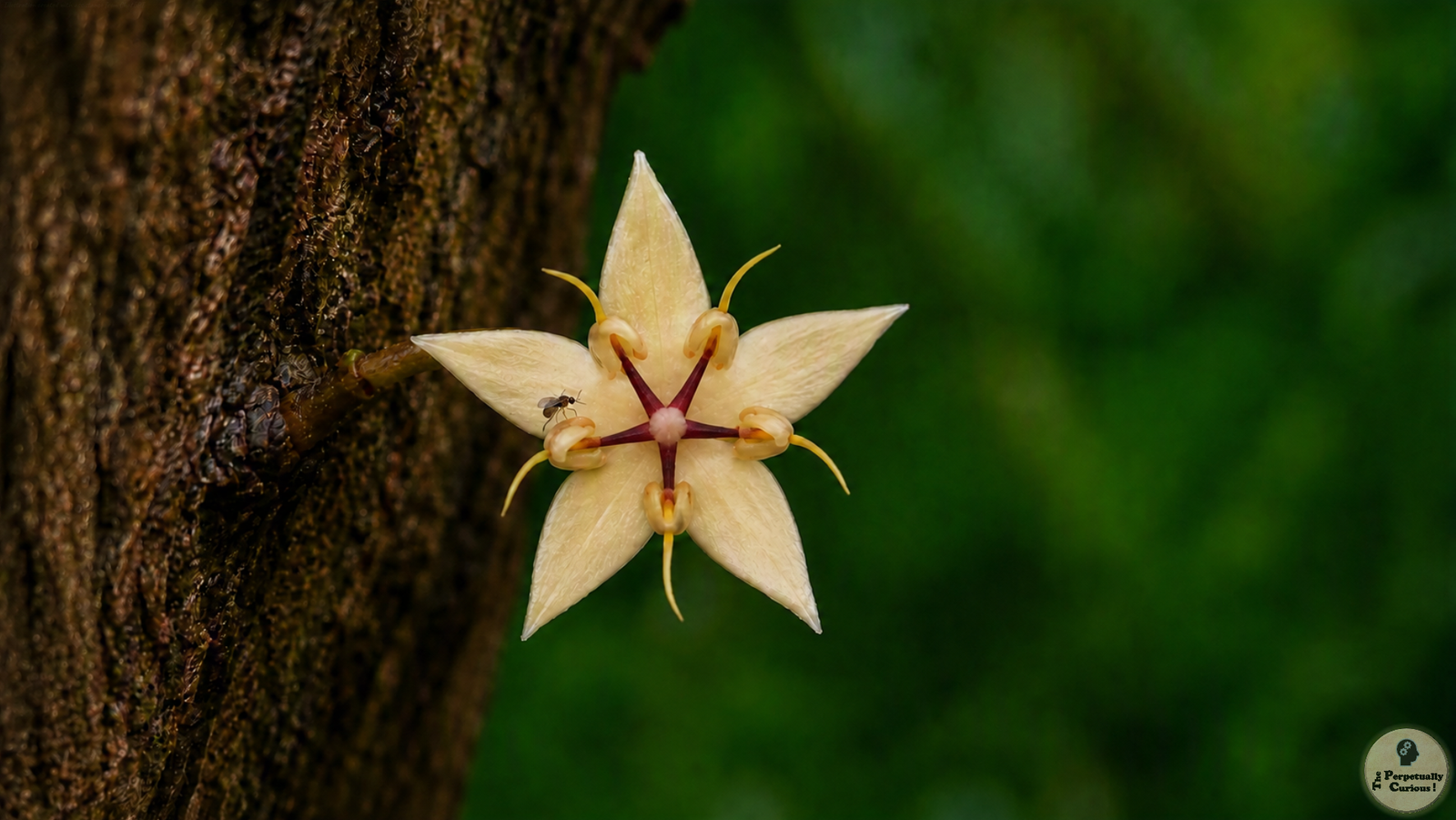
Cacao flower pollination depends on more than the arrival of a tiny visitor. The decisive transfer takes place inside a blossom measuring only about 0.4 to 0.6 inches (10 to 15 millimeters) in height, where pollen must reach the stigma through an unusually constrained floral structure.
Each of the flower’s pollen-bearing anthers sits within the hood of a petal. The main access bottleneck is a narrow opening between the petal hood and its filament, known as the petal side door. Near the center, a ring of sterile structures called staminodes surrounds the style and stigma. An insect may move across the outer flower or rest inside it without touching either pollen or the receptive surface. Its size matters, but so do its shape and route through the blossom. A visitor becomes a plausible pollinator only when its movements can connect the flower’s male and female structures.
Cacao pollination was historically attributed mainly to biting midges in the family Ceratopogonidae, especially members of Forcipomyia. More recent surveys have recorded a broader mixture of insects, with visitor communities differing among regions. Yet visitor abundance alone does not establish pollination. A 2026 study tested the distinction more closely by observing behavior and examining insect bodies for cacao pollen. Biting midges were more active on cacao flowers, contacted reproductive structures more often, and carried cacao pollen more often than the other flies studied.
That evidence supports ceratopogonid midges as cacao’s likely dominant pollinators, but it does not prove that every midge pollinates or that no other insect ever does. The study did not directly measure successful pollen deposition or fruit set. Research in Colombia also identified two ceratopogonid genera, Forcipomyia and Dasyhelea, in a cacao agroforestry system and found a positive association between the abundance of captured pollinating insects and the percentage of fertilized flowers.
Cacao is one specialized example within the wider role of pollinators across food production, biodiversity, and ecosystems. Its flowers make the general principle unusually visible: a pollinator is defined by successful transfer, not simple presence. The crucial visitor is the one whose body and behavior carry compatible pollen across the flower’s structural barriers and place it where fertilization can begin.