

African wild dogs move across the African savanna in fluid, coordinated formations, their mottled coats flickering like shifting brushstrokes against grass and dust. They travel through landscapes shaped by heat, wind, and the movement of prey, and their lives unfold through cooperation, endurance, and finely tuned social bonds. By following a pack through its daily rhythms, it becomes possible to see how movement, relationship, and environment are woven into a single ecological story. A broader view of savanna landscapes can offer additional context for how these environments shape the lives of many species.
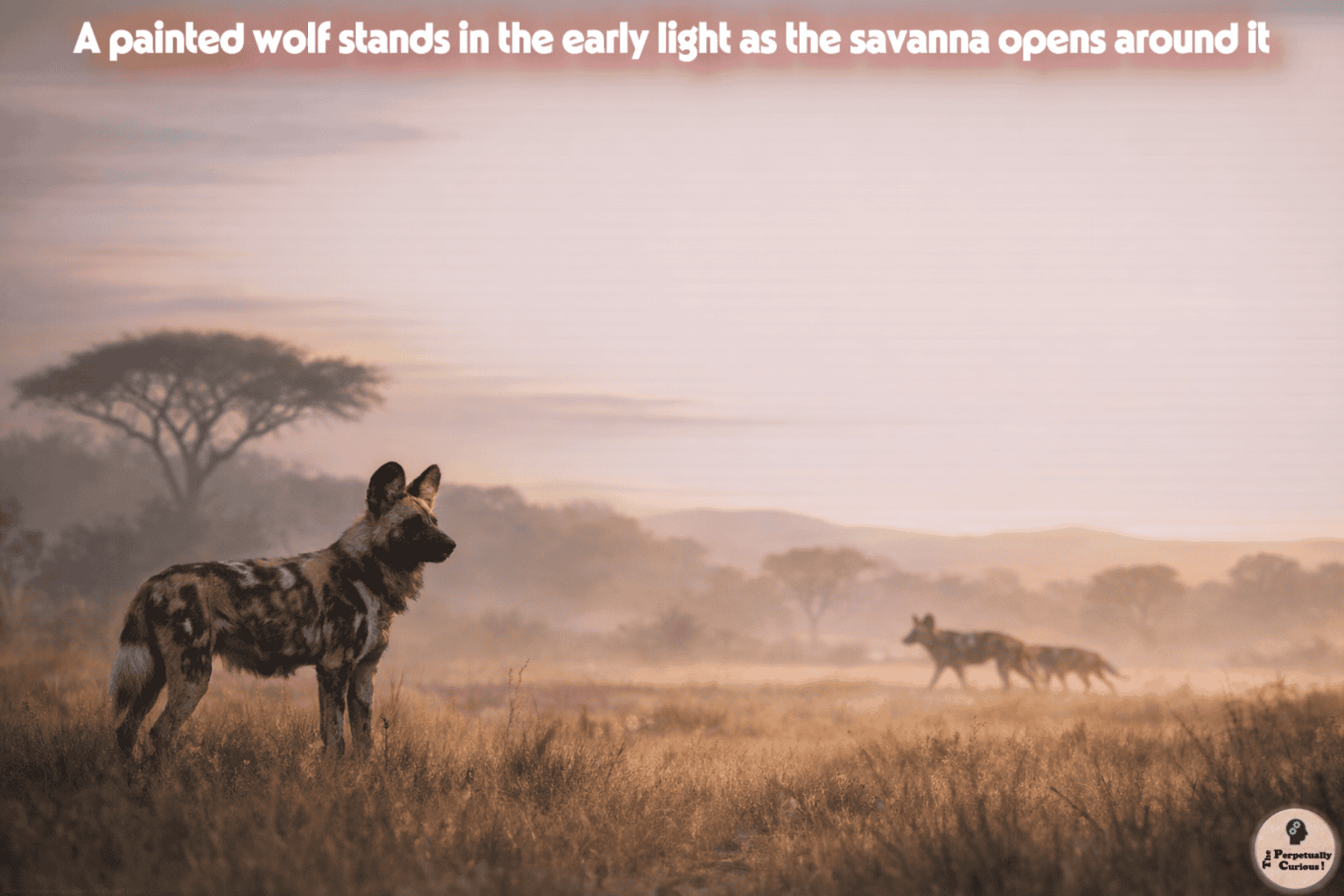
They move through the open world as a quiet pattern shaped by light, distance, and time.
What remains is not a story but a trace, the still geometry of coexistence.
🐾 African wild dog appearance and adaptations
African wild dogs, also known as painted wolves, carry the scientific name Lycaon pictus, which means “painted wolf” and refers to the species’ mottled coat. These patterns are unique to each individual and may help pack members recognize one another at a distance. Their large, rounded ears provide excellent hearing and assist with heat loss, while their specialized teeth reflect a strongly carnivorous diet.
Placed alongside wolves, foxes, and jackals, African wild dogs also show how related canid lineages can follow different ecological and behavioral paths.
In the wild, individuals typically live for about 10 to 11 years, with some reaching 12. Their long limbs, lean bodies, and efficient stride support a lifestyle built on endurance and coordinated movement across wide landscapes.
🏞️ Where African wild dogs live
African wild dogs are now found mainly in scattered regions of sub‑Saharan Africa, especially in savannas and lightly wooded areas. Stable populations remain in countries such as Botswana, Tanzania, and Zimbabwe, where relatively large and connected habitats still exist.
They require extensive territories, sometimes covering hundreds of square miles, because they follow mobile prey and avoid areas with high densities of competing predators. Packs may cover long distances in a single day while hunting and patrolling their range, and figures of around 30 miles (about 48 kilometers) are sometimes cited in broad summaries.
This need for space shapes nearly every aspect of their lives. Their social structure, hunting strategies, and daily movements all reflect the demands of living in open, dynamic landscapes where prey availability and predator presence shift from season to season. Because wild dogs must coordinate their travel across such wide areas, their social organization becomes a practical necessity rather than an incidental trait, which leads naturally into the dynamics of pack life.
👥 Life inside the pack
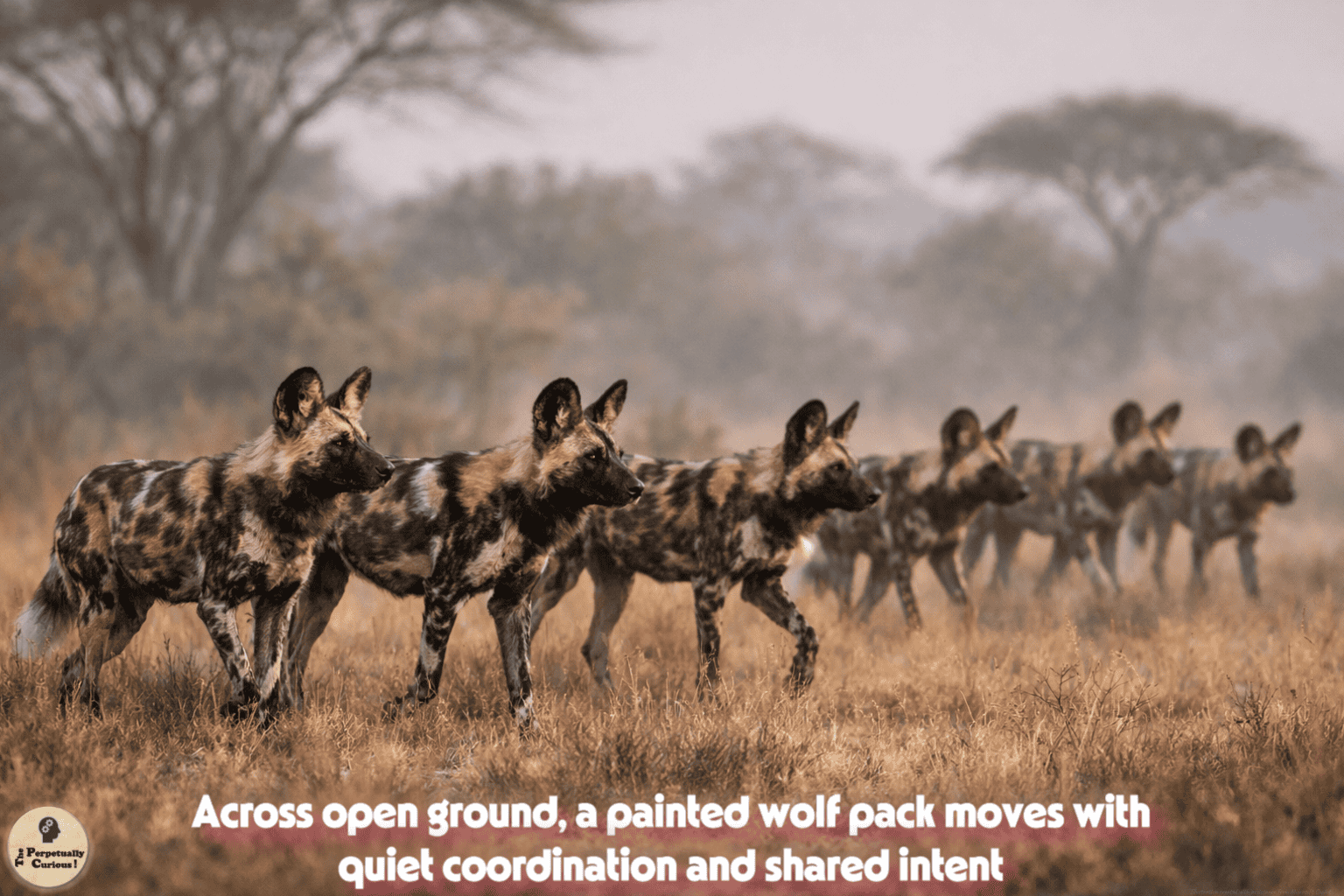
African wild dogs live in cohesive packs that often contain about 6 to 20 individuals, with some packs documented at larger sizes in areas of high prey density. At the center of the group there is usually a dominant breeding pair, which often produces most or all of the pups in a given season. Non‑breeding adults play active roles in guarding pups, accompanying them on early excursions, and providing food through regurgitation.
Young adults may eventually disperse from their natal pack to join other groups or form new ones. This movement helps maintain genetic diversity across the broader population.
Pack life is not only about hierarchy. It is also about coordination, shared responsibility, and the ability to respond collectively to opportunities and risks in the landscape.
🐶 African wild dog life cycle: From den to first hunts
Pups are usually born in underground dens, often in abandoned aardvark burrows or similar structures that provide shelter and stable temperatures. They remain at the den for roughly 10 to 12 weeks and are fully dependent on the pack during this period.
African wild dogs typically produce litters ranging from about 6 to 16 pups, with an average of approximately 8 to 10, among the largest litter sizes recorded for canids of comparable body size. During this period, the entire pack tends to prioritize pup care. Adults bring food back to the den and regurgitate it for pups, as well as for pack members that are temporarily unable to feed themselves. This shared system contrasts with the early lives of baby cheetahs, whose mother raises the litter alone rather than relying on a cooperative pack.
Dens can be vulnerable to predators such as lions and hyenas, which adds urgency to the pack’s coordinated defense and movement decisions. As pups grow and begin to accompany the pack, the behaviors and tactics they encounter during early hunts become essential for their future roles. This early period of cooperative care forms the foundation for the complex hunting system that defines adult pack life.
🏃♀️ Endurance hunters of the savanna
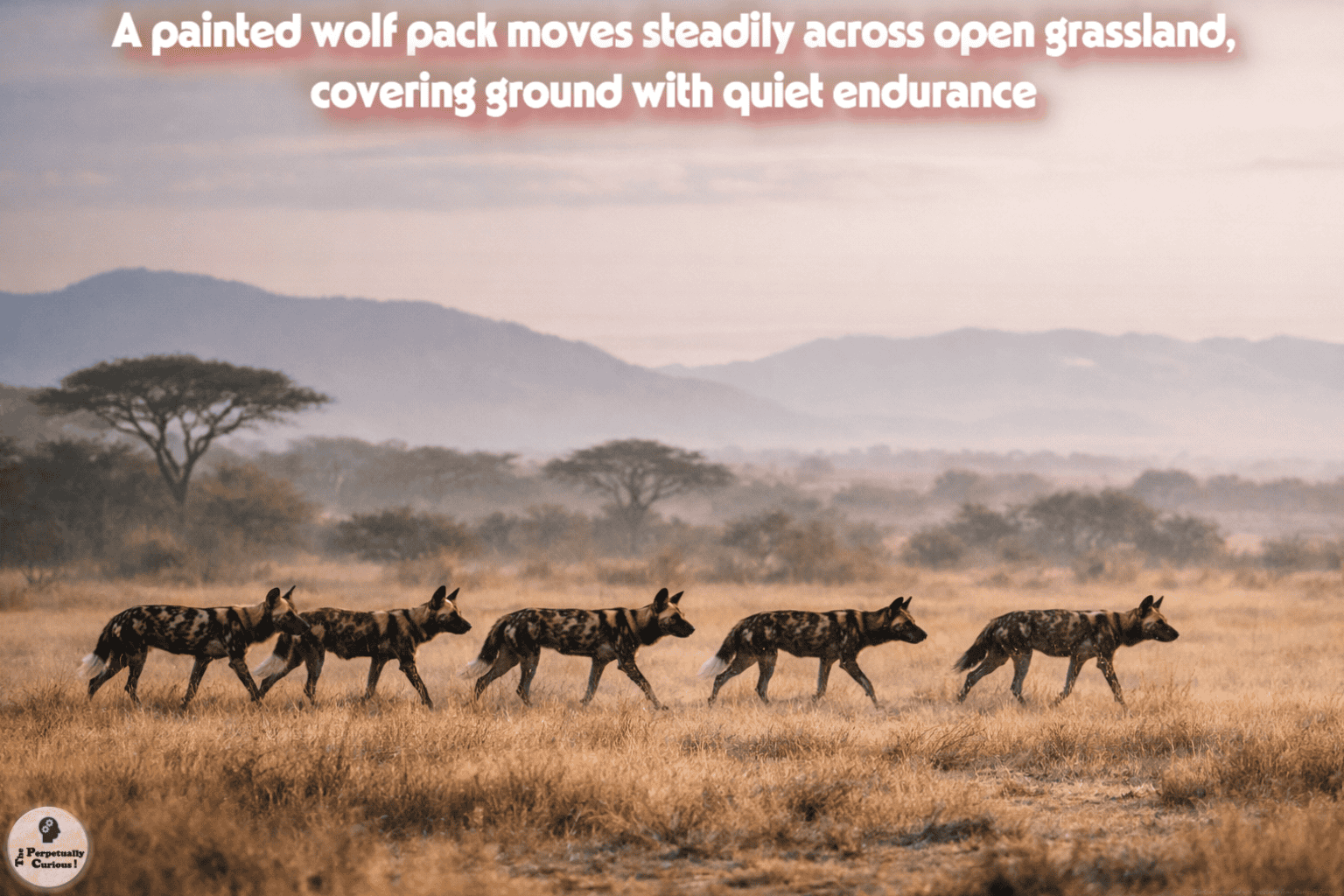
African wild dogs are often described as endurance hunters rather than ambush predators. In contrast to lions, leopards, or crocodiles, which rely heavily on stealth and short bursts of speed, wild dogs typically pursue prey over longer distances.
In sprinting pursuit, African wild dogs can exceed about 40 miles per hour (around 64 kilometers per hour), with higher figures sometimes reported. Their relatively large lungs and efficient circulatory system support this endurance.
During a hunt, different pack members may take on different roles. Some individuals may lead the chase, while others attempt to flank or cut off escape routes. African wild dogs are often highly successful hunters, and some studies report success rates above 60 percent, but estimates vary widely by habitat, prey type, and study design.
Terrain can influence hunting outcomes. Open plains may favor long pursuits, while thicker vegetation may require more strategic coordination and rapid adjustments in direction.
🦌 What African wild dogs eat
African wild dogs typically hunt medium‑sized ungulates. Common prey include impalas, gazelles, wildebeest calves, and smaller mammals. The exact prey profile may vary by region, depending on which species are most abundant and accessible.
Seasonal changes can influence prey availability. During wetter periods, some prey species may disperse more widely, while dry seasons may concentrate animals near water sources. Wild dogs adjust their movements accordingly.
Once a kill is made, wild dogs usually begin feeding very quickly. They often consume much of the carcass within minutes, which may reduce the chance that larger predators or scavengers will displace them.
🔊 Communication, bonds, and decision‑making
The social life of African wild dogs is reinforced by a varied communication system. Their vocal repertoire includes long‑distance hoo calls and other high‑pitched social sounds that help pack members stay connected during hunts and long‑distance travel. These sounds, combined with body posture and tail signals, support coordination across shifting terrain.
Packs often show measured responses to injured or ill members. Individuals may slow their pace to accommodate a weakened companion or continue to feed animals that are temporarily unable to hunt.
Some studies have described sneeze‑like sounds during pre‑hunt gatherings, which may play a role in group decision‑making. The exact mechanisms and consistency of this behavior are still being studied, but it highlights the complexity of pack coordination.
⚖️ Living alongside other predators
African wild dogs share their landscapes with lions, hyenas, leopards, and other carnivores. Interactions with these species can be intense. Lions may kill wild dogs as competitors, while spotted hyenas may attempt to steal kills. The social dynamics described in hyena clan life illustrate how competing carnivores shape one another’s behavior across shared landscapes.
These interactions influence where and when wild dogs travel. Packs may adjust their hunting routes to avoid areas with high lion activity, and they may feed rapidly to reduce the risk of losing a carcass.
This competition forms part of the broader ecological pressures that shape wild dog behavior and survival. These same pressures also heighten the challenges that modern conservation efforts must address.
🌿 Conservation status and ongoing pressures
African wild dogs are currently listed as Endangered on the IUCN Red List. There are estimated to be about 6,600 adults and yearlings across roughly 39 subpopulations, of which approximately 1,400 are reproductively mature individuals. They now occupy less than about 7 percent of their historical range.
Habitat loss and fragmentation, often associated with expanding agriculture, settlements, and infrastructure, are major pressures. Road networks can increase the risk of vehicle collisions, and wire snares set for other species may accidentally capture wild dogs.
Diseases such as rabies and canine distemper, frequently associated with domestic dogs, can have severe impacts on local populations. Because wild dog packs are highly social, disease outbreaks may spread rapidly within a group.
Connected landscapes and safe movement corridors are important for maintaining viable populations, especially for a species that depends on long‑distance travel and genetic exchange between packs.
🌌 A species shaped by movement and relationship
The life of African wild dogs is shaped by movement, cooperation, and the landscapes they traverse. Their long daily journeys link den sites, hunting grounds, and safe resting areas. Their social bonds connect generations and allow individuals to survive injuries, illness, and the challenges of raising large litters.
Their story is not only about efficiency as hunters. It is also about how a highly social carnivore navigates a world of shifting prey, competing predators, and human‑altered environments. In this sense, African wild dogs offer a vivid example of how ecology, behavior, and landscape are intertwined.
Pass this article along to someone curious and let the learning travel.
💡 Did You Know
💡 Did You Know?
🐾 African wild dogs have only four toes on each foot, unlike many other canids that have five on their forefeet. This feature is associated with their specialized running style.
🎨 No two African wild dogs have the same coat pattern, which allows researchers to identify individuals through photographs.
🐶 African wild dogs have unusually large litters for a canid. Litters typically range from about 6 to 16 pups, with an average of approximately 8 to 10.
⏳ Pups usually remain at the den for roughly 10 to 12 weeks before beginning to travel more regularly with the pack.
🥇 During feeding, pups and yearlings often receive priority access to food, a behavior that supports their rapid growth and development.
⚡ Wild dogs can consume a large portion of a carcass in minutes, which may reduce the chance that larger predators or scavengers will displace them.
🌞 Wild dogs often rest in shaded areas during the hottest hours of the day, a behavior that helps them manage heat in warm climates.
How do African wild dogs fit into the broader African ecosystem?
They influence prey populations, interact with other predators, and contribute to the ecological balance of their regions. Their role can be better understood by exploring how other species interact with savanna landscapes.
Do other animals show similar cooperative care systems?
Some species exhibit forms of cooperative care, including shared responsibilities in raising young. Comparable patterns can be seen in other highly social animals, although the specific structure varies by species.
How do environmental changes affect wild dog movement?
Shifts in rainfall, vegetation, and prey distribution can influence where packs travel. These changes can alter movement patterns across a landscape, especially in regions where seasonal conditions strongly affect prey availability.
What is the scientific name of the African wild dog?
The scientific name is Lycaon pictus, which means “painted wolf.”
How successful are African wild dogs at hunting?
Some studies report success rates above 60 percent, but estimates vary widely by habitat, prey type, and study design.
How fast can African wild dogs run?
In sprinting pursuit, they can exceed about 40 miles per hour (around 64 kilometers per hour), with higher figures sometimes reported.
What do African wild dogs usually eat?
They typically hunt medium‑sized ungulates such as impalas, gazelles, and wildebeest calves.
Where are African wild dogs found today?
They are found in scattered populations across parts of sub‑Saharan Africa, including Botswana, Tanzania, and Zimbabwe.
Why are African wild dogs considered Endangered?
They face pressures from habitat loss, disease, accidental snaring, and conflict with human activities. Their remaining range is small and fragmented, and populations are vulnerable to local declines.
How do African wild dogs communicate within the pack?
They communicate through long‑distance hoo calls, other high‑pitched social sounds, and a range of body and tail signals that help maintain coordination.
🤝 Share this story forward
If this piece offered clarity or perspective, you may consider sharing it with others who may value a deeper understanding of African wild dogs.
🔎 Related exploration
For readers who want to continue exploring the world of African wild dogs, this related video offers a broader look at their behavior and ecological presence.
“African Wild Dogs: Painted Wolves of the Savanna.” The Perpetually Curious!, May 2026.
https://www.theperpetuallycurious.org/articles/african-wild-dogs/Continue Exploring
For the curious mind: want to explore this theme through a few questions? Visit the Classic Quiz Studio, nestled under Explorations opens in a new tab ,and see where a few well-placed questions lead: Wilderness & Homestead Creatures Quizzesopens in a new tab
For what comes next
Site Updates gathers occasional notes, new additions, and ways to keep in touch. RSS brings new publications to your feed reader in chronological order.
Choose the path that speaks to you, and let the next curiosity find you wherever your wondering takes you.