
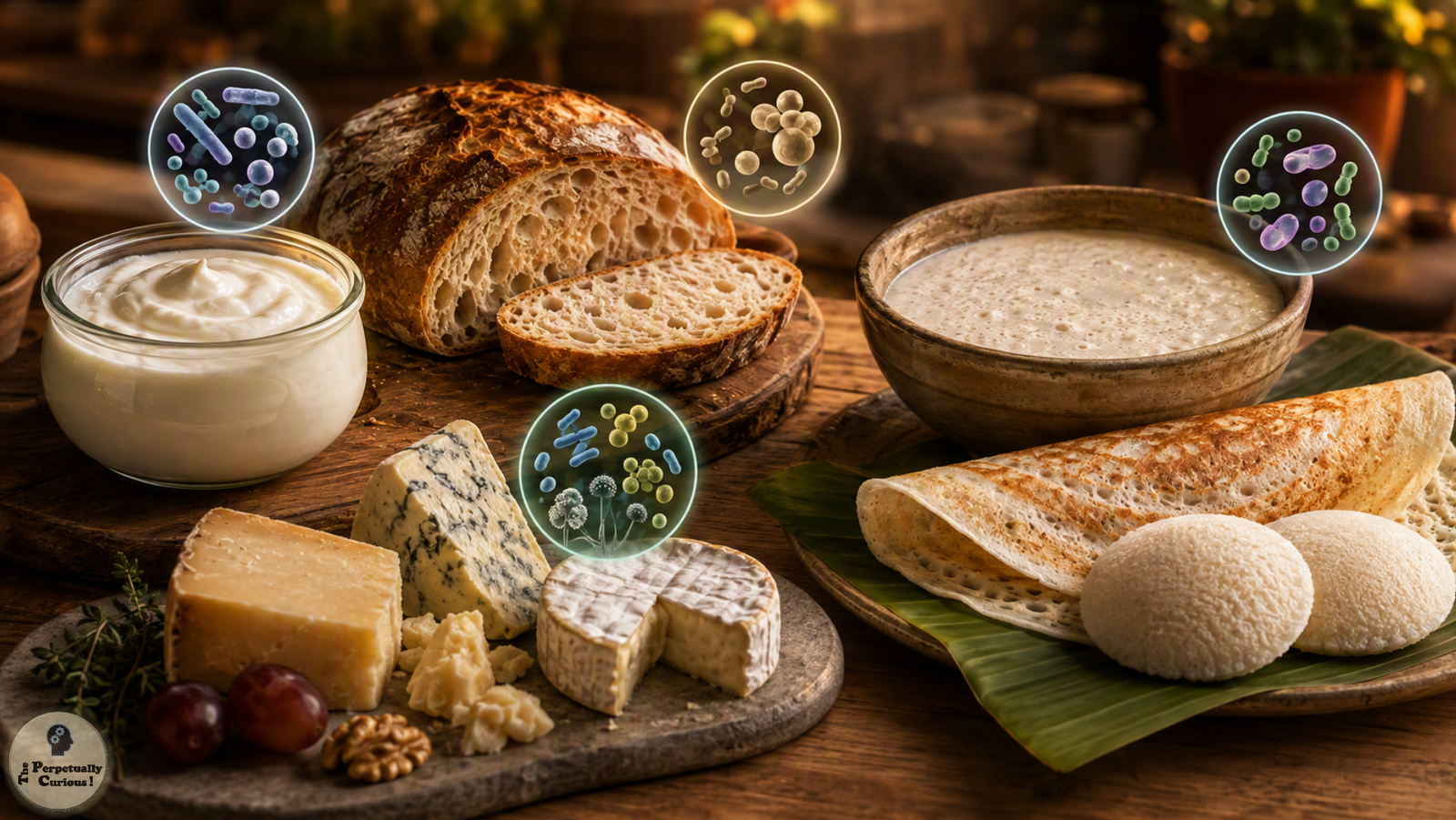
A bowl of milk thickening into yogurt, a loaf rising, or a rice-and-pulse batter turning lightly sour may seem like little more than waiting. Yet each transformation is driven by microorganisms, and the organisms at work are not interchangeable. Bacteria, yeasts, and sometimes molds thrive under different conditions and alter food in different ways.
Yogurt fermentation is driven chiefly by bacteria. Streptococcus thermophilus and Lactobacillus delbrueckii subsp. bulgaricus metabolize lactose and produce lactic acid. As acidity rises, milk proteins form a delicate gel, creating yogurt’s tart flavor and spoonable texture.
Bread makes clear why bacteria are only part of the story. In ordinary yeasted dough, baker’s yeast releases carbon dioxide, which becomes trapped within the dough and helps it rise. Sourdough supports a mixed community of yeasts and lactic acid bacteria. Yeasts provide much of the leavening, while bacteria produce acids and other metabolites that influence aroma, flavor, and dough structure.
Fermented rice-and-pulse batters used for foods such as dosa and idli support more variable microbial communities. Lactic acid bacteria and yeasts can shift in abundance as fermentation proceeds. Their metabolism lowers the batter’s pH and may generate gases and aroma compounds, changing its taste, scent, and texture. The community that develops depends on the ingredients, temperature, starter practice, and handling conditions.
Cheese-making introduces another pattern of microbial activity. Starter bacteria usually acidify the milk, while rennet or added acid commonly helps form curds. During ripening, additional bacteria, yeasts, or molds may continue transforming components of the cheese and shaping its texture and aroma.
Together, these foods illustrate fermented-food traditions in which ingredients and conditions create distinct environments for microbial life. Fermentation is therefore not one universal process carried out by the same microorganisms. Different ingredients and conditions favor different communities, and those communities carry out different chemical transformations.
What looks like stillness on a kitchen counter is active metabolism. Depending on the microbes and their surroundings, microbial metabolism can turn sugars and other food components into acids, gases, alcohols, and aroma compounds. Those different pathways help explain why milk thickens, dough expands, batter changes character, and cheese develops flavors that were absent at the beginning.
▶ Watch the companion Short on yogurt fermentation