
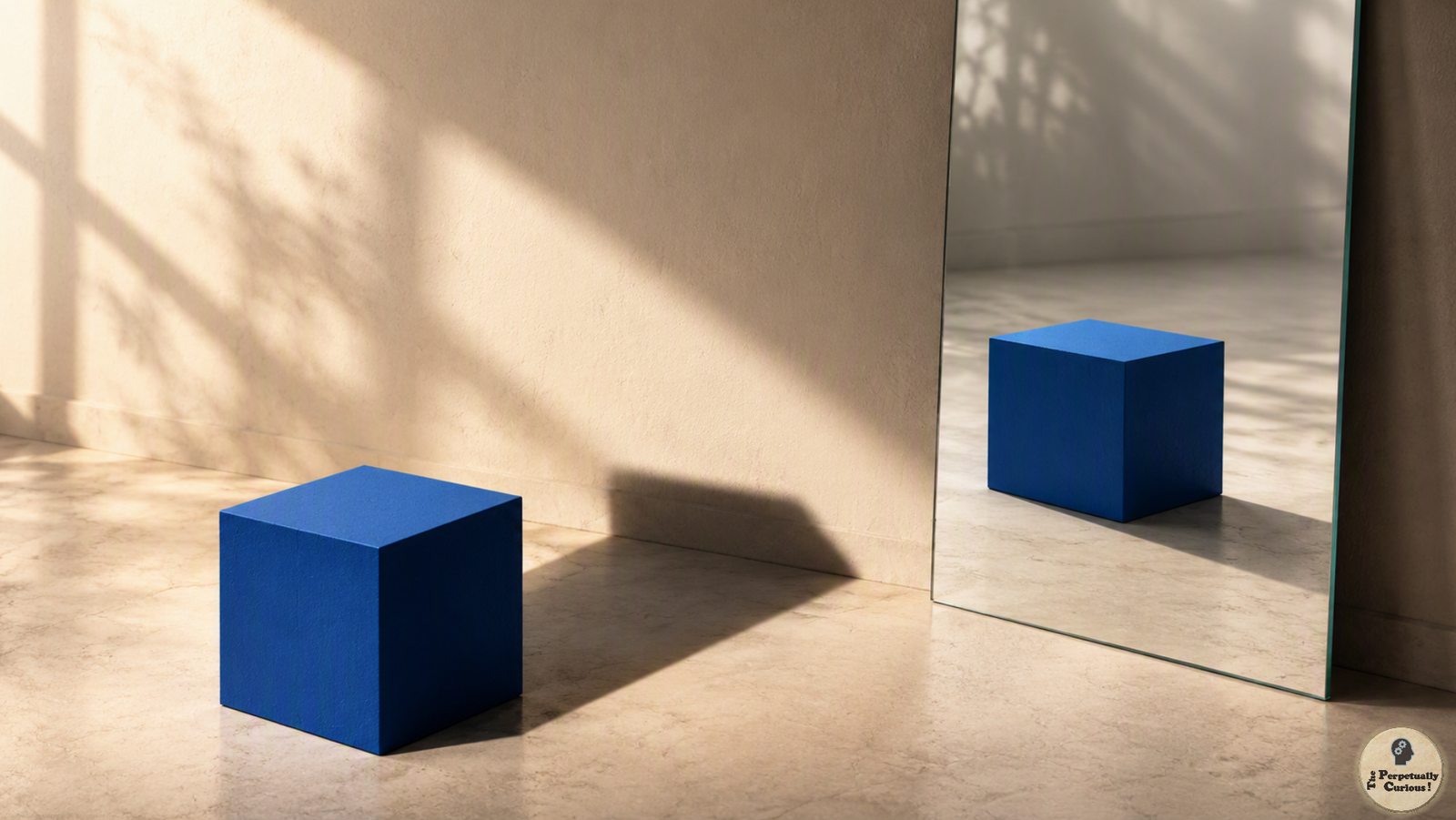
A shadow and a reflection can both trace the presence of an object, but they are produced by different fates of light.
A shadow forms when an object blocks some of the light traveling from a source toward another region. Behind the object, the blocked source contributes less illumination than it does nearby. With an extended source such as the Sun, some places may lose all of the direct light while neighboring places lose only part of it, producing darker and lighter regions of shadow. At larger scales, the same geometry produces eclipse shadows across the Solar System.
A reflection begins differently. Light reaches a surface and is redirected from it. Reflection does not require a mirror. Paper, skin, wood, water, and walls all return some light toward their surroundings. What makes a mirror unusual is not that it reflects while ordinary objects do not, but that its surface redirects light in an orderly, specular pattern. Rays arriving together remain geometrically organized enough for the eye to reconstruct a recognizable scene. That distinction is central to how mirrors form images.
This also explains why a shadow is not simply a dark reflection. The dark shape on a wall is an illumination pattern created because part of the source light has been blocked, rather than an image formed by orderly reflected rays from the object. A mirror image, by contrast, reaches the eye because reflected light from the scene has followed new paths from the mirror. The image can preserve color and detail because those redirected rays still carry information from the illuminated objects.
The two effects can even appear at the same time. A person standing in sunlight may cast a shadow on the ground while also appearing in a nearby window or mirror. Different rays encounter different surfaces and follow different paths.
The useful distinction is therefore not darkness versus brightness, or silhouette versus picture. A shadow marks where a path of illumination has been interrupted. A reflection is light that reached a surface and was redirected. Both begin when light meets matter, but they record two different outcomes of that encounter.