
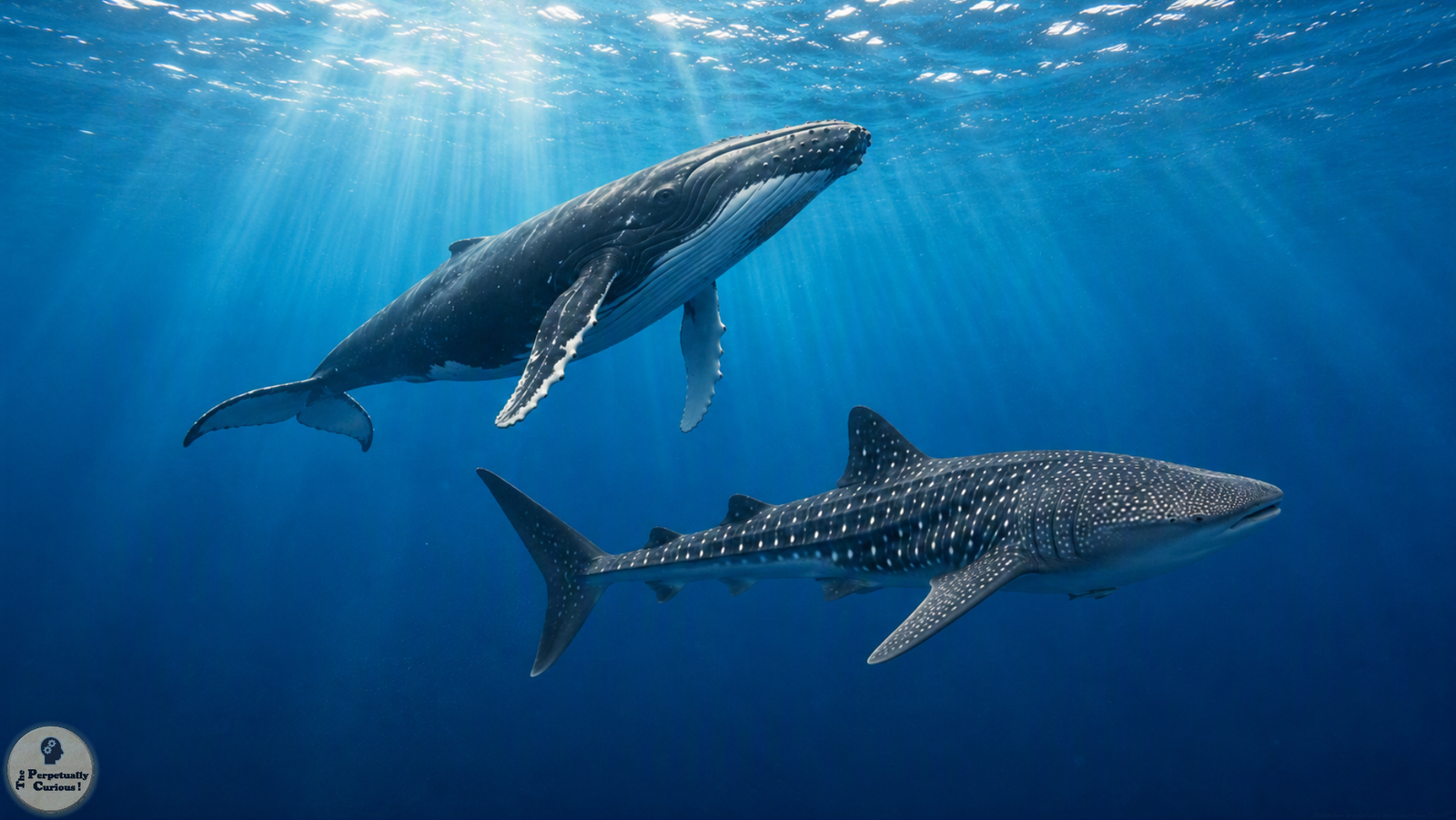
The name whale shark seems to bring two ocean giants together. Whale suggests an air-breathing marine mammal. Shark identifies a fish, and that is where the animal’s biology firmly places it. A whale shark is not part whale or a bridge between whales and sharks. It is a shark whose enormous size earned it a whale-sized name.
The resemblance is understandable. Whales and whale sharks can both grow to immense proportions, cross open oceans, and move with an unhurried presence. Baleen whales and whale sharks also gather small prey by filtering it from seawater. These similarities can make them appear like variations on the same biological design.
Their breathing reveals a fundamental difference. A whale shark extracts oxygen from water through its gills. Like other sharks, it has a skeleton made primarily of cartilage rather than bone. It may swim near the surface, but it does not need to surface for air.
A whale follows a different biological path. Whales are mammals. They breathe air through lungs, surface to inhale through blowholes, possess bony skeletons, and nourish their young with milk. No matter how long a whale remains underwater, its next breath must come from the atmosphere.
Their tails make the distinction visible. A whale’s tail ends in horizontal flukes that propel the animal through an up-and-down motion. A whale shark has the upright tail form typical of sharks and sweeps it mainly from side to side. Similar silhouettes therefore conceal different ways of moving through the same ocean.
Their filter-feeding methods also differ. Baleen whales strain prey such as krill or small fish from seawater using baleen plates. Whale sharks draw prey-bearing water into their broad mouths and retain plankton, fish eggs, and other small organisms with specialized filtering structures as the water passes out across the gills.
Common names often preserve resemblance more readily than biological relationships. In whale shark, whale conveys exceptional scale, while shark provides the classification. One is a mammal that dives while holding its breath. The other is a fish that continues breathing beneath the surface.
The name brings them together for an instant. Their bodies tell two different evolutionary stories.