Explore by topic, question, or idea. Find articles, reflections, videos, puzzles, and curiosity pathways gathered across the site.
Press Enter or select Search. A newly typed query starts globally; filters are applied only through the visible rail.
4 results for “chemical encounters”
- The Perpetually Curious! › Canonical › PhysicsArticle
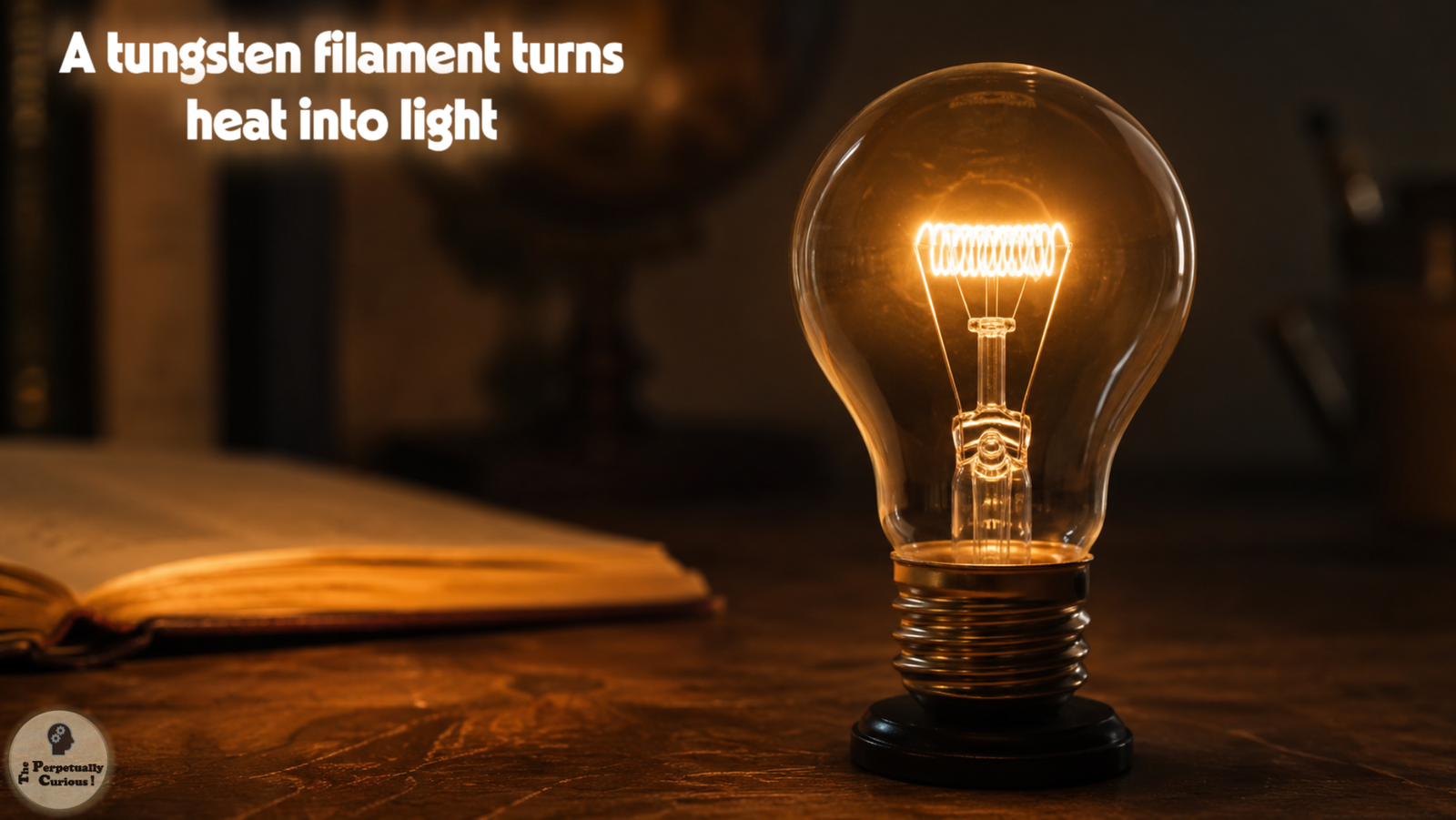
💡 Listening to Matter When It Learns to Glow: How an Incandescent Light Bulb Works
From section: 💡 Did You Know?✨ Light does not always require extreme heat. Firefly bioluminescence produces visible photons through a controlled chemical reaction with very little accompanying warmth, creating a striking contrast with incandescent light.
- The Perpetually Curious! › Canonical › PhysicsArticle
🌟 When Light Learns to Answer Back: The Quiet Science of Mirrors
From section: 🧪 Why mirrors are usually made of glass and metal… Light enters through the glass, reaches the metal, reflects from it, and then passes back through the glass to the observer. The glass protects the delicate metal film from scratches and chemical damage while also providing structural support so that the mirror remains flat over time.
- The Perpetually Curious! › Archives › PhysicsArticle
✨ Clean Chemistry: The Curious Physics Behind Soap Bubbles
From section: 📜 Nearly 5,000 Years of SudsMany synthetic detergents are less affected because their surfactants form more soluble salts, while builders can sequester hardness ions. 📜 Nearly 5,000 Years of Suds Soap‑making is one of humanity’s oldest chemical crafts.
- The Perpetually Curious! › Archives › PhysicsArticle
💡 How an Incandescent Filament Turns Resistance into Warm Light
From section: When heat enters the visible spectrumThis dependence on extreme heat separates incandescent light from firefly bioluminescence, where a controlled chemical reaction produces photons with very little accompanying warmth.