Explore by topic, question, or idea. Find articles, reflections, videos, puzzles, and curiosity pathways gathered across the site.
Press Enter or select Search. A newly typed query starts globally; filters are applied only through the visible rail.
72 results for “health science”
- The Perpetually Curious! › Archives › Botanical WondersArticle
🌱 Grafting: Where Science and Art Take Root
🌿 What is grafting? Grafting is the practice of joining two plants so they grow as one. The upper part, the scion, carries buds or shoots, and the lower part, the rootstock, provides the foundation and root system. When their tissues align and heal, the two plants merge into a single organism.
- The Perpetually Curious! › Archives › Wilderness & Homestead CreaturesArticle
🐘 Elephant Spa: Why Mud and Dust Baths Are Essential for Elephant Survival and Health
On a scorching afternoon in the African savanna, a herd of elephants gathers at a muddy waterhole. Trunks scoop and fling mud into the air, coating their massive bodies in a thick, earthy layer. The air is filled with the sound of splashes, the scent of wet earth, and the low…
- The Perpetually Curious! › Archives › Wilderness & Homestead CreaturesArticle
🦩 Why Do Flamingos Stand on One Leg? The Science Behind Their Iconic Pose
Flamingos are instantly recognizable for their vivid pink plumage, long slender legs, and graceful presence in shallow lakes and lagoons. Among their most distinctive traits is the habit of standing on one leg, a posture that often appears serene and effortless. This behavior is…
- The Perpetually Curious! › Archives › Biology & HealthArticle
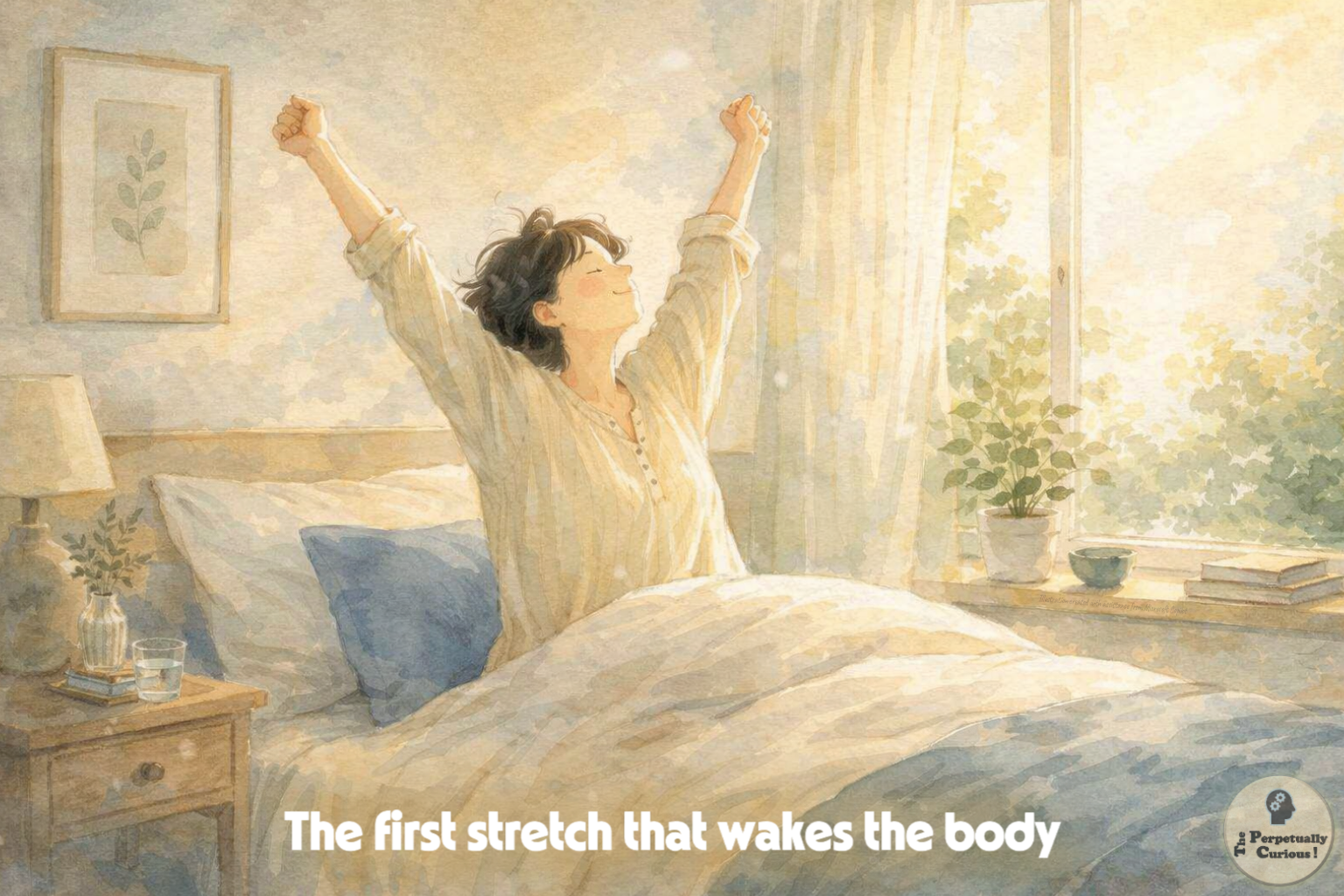
🌅 Pandiculation: How the Waking Stretch Restores Body Awareness
Before the eyes fully focus or the mind has assembled the day, the body may begin moving on its own. The arms rise, the chest opens, the back lengthens, and several muscles tighten before easing into release. This familiar sequence has a scientific name: pandiculation.
- The Perpetually Curious! › Archives › PhysicsArticle
✨ Clean Chemistry: The Curious Physics Behind Soap Bubbles
From section: 🚿 A Familiar Ritual, A Hidden Science🚿 A Familiar Ritual, A Hidden Science You pump soap into your hands, add water, and rub.
- The Perpetually Curious! › Archives › History, Arts, and CultureArticle
The Living Colors of Tradition: Where Chemistry Meets Cultural Wisdom in Natural Dyes 🎨
The transformation of white cloth into vibrant color represents one of humanity's oldest intersections between science and culture. Long before chemists understood molecular structures and electron orbitals, traditional dyers around the world were conducting sophisticated…
- The Perpetually Curious! › Archives › Botanical WondersArticle
Rubber Production Explained: From Tree Latex to Durable Elasticity 🌿
From Milky Latex to Elastic Resilience, and the Quiet Science Behind It A tire hums over rain-dark pavement. A rubber band stretches, and returns. A gasket holds pressure where metal meets metal. A glove yields to motion without tearing.
- The Perpetually Curious! › Archives › PhysicsArticle
🔬 The Light That Sees Through You: How X-Rays Illuminate the Hidden World Within
On the evening of November 8, 1895, a quiet laboratory in Würzburg, Germany, became the setting for one of science's most luminous accidents. Wilhelm Conrad Röntgen, a methodical and deeply curious physicist, had been experimenting with cathode ray tubes, which were sealed glass…
- The Perpetually Curious! › Archives › Food & LifestyleArticle
The Tale of Two Proteins: Understanding the A1 and A2 Milk Distinction 🥛
In the vast landscape of dairy choices that line our grocery shelves, a particular distinction has captured the attention of health-conscious consumers and dairy scientists alike. The difference between A1 and A2 milk represents a fascinating intersection of genetics, nutrition…
- The Perpetually Curious! › Archives › Botanical WondersArticle
🌳🍂 Harmony of Hues: Painting the Landscape with Crimson and Gold
🍁 Have you ever wondered why many leaves do not simply fade in autumn, but instead ignite into crimson, gold, and amber while others settle quietly into softer browns?