Explore by topic, question, or idea. Find articles, reflections, videos, puzzles, and curiosity pathways gathered across the site.
Press Enter or select Search. A newly typed query starts globally; filters are applied only through the visible rail.
10 results for “humanity many new years”
- The Perpetually Curious! › Archives › PhysicsArticle
✨ Clean Chemistry: The Curious Physics Behind Soap Bubbles
From section: 📜 Nearly 5,000 Years of SudsFrom those crude fat‑and‑ash blends to today’s engineered surfactants, the evolution of soap mirrors humanity’s growing mastery of chemistry.
- The Perpetually Curious! › Canonical › PhysicsArticle
🌟 When Light Learns to Answer Back: The Quiet Science of Mirrors
Every morning, many people stand before a mirror and watch light return to them as a familiar face. The experience feels effortless, as though the glass simply agrees to show what is already there. Yet behind that calm surface lies a precise exchange between light and matter.
- The Perpetually Curious! › Archives › PhysicsArticle
⚗️ The Invisible Revolution: Understanding the Ancient Art and Modern Science of Glass Manufacturing
Where Sand Becomes Transparent 🏛️ Glass surrounds us so completely that we rarely pause to consider its profound mystery. This transparent solid, neither truly liquid nor conventionally crystalline, represents one of humanity's most transformative discoveries.
- The Perpetually Curious! › Archives › PhysicsArticle
Why Starlight Does Not Mix: How the Night Sky Keeps Each Star’s Signature Intact ✨🌌
Step outside on a clear night and look up. Light arrives from so many distant suns that the sky can feel like a single luminous fabric, stitched from countless journeys. It is natural to wonder what happens along the way.
- The Perpetually Curious! › Archives › PhysicsArticle
The Cosmic Recipe: Understanding the Physical Criteria for Star Formation 🌟
Opening the Cosmic Kitchen 🌌 In the vast expanse of our universe, where darkness stretches for light-years and cold reigns supreme, something extraordinary happens. Stars are born. This process, far from being a simple ignition, represents one of nature's most complex and beautiful phenomena.
- The Perpetually Curious! › Archives › PhysicsArticle
🚀⚡ Pioneering Power in Deep Space: The Essential Role of Radioisotope Thermoelectric Generators (RTGs)
Far beyond the reach of strong sunlight, some of humanity’s greatest explorers rely on one of the most dependable power sources ever built: Radioisotope Thermoelectric Generators (RTGs).
- The Perpetually Curious! › Canonical › PhysicsArticle
💡 Listening to Matter When It Learns to Glow: How an Incandescent Light Bulb Works
From section: ⏳ Lifespan, wear, and the delicate fate of a filament… The filament’s thermal inertia smooths most of this variation, making it far less noticeable than the flicker associated with many other lighting systems.
- The Perpetually Curious! › Archives › PhysicsArticle
🌫️ How Radar Listens to the Sky: The Quiet Science Behind the Sweep
This article follows that journey from the first whisper of a pulse to the structured images that appear on weather maps, tracing how physical principles become the patterns that many viewers recognize on their screens.
- The Perpetually Curious! › Archives › PhysicsArticle
🦈 Why Do Sharks Float? The Science Behind Their Buoyancy
From section: 🌊 Opening DiveAs cartilaginous fishes, many sharks approach near‑neutral buoyancy through a combination of oil‑rich livers, lightweight skeletons, and hydrodynamic lift.
- The Perpetually Curious! › Archives › PhysicsArticle
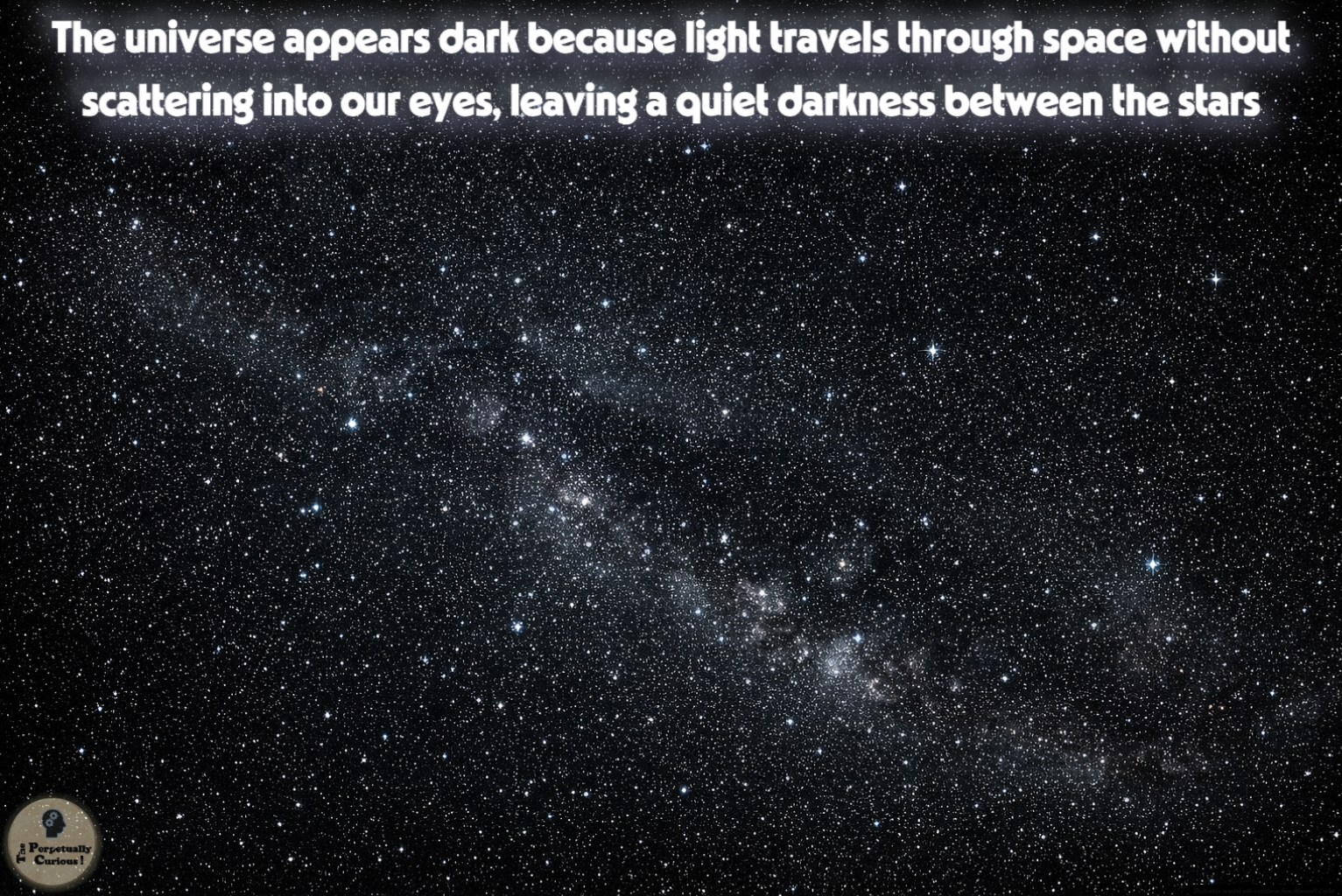
🌌 Why Space Looks Dark: Light, Matter, and the Quiet Cosmos
From section: How light becomes visibleA daytime sky is bright because countless air molecules scatter sunlight in many directions, allowing light to reach the eye even when one is not looking directly at the Sun.