Explore by topic, question, or idea. Find articles, reflections, videos, puzzles, and curiosity pathways gathered across the site.
Press Enter or select Search. A newly typed query starts globally; filters are applied only through the visible rail.
67 results for “the quiet science of cooking oils”
- The Perpetually Curious! › Archives › PhysicsArticle
🦈 Why Do Sharks Float? The Science Behind Their Buoyancy
🌊 Opening Dive Sharks are among the ocean’s most formidable creatures, yet they face a unique challenge: staying afloat without the gas‑filled swim bladders used by most bony fishes.
- The Perpetually Curious! › Archives › Botanical WondersArticle
Rubber Production Explained: From Tree Latex to Durable Elasticity 🌿
From Milky Latex to Elastic Resilience, and the Quiet Science Behind It A tire hums over rain-dark pavement. A rubber band stretches, and returns. A gasket holds pressure where metal meets metal. A glove yields to motion without tearing.
- The Perpetually Curious! › Archives › PhysicsArticle
🔬 The Light That Sees Through You: How X-Rays Illuminate the Hidden World Within
On the evening of November 8, 1895, a quiet laboratory in Würzburg, Germany, became the setting for one of science's most luminous accidents. Wilhelm Conrad Röntgen, a methodical and deeply curious physicist, had been experimenting with cathode ray tubes, which were sealed glass…
- The Perpetually Curious! › Archives › Wilderness & Homestead CreaturesArticle
The Symphony of Stripes: Decoding Nature's Most Elegant Barcode 🦓
Where Mathematics Meets Majesty ✨ A zebra against the African sunrise creates a living masterwork, stripes that have inspired human art and science for millennia.
- The Perpetually Curious! › Archives › PhysicsArticle
⚗️ The Invisible Revolution: Understanding the Ancient Art and Modern Science of Glass Manufacturing
From section: Where Sand Becomes Transparent 🏛️The ancient Roman historian Pliny the Elder recounted a legendary story of Phoenician merchants accidentally discovering glass when cooking fires on sandy beaches fused sodium-rich plant ashes with silica.
- The Perpetually Curious! › Archives › ChemistryArticle
The Secret Science of Scent: How Perfume Transforms Molecules into Memories 🌸
From section: The Dawn of Fragrance 📜Archaeological evidence from ancient Mesopotamia reveals early aromatic practices, with clay tablets and vessels suggesting sophisticated understanding of fragrant resins and oils.
- The Perpetually Curious! › Archives › Botanical WondersArticle
🌿 How Plants Tell Time: The Quiet Clocks That Shape the Living World
This quiet precision hints at an internal sense of time.Read more »
- The Perpetually Curious! › Archives › Wilderness & Homestead CreaturesArticle
🐙 Eight-Armed Genius: The Science of Octopus Intelligence & Ink
From section: Meeting the Ocean's Most Enigmatic Mind 🌀Having evolved across hundreds of millions of years from shelled ancestors into approximately 300 distinct species, each octopus carries unique adaptations that seem borrowed from science fiction rather than natural selection.
- The Perpetually Curious! › Archives › Wilderness & Homestead CreaturesArticle
🐕 The Science and Wonder of Dog Crossbreeds: Understanding Genetic Diversity in Our Canine Companions
This remarkable shift reflects both advancing genetic science and changing perspectives on canine companionship.
- The Perpetually Curious! › Archives › Planet EarthArticle
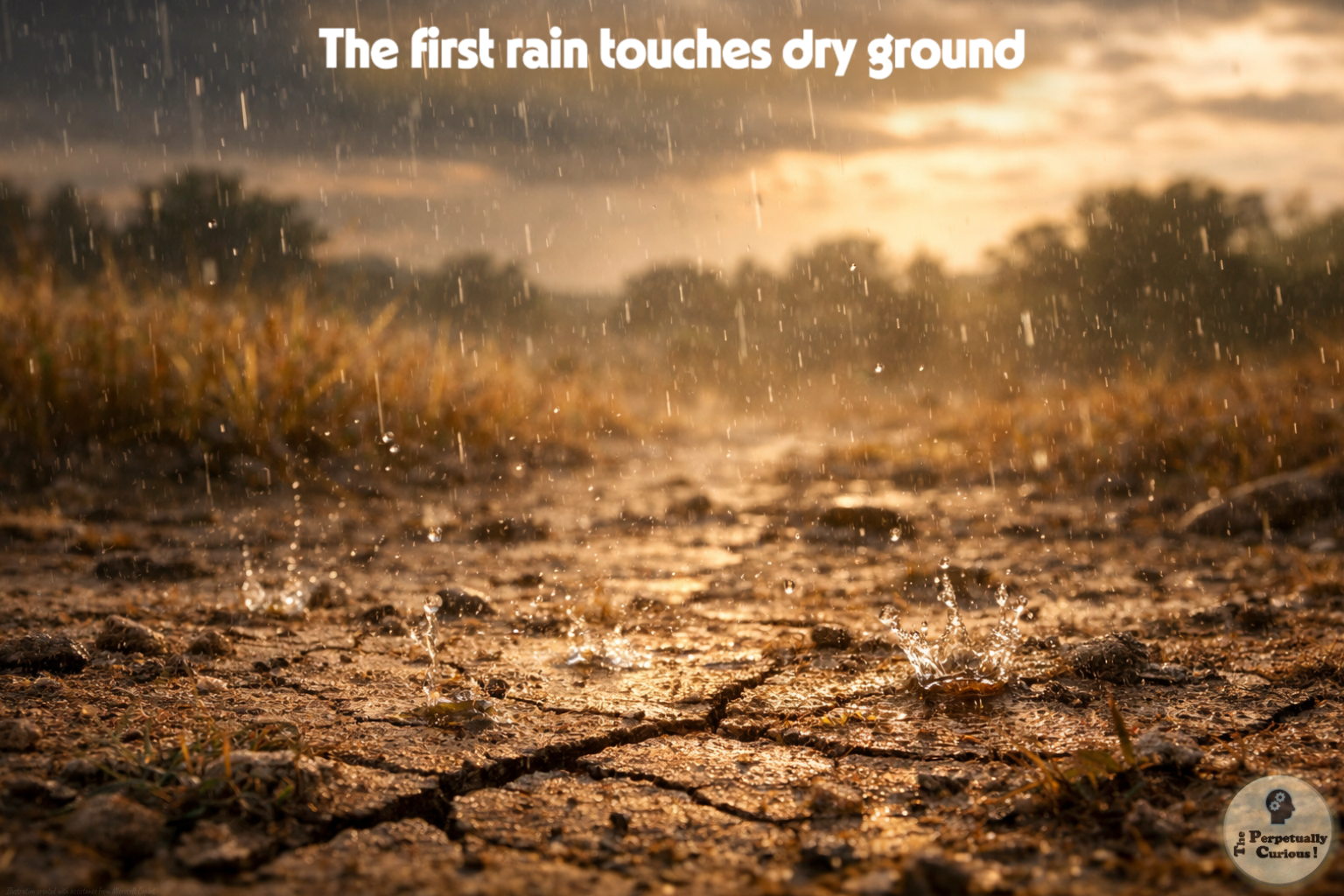
🌧️ Petrichor: How First Rain Lifts Earth’s Hidden Scent
The smell of rain often arrives before we think about its science. A dry path darkens, a garden bed drinks in the first drops, and a scent rises that seems older than the moment itself. It can feel as if rain has a fragrance of its own, but the water is only part of the story.