Explore by topic, question, or idea. Find articles, reflections, videos, puzzles, and curiosity pathways gathered across the site.
Press Enter or select Search. A newly typed query starts globally; filters are applied only through the visible rail.
11 results for “the quiet science of cooking oils”
- The Perpetually Curious! › Canonical › PhysicsArticle
🌟 When Light Learns to Answer Back: The Quiet Science of Mirrors
… Its quiet clarity depends on physics at a scale far smaller than ordinary sight, on materials shaped with remarkable smoothness, and on perception that turns returning light into recognition. …
- The Perpetually Curious! › Archives › PhysicsArticle
🌫️ How Radar Listens to the Sky: The Quiet Science Behind the Sweep
A radar dish turning slowly against the horizon often feels like a quiet sentinel, listening for stories carried on invisible waves. Although the technology is rooted in physics and engineering, its practice has a quiet elegance, as radar sends brief pulses of energy into the…
- The Perpetually Curious! › Archives › PhysicsArticle
🐋 How Do Whales Float? The Science of Buoyancy Beneath the Waves
Let us dive into the science of buoyancy and discover how whales master it.
- The Perpetually Curious! › Archives › PhysicsArticle
🦈 Why Do Sharks Float? The Science Behind Their Buoyancy
🌊 Opening Dive Sharks are among the ocean’s most formidable creatures, yet they face a unique challenge: staying afloat without the gas‑filled swim bladders used by most bony fishes.
- The Perpetually Curious! › Archives › PhysicsArticle
🔬 The Light That Sees Through You: How X-Rays Illuminate the Hidden World Within
On the evening of November 8, 1895, a quiet laboratory in Würzburg, Germany, became the setting for one of science's most luminous accidents. Wilhelm Conrad Röntgen, a methodical and deeply curious physicist, had been experimenting with cathode ray tubes, which were sealed glass…
- The Perpetually Curious! › Archives › PhysicsArticle
⚗️ The Invisible Revolution: Understanding the Ancient Art and Modern Science of Glass Manufacturing
From section: Where Sand Becomes Transparent 🏛️The ancient Roman historian Pliny the Elder recounted a legendary story of Phoenician merchants accidentally discovering glass when cooking fires on sandy beaches fused sodium-rich plant ashes with silica.
- The Perpetually Curious! › Archives › PhysicsArticle
✨ Clean Chemistry: The Curious Physics Behind Soap Bubbles
From section: 🚿 A Familiar Ritual, A Hidden Science🚿 A Familiar Ritual, A Hidden Science You pump soap into your hands, add water, and rub.
- The Perpetually Curious! › Archives › PhysicsArticle
🌍 When Worlds Pull: Gravity Across the Planets and What It Reveals About Them
Gravity is the quiet sculptor of the cosmos. It shapes the paths of planets, guides the drift of moons, and anchors every step taken on the surface of a world. When we compare gravity across the Solar System, we begin to see how each planet carries its own gravitational signature.
- The Perpetually Curious! › Canonical › PhysicsArticle
💡 Listening to Matter When It Learns to Glow: How an Incandescent Light Bulb Works
… It reveals how carefully chosen materials can endure extreme conditions, how temperature can shape color, and how an unseen current can become a visible presence. In that transformation, an everyday object becomes a quiet invitation to look more closely.
- The Perpetually Curious! › Archives › PhysicsArticle
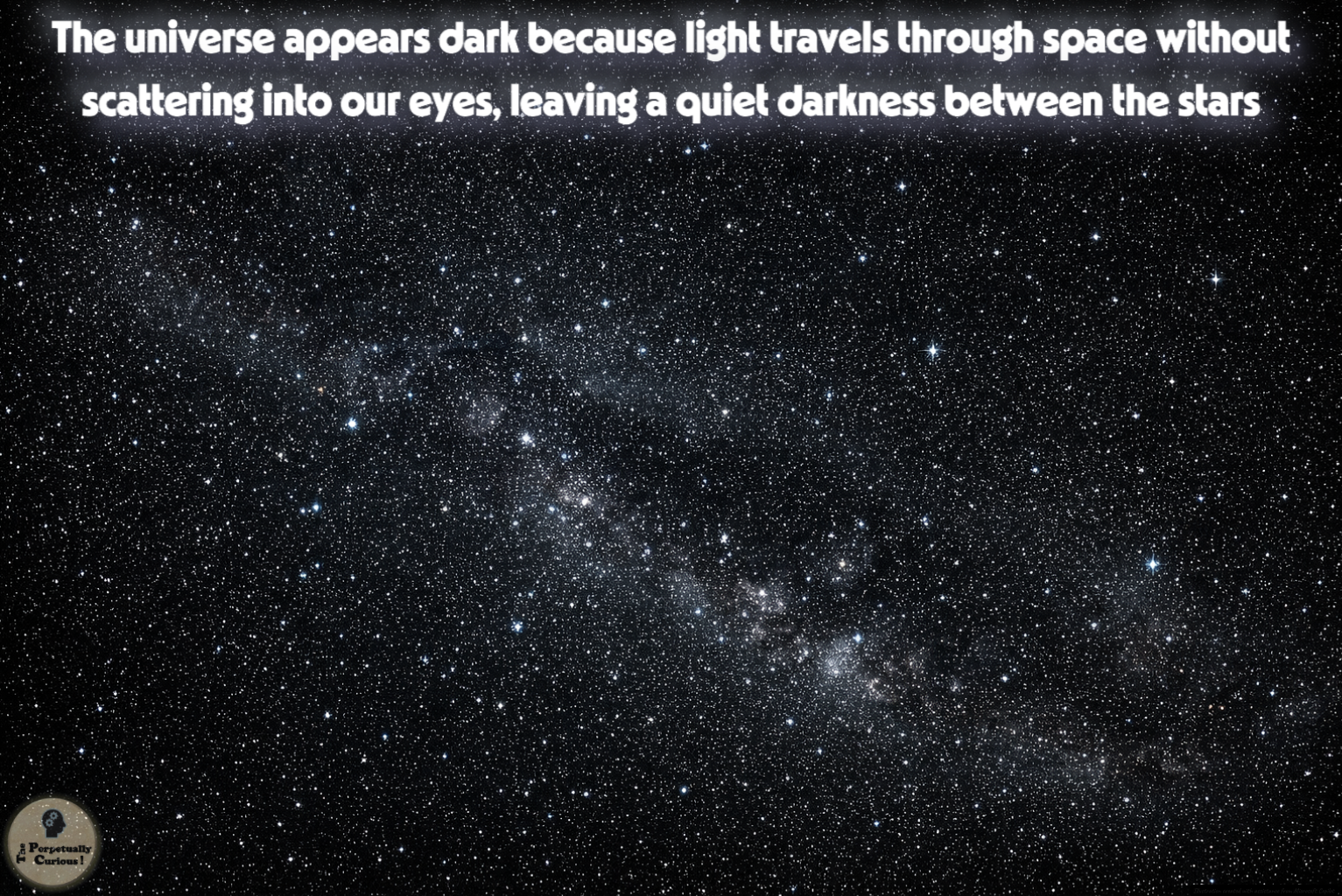
🌌 Why Space Looks Dark: Light, Matter, and the Quiet Cosmos
Space can look surprisingly dark, even in a universe filled with stars. That darkness is not simply the absence of light. It is often the result of how light travels, what it meets, and what it does not meet. On Earth, daylight becomes a bright blue sky because sunlight…