Explore by topic, question, or idea. Find articles, reflections, videos, puzzles, and curiosity pathways gathered across the site.
Press Enter or select Search. A newly typed query starts globally; filters are applied only through the visible rail.
9 results for “the science behind nature geometry”
- The Perpetually Curious! › Archives › PhysicsArticle
🦈 Why Do Sharks Float? The Science Behind Their Buoyancy
🌊 Opening Dive Sharks are among the ocean’s most formidable creatures, yet they face a unique challenge: staying afloat without the gas‑filled swim bladders used by most bony fishes.
- The Perpetually Curious! › Archives › PhysicsArticle
✨ Clean Chemistry: The Curious Physics Behind Soap Bubbles
From section: 🚿 A Familiar Ritual, A Hidden Science🚿 A Familiar Ritual, A Hidden Science You pump soap into your hands, add water, and rub.
- The Perpetually Curious! › Archives › PhysicsArticle
🐋 How Do Whales Float? The Science of Buoyancy Beneath the Waves
Let us dive into the science of buoyancy and discover how whales master it.
- The Perpetually Curious! › Archives › PhysicsArticle
🌫️ How Radar Listens to the Sky: The Quiet Science Behind the Sweep
A radar dish turning slowly against the horizon often feels like a quiet sentinel, listening for stories carried on invisible waves. Although the technology is rooted in physics and engineering, its practice has a quiet elegance, as radar sends brief pulses of energy into the…
- The Perpetually Curious! › Archives › PhysicsArticle
⚗️ The Invisible Revolution: Understanding the Ancient Art and Modern Science of Glass Manufacturing
Where Sand Becomes Transparent 🏛️ Glass surrounds us so completely that we rarely pause to consider its profound mystery. This transparent solid, neither truly liquid nor conventionally crystalline, represents one of humanity's most transformative discoveries.
- The Perpetually Curious! › Archives › PhysicsArticle
🔬 The Light That Sees Through You: How X-Rays Illuminate the Hidden World Within
On the evening of November 8, 1895, a quiet laboratory in Würzburg, Germany, became the setting for one of science's most luminous accidents. Wilhelm Conrad Röntgen, a methodical and deeply curious physicist, had been experimenting with cathode ray tubes, which were sealed glass…
- The Perpetually Curious! › Archives › PhysicsArticle
The Cosmic Recipe: Understanding the Physical Criteria for Star Formation 🌟
Opening the Cosmic Kitchen 🌌 In the vast expanse of our universe, where darkness stretches for light-years and cold reigns supreme, something extraordinary happens. Stars are born. This process, far from being a simple ignition, represents one of nature's most complex and beautiful phenomena.
- The Perpetually Curious! › Archives › PhysicsArticle
❄️⚡ The Peltier Effect: When Electricity Becomes Heat Flow
From section: 🌍 IntroductionThe duality between electricity and heat flow lies at the heart of thermoelectric science and continues to inspire new applications.
- The Perpetually Curious! › Archives › PhysicsArticle
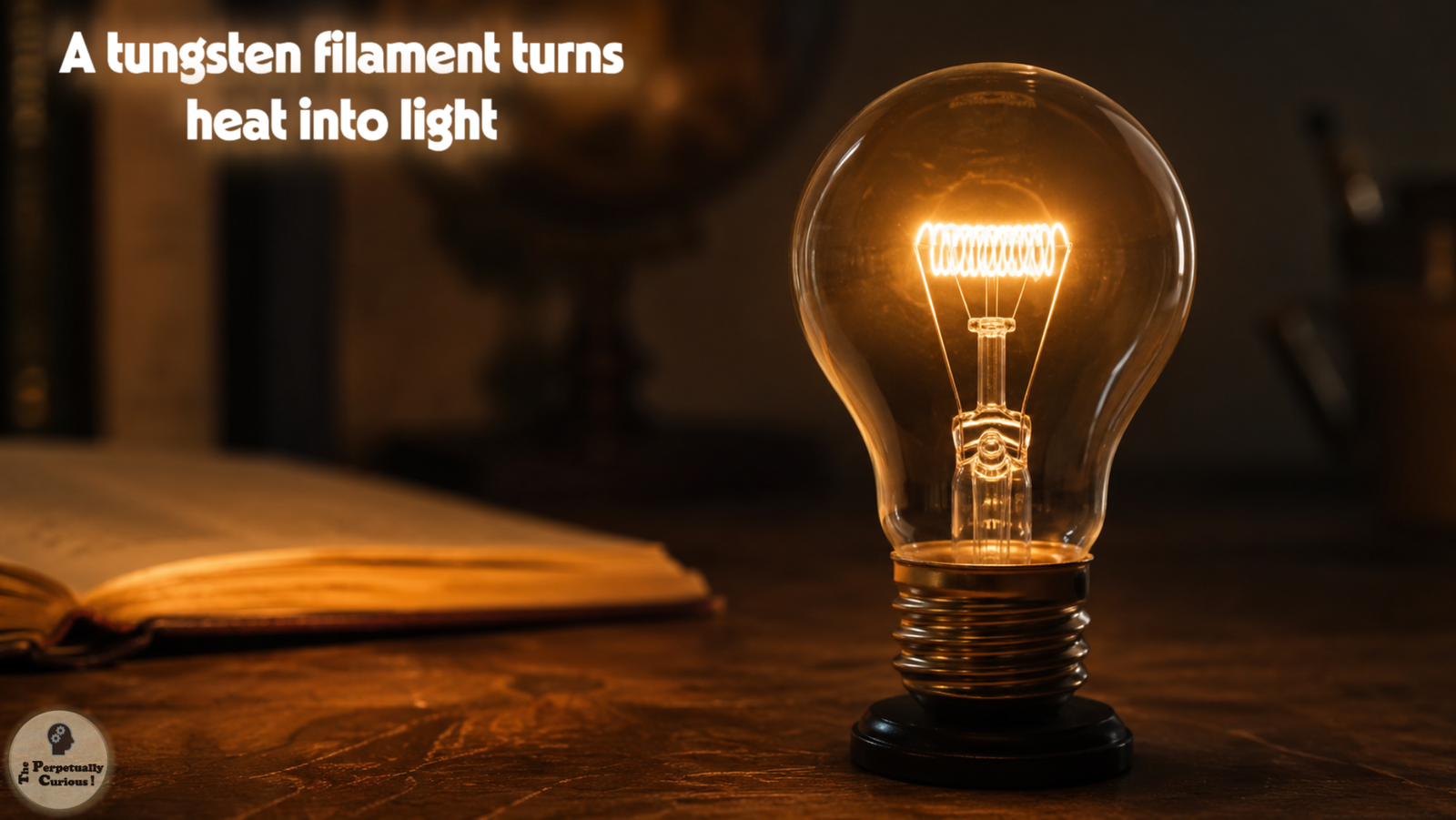
💡 How an Incandescent Filament Turns Resistance into Warm Light
From section: Why the glow remains warmBeyond the filament’s first glow, the complete article on our main site keeps the bulb’s whole engineered environment in view, including its coiled geometry, protective gas, glass envelope, energy losses, gradual aging, and the later shift from hot metal to semiconductor light.