Explore by topic, question, or idea. Find articles, reflections, videos, puzzles, and curiosity pathways gathered across the site.
Press Enter or select Search. A newly typed query starts globally; filters are applied only through the visible rail.
14 results for “why it rains and how raindrops are born”
- The Perpetually Curious! › Archives › Planet EarthArticle
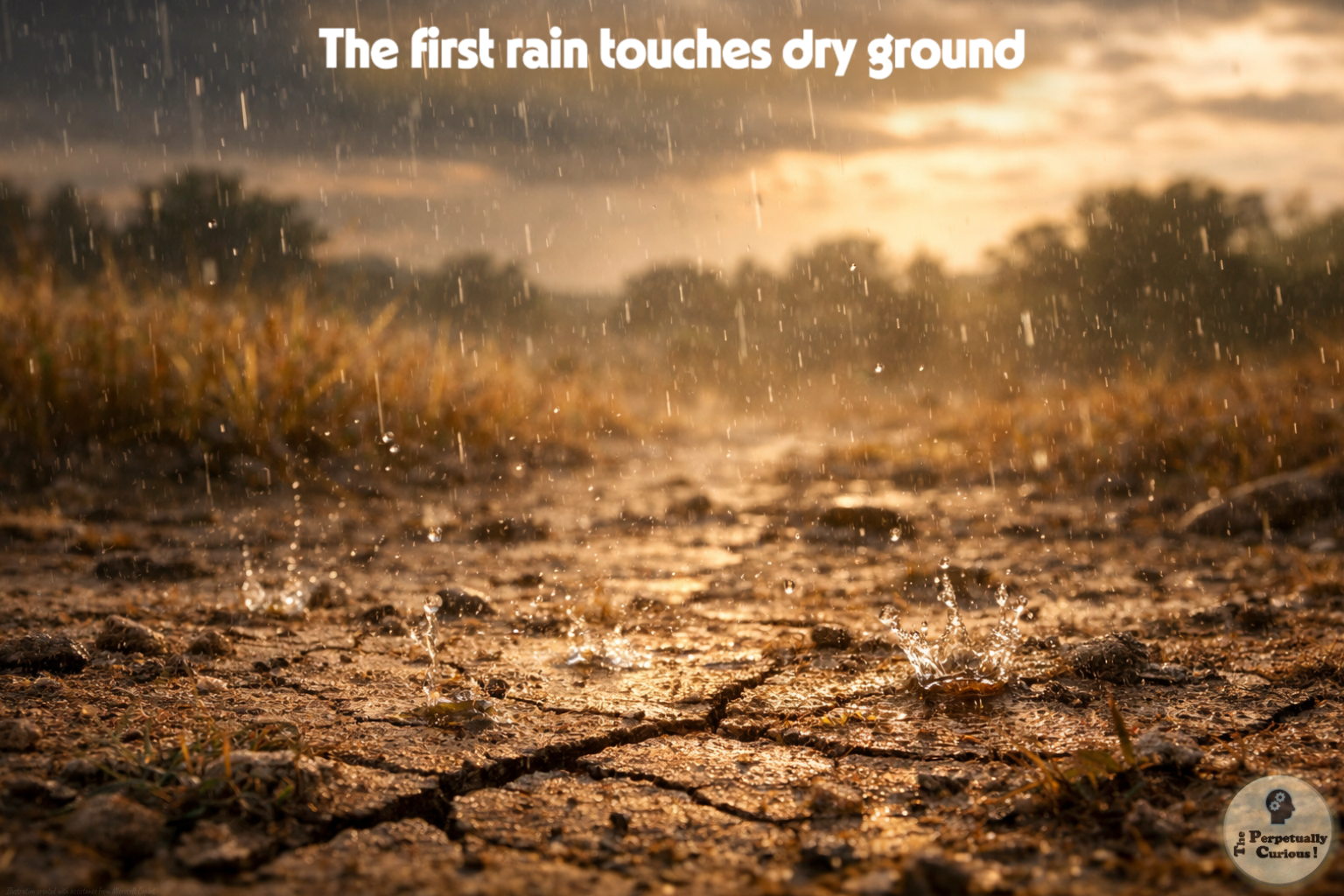
🌧️ Petrichor: How First Rain Lifts Earth’s Hidden Scent
From section: When raindrops become tiny scent liftersWhen raindrops become tiny scent lifters A raindrop hitting dry, porous ground is a small impact event.
- The Perpetually Curious! › Archives › PhysicsArticle
The Cosmic Recipe: Understanding the Physical Criteria for Star Formation 🌟
Opening the Cosmic Kitchen 🌌 In the vast expanse of our universe, where darkness stretches for light-years and cold reigns supreme, something extraordinary happens. Stars are born. This process, far from being a simple ignition, represents one of nature's most complex and beautiful phenomena.
- The Perpetually Curious! › Archives › Planet EarthArticle
When Nature's Fury Spirals: Understanding the Science Behind Nor'easters 🌊
Few weather phenomena capture the raw power of nature quite like a nor'easter bearing down on the Eastern Seaboard. These massive storm systems, born from the collision of opposing air masses over the Atlantic, represent some of the most complex and fascinating atmospheric dynamics on Earth.
- The Perpetually Curious! › Archives › Planet EarthArticle
❄️ Antarctica: Southernmost Continent’s Frozen Symphony of Silence and Light
From section: Where Silence Breathes and Light Dances: Antarctica's Living SymphonyBorn when solar wind, streams of charged particles from our sun, meets Earth's magnetic field and collides with gases high in the atmosphere, these luminous waves pulse across the dark in dreamlike hues.
- The Perpetually Curious! › Archives › Planet EarthArticle
🌊 The Great Lakes: North America's Temporary Inland Seas
Picture yourself holding a glass of water in Chicago. That water contains a mixture of ages, with some molecules that fell as rain just years ago and others that have circulated through Lake Superior for nearly two centuries.
- The Perpetually Curious! › Archives › Cosmic ExplorationArticle
When the Sky Falls: Extraordinary Precipitation Across Our Solar System 🌧️
We call it rain when water falls from Earth's clouds, but that simple word stretches and transforms across our solar system into phenomena that challenge our earthbound vocabulary. Should we call it rain when methane cascades onto Titan's hydrocarbon shores?
- The Perpetually Curious! › Archives › Botanical WondersArticle
Rubber Production Explained: From Tree Latex to Durable Elasticity 🌿
From Milky Latex to Elastic Resilience, and the Quiet Science Behind It A tire hums over rain-dark pavement. A rubber band stretches, and returns. A gasket holds pressure where metal meets metal. A glove yields to motion without tearing.
- The Perpetually Curious! › Archives › Botanical WondersArticle
The Riverbank Architect: Discovering the Remarkable Arjuna Tree 🌊
Stand beneath an ancient Arjuna tree during monsoon season and you'll understand why riverside communities have revered these giants for millennia. Water droplets cascade from leaves that shimmer like green glass, while the smooth bark releases a subtle earthy fragrance after rain.
- The Perpetually Curious! › Archives › Planet EarthArticle
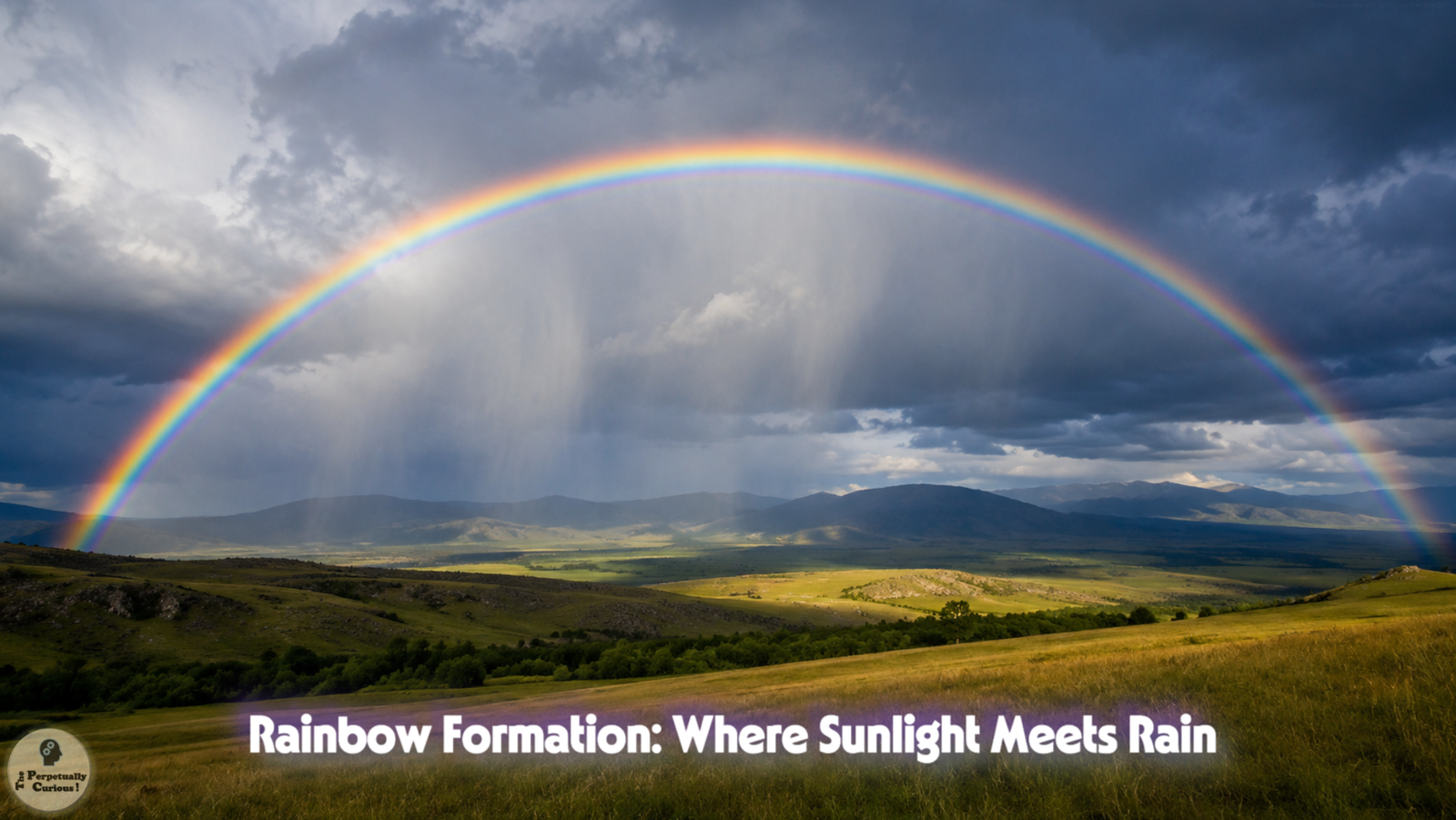
🌈 Rainbow Formation: Why Every Observer Sees a Different Arc
From section: A rainbow begins with a viewpointTheir atmospheric origin is a separate process, traced through how raindrops grow inside clouds.
- The Perpetually Curious! › Archives › Environment & SustainabilityArticle
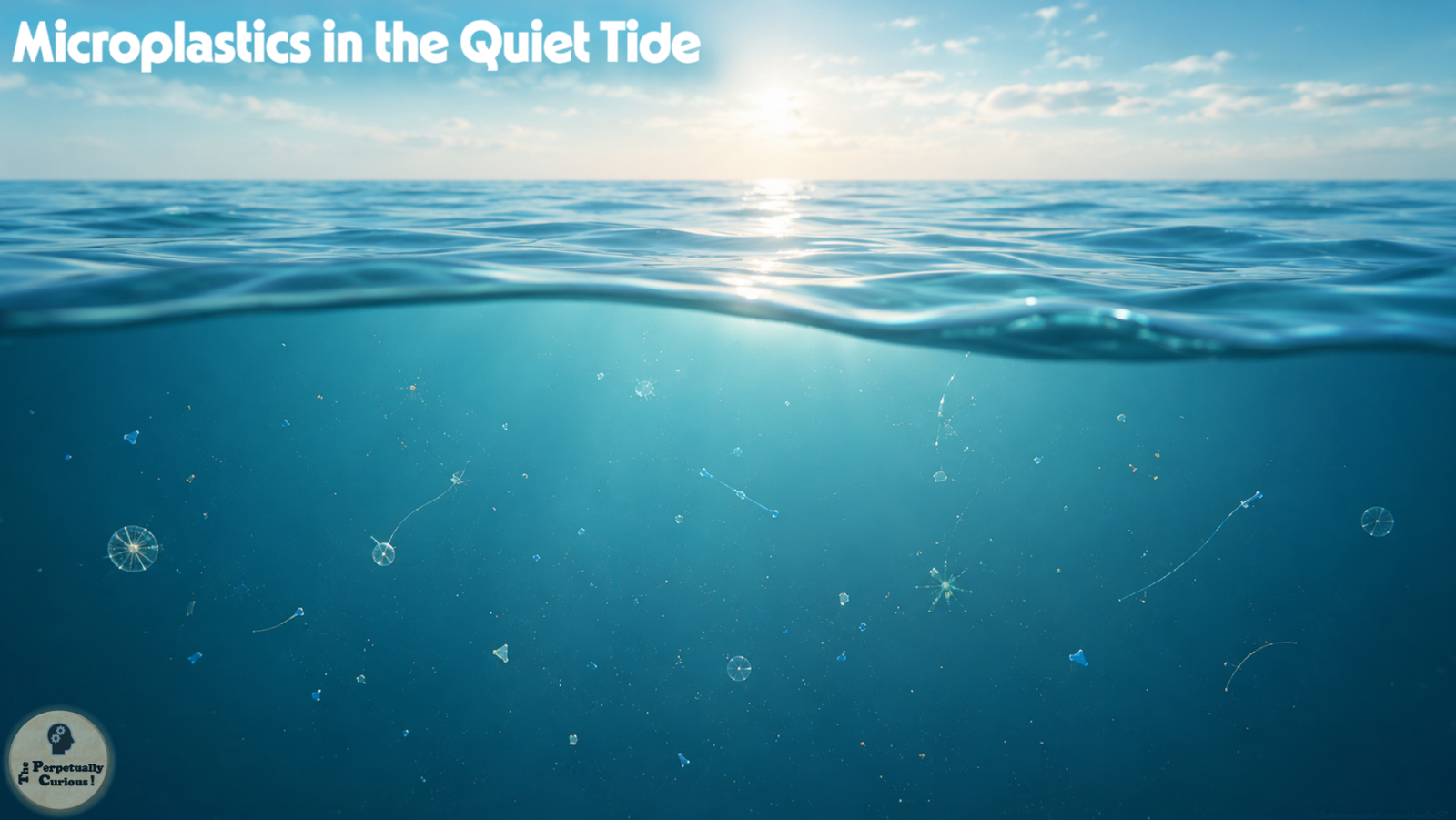
🌊 Microplastics in the Ocean: How Tiny Fragments Travel
Microplastics in the ocean are not only small pieces of plastic. They are mobile fragments, shaped by weathering, water movement, and the living systems they pass through.