Explore by topic, question, or idea. Find articles, reflections, videos, puzzles, and curiosity pathways gathered across the site.
Press Enter or select Search. A newly typed query starts globally; filters are applied only through the visible rail.
10 results for “an incandescent light bulb works”
- The Perpetually Curious! › Canonical › PhysicsArticle
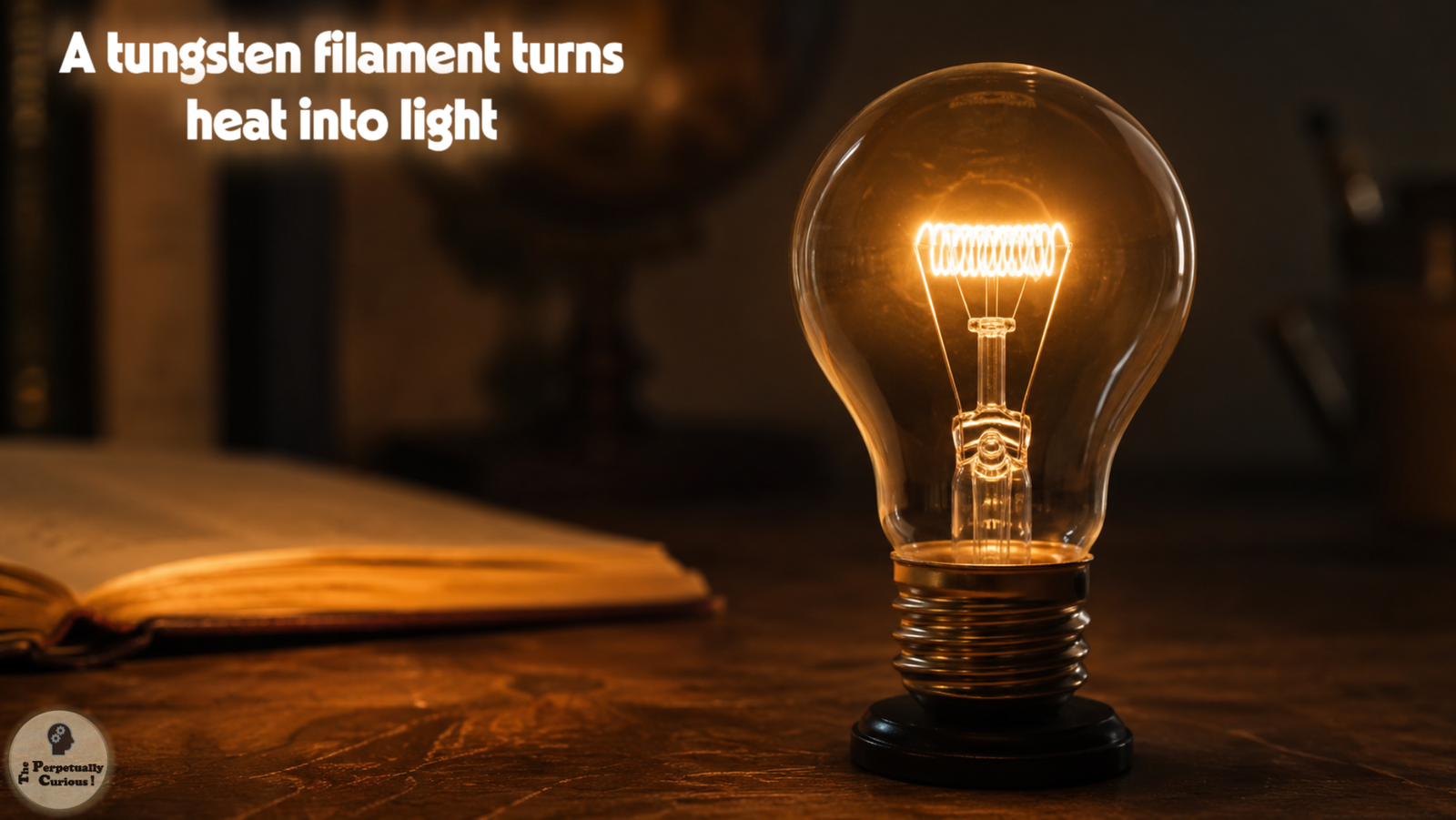
💡 Listening to Matter When It Learns to Glow: How an Incandescent Light Bulb Works
From section: 🌍 A familiar symbol of ideas and a quiet lesson in physics… Understanding how an incandescent light bulb works offers a gentle introduction to these ideas while reminding us that even familiar objects contain deep mechanisms waiting to be noticed. The bulb becomes both a practical tool and a quiet metaphor for the way visible understanding can emerge from unseen processes.
- The Perpetually Curious! › Archives › PhysicsArticle
💡 How an Incandescent Filament Turns Resistance into Warm Light
An incandescent bulb seems to awaken all at once. The switch closes, the filament brightens, and a room takes on a warm amber cast. Inside the glass, however, the change is not sudden magic.
- The Perpetually Curious! › Canonical › PhysicsArticle
🌟 When Light Learns to Answer Back: The Quiet Science of Mirrors
From section: 🔍 Light, surfaces, and the law of reflectionReflection follows a simple geometric rule known as the law of reflection. The angle at which light arrives, measured from a line perpendicular to the surface, equals the angle at which it leaves. When many rays of light obey this rule together on a very smooth surface, the geometry of the scene is preserved. …
- The Perpetually Curious! › Archives › PhysicsArticle
🔬 The Light That Sees Through You: How X-Rays Illuminate the Hidden World Within
He had shielded the glowing tube with heavy black cardboard to block all visible light, yet a barium platinocyanide screen positioned some distance across the darkened room had begun to glow entirely on its own, a phenomenon far too distant to be explained by the cathode rays he was studying.
- The Perpetually Curious! › Archives › PhysicsArticle
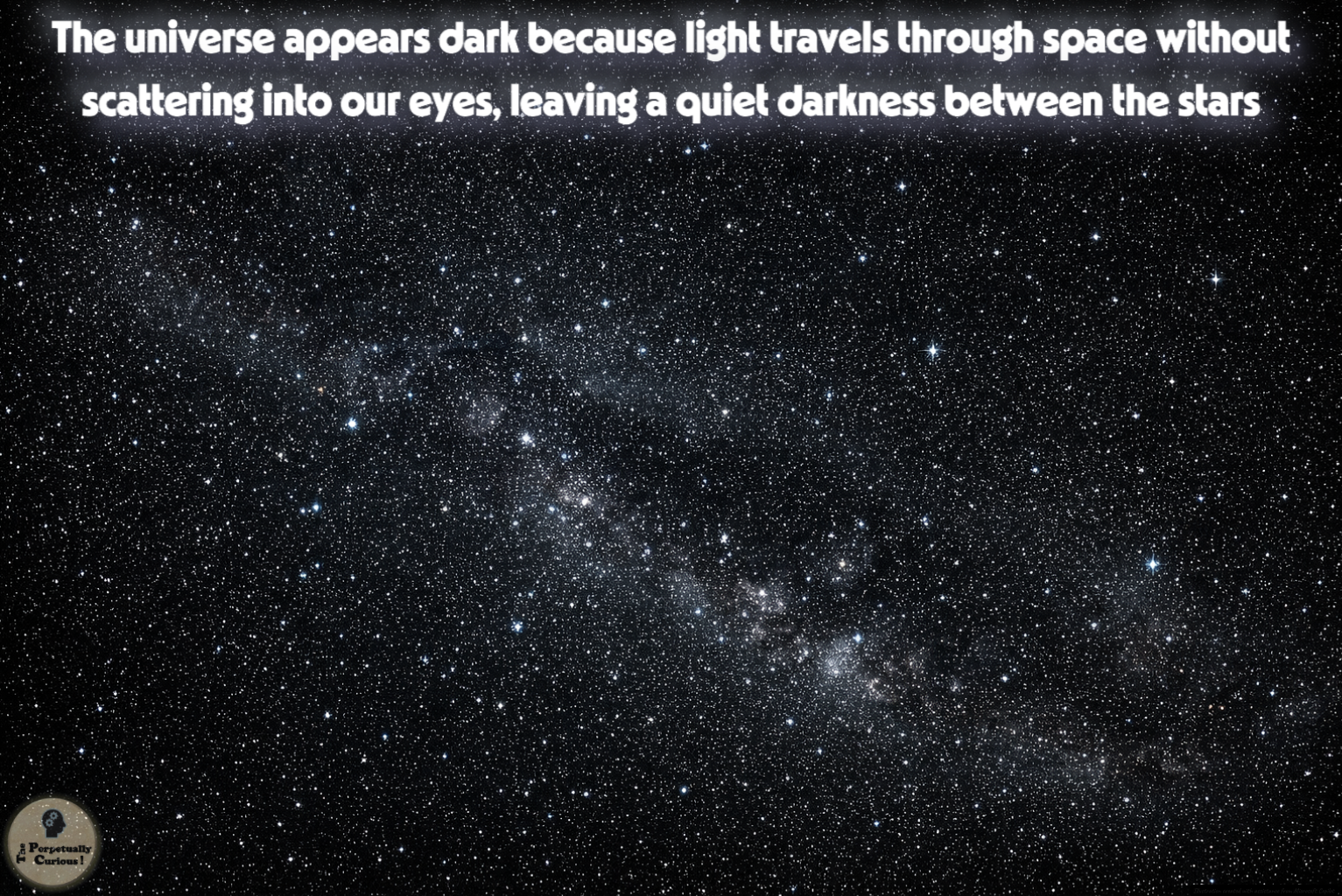
🌌 Why Space Looks Dark: Light, Matter, and the Quiet Cosmos
From section: How light becomes visibleHow light becomes visible Light becomes visible to us when it enters the eye from a source, a reflective surface, or a glowing object.
- The Perpetually Curious! › Archives › PhysicsArticle
Why Starlight Does Not Mix: How the Night Sky Keeps Each Star’s Signature Intact ✨🌌
Step outside on a clear night and look up. Light arrives from so many distant suns that the sky can feel like a single luminous fabric, stitched from countless journeys. It is natural to wonder what happens along the way.
- The Perpetually Curious! › Archives › PhysicsArticle
The Cosmic Recipe: Understanding the Physical Criteria for Star Formation 🌟
Opening the Cosmic Kitchen 🌌 In the vast expanse of our universe, where darkness stretches for light-years and cold reigns supreme, something extraordinary happens. Stars are born. This process, far from being a simple ignition, represents one of nature's most complex and beautiful phenomena.
- The Perpetually Curious! › Archives › PhysicsArticle
🌌 Tuning Into the Universe: The Hidden Symphony of Radio Waves
🌌 What the name really means Radio astronomy is the study of radio waves naturally emitted by the universe. These waves are not sound but a form of light, electromagnetic radiation that travels at the same speed in vacuum as visible light. They are part of one continuous…
- The Perpetually Curious! › Archives › PhysicsArticle
🌫️ How Radar Listens to the Sky: The Quiet Science Behind the Sweep
A radar dish turning slowly against the horizon often feels like a quiet sentinel, listening for stories carried on invisible waves. Although the technology is rooted in physics and engineering, its practice has a quiet elegance, as radar sends brief pulses of energy into the…
- The Perpetually Curious! › Archives › PhysicsArticle
✨ Clean Chemistry: The Curious Physics Behind Soap Bubbles
From section: 🌬️ The Physics of FoamThe rainbow sheen on a bubble’s surface reveals another layer of physics: light waves reflected from the inner and outer boundaries of an ultrathin film interfere with one another, producing shifting bands of color.