Explore by topic, question, or idea. Find articles, reflections, videos, puzzles, and curiosity pathways gathered across the site.
Press Enter or select Search. A newly typed query starts globally; filters are applied only through the visible rail.
10 results for “beaches hardness”
- The Perpetually Curious! › Canonical › Planet EarthArticle
🌊 Where the Waves Leave Their Footprints: Why Beaches Carry Sand
From section: 🌍 Beaches Around the World and the Grains They CarryBeaches across the world reveal how grain size and composition reflect local geology and wave energy.
- The Perpetually Curious! › Archives › Planet EarthArticle
🌊 Why Beaches Have Sand
Beaches often appear simple at first glance. They seem like a narrow place where land and water meet. Yet the presence of sand along so many coastlines is the result of long journeys, slow transformations, and the combined work of rivers, weather, and waves.
- The Perpetually Curious! › Canonical › ChemistryArticle
💧 When Water Turns Gentle: The Science and Story of Water Softening
From section: 🌍 Where hardness begins: minerals in motionHardness is therefore one chemical characteristic of water, not a complete measure of its quality or safety. Yet as dissolved ions leave the landscape and enter homes and infrastructure, geology begins to make itself visible in everyday life.
- The Perpetually Curious! › Canonical › Environment & SustainabilityArticle
🔄 Tides of Plastic: Microplastic Pollution in the Oceans and Its Journey Back to Us
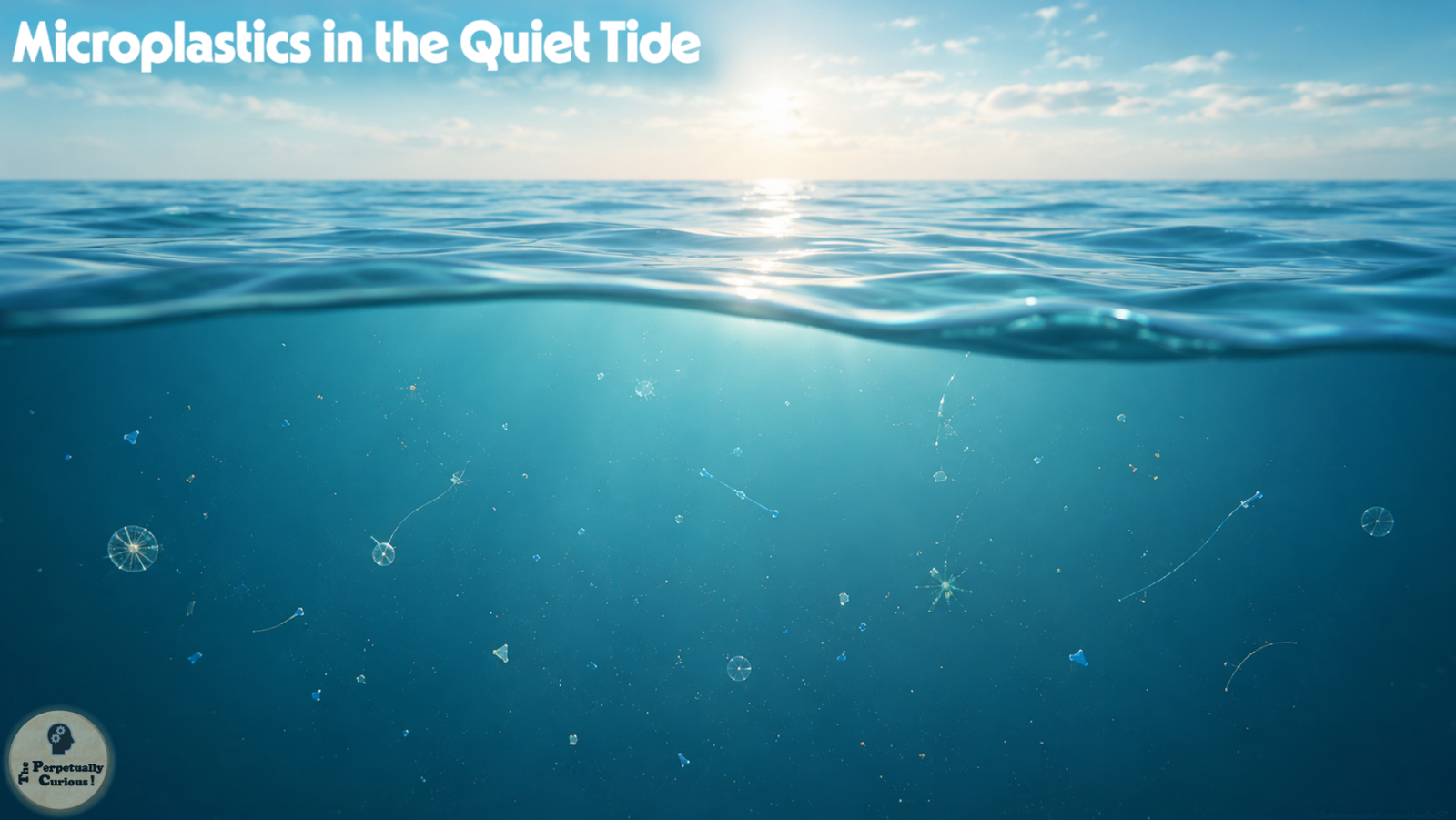
From section: 🌊 From land to sea: how microplastics enter and move through the oceansMicroplastics reach the ocean through many pathways. Mismanaged plastic waste may fragment on beaches, roadsides, and coastal land, with wind and runoff carrying pieces into rivers and estuaries. Urban stormwater can transport tire wear particles and synthetic fibers from roads, drains, and laundry effluent. …
- The Perpetually Curious! › Canonical › Planet EarthArticle
🌑 How Coal Is Formed: The Slow Birth of Black Stone Across Deep Time
From section: Frequently Asked Questions+How do geologists determine coal rank in the field? Geologists may first examine appearance, hardness, brightness, and fracture, but precise rank determination depends on laboratory measurements such as moisture, volatile matter, fixed carbon, heating value, and sometimes vitrinite reflectance.
- The Perpetually Curious! › Canonical › Engineering & TechnologyArticle
🧪 The Quiet Alchemy of Pencil Making: How an Everyday Tool Comes into Being
From section: 🧪 Forming the core: Where graphite and clay become a writing line… The proportions are adjusted with care, because more clay generally produces a harder, lighter line, while more graphite tends to produce a softer, darker line. This balance forms the basis for familiar hardness grades such as H, HB, or B.
- The Perpetually Curious! › Canonical › Planet EarthArticle
🌍 Why Mud Is Brown or Black: Where Earth Turns to Quiet Ink
From section: 🧪 Mud, sand, and why their colors divergeMud and sand often coexist along coasts and rivers, yet they frequently differ in color. Sandy beaches are commonly light beige or pale yellow, while nearby mudflats may appear dark brown or black. This contrast arises from differences in grain size, composition, and the ability to hold water and organic matter.
- The Perpetually Curious! › Archives › PhysicsArticle
✨ Clean Chemistry: The Curious Physics Behind Soap Bubbles
From section: 📜 Nearly 5,000 Years of SudsMany synthetic detergents are less affected because their surfactants form more soluble salts, while builders can sequester hardness ions. 📜 Nearly 5,000 Years of Suds Soap‑making is one of humanity’s oldest chemical crafts.
- The Perpetually Curious! › Archives › PhysicsArticle
⚗️ The Invisible Revolution: Understanding the Ancient Art and Modern Science of Glass Manufacturing
From section: Where Sand Becomes Transparent 🏛️The ancient Roman historian Pliny the Elder recounted a legendary story of Phoenician merchants accidentally discovering glass when cooking fires on sandy beaches fused sodium-rich plant ashes with silica.
- The Perpetually Curious! › Archives › Environment & SustainabilityArticle
🌊 Microplastics in the Ocean: How Tiny Fragments Travel
Once plastic reaches rivers, beaches, storm drains, or coastal waters, sunlight, abrasion, waves, and time can break larger items into particles smaller than about 5 millimeters.