Explore by topic, question, or idea. Find articles, reflections, videos, puzzles, and curiosity pathways gathered across the site.
Press Enter or select Search. A newly typed query starts globally; filters are applied only through the visible rail.
24 results for “brachistochrone darkness”
- The Perpetually Curious! › Canonical › Cosmic ExplorationArticle
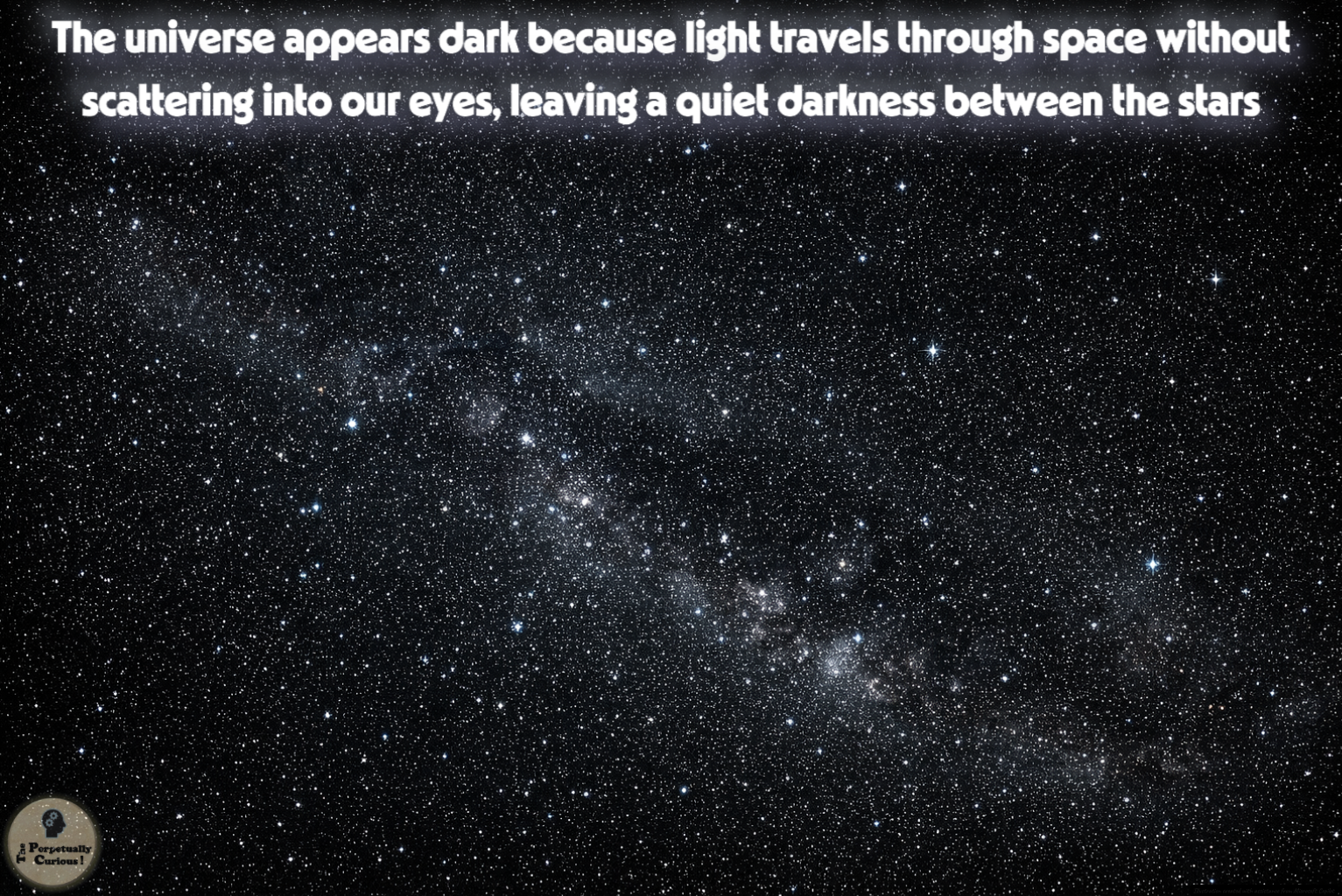
🌌 Why Space Looks Dark in a Universe Filled with Light: Understanding the Quiet Cosmos
From section: 🌠 Seeing darkness with new understandingThe next time a night sky appears as a field of scattered stars on a dark background, it may carry a different meaning. The patterns people trace among those points belong to constellations, while the darkness between them belongs to light, distance, and the transparency of space.
- The Perpetually Curious! › Archives › MathematicsArticle
⚡ The Curve That Seemingly Defies Gravity: The Brachistochrone and the Fastest Path Down
Gravity pulls everything straight down. Or so it seems. Drop a stone and it falls vertically. Pour water and it seeks the most direct path downhill. Our intuition tells us that the shortest route is always the fastest.
- The Perpetually Curious! › Archives › PhysicsArticle
🌌 Why Space Looks Dark: Light, Matter, and the Quiet Cosmos
Space can look surprisingly dark, even in a universe filled with stars. That darkness is not simply the absence of light. It is often the result of how light travels, what it meets, and what it does not meet. On Earth, daylight becomes a bright blue sky because sunlight…
- The Perpetually Curious! › Canonical › Cosmic ExplorationArticle
🌍 When Earth First Took Shape: A Planet Born from Cosmic Dust
Earth’s story begins in a quiet arm of the Milky Way, where a drifting cloud of gas and dust moved through darkness. Over time, gravity drew part of this cloud inward, creating a rotating structure that grew denser and hotter as it contracted. At the center, heat and pressure…
- The Perpetually Curious! › Canonical › Cosmic ExplorationArticle
🌙 Quiet Worlds, Vast Stories: Some Lesser-Known Moons of Our Solar System
Most sky‑watchers can name a handful of large moons such as Ganymede, Titan, or Earth’s own Moon, yet scattered across the outer darkness are smaller, quieter companions that rarely appear in familiar summaries. These lesser-known moons do not dominate by size.
- The Perpetually Curious! › Canonical › NatureArticle
🌅 The Quiet Geometry of Dawn: How Early Morning Light Shapes the Landscape
The first light of day often arrives with a quiet patience. Before the sun appears, the world begins to shift in gradients of color and in shapes that slowly emerge from darkness. Dawn is not only a moment on the clock.
- The Perpetually Curious! › CanonicalReflection
Starlight as Memory
From Reflections on Time ⏳ 👁️ Starlight carries a silent archive of what has been. What we see in the sky is not the present, but ancient light arriving as witness. In every glimmer, the universe offers its memory, threading time itself through darkness to meet us here.
- The Perpetually Curious! › Archives › Wilderness & Homestead CreaturesArticle
✨ The Secret Language of Summer Nights: Decoding Firefly Bioluminescence
From section: 🌙 When Darkness Becomes a Canvas🌙 When Darkness Becomes a Canvas As twilight surrenders to night, tiny alchemists emerge to paint the darkness with living light.
- The Perpetually Curious! › Archives › PhysicsArticle
The Cosmic Recipe: Understanding the Physical Criteria for Star Formation 🌟
Opening the Cosmic Kitchen 🌌 In the vast expanse of our universe, where darkness stretches for light-years and cold reigns supreme, something extraordinary happens. Stars are born. This process, far from being a simple ignition, represents one of nature's most complex and beautiful phenomena.
- The Perpetually Curious! › Canonical › Planet EarthArticle
🌇 When the Sky Becomes a Painting: Why Clouds Glow Red and Orange at Sunset on Earth
From section: Frequently Asked Questions+Why does the sky darken so quickly after astronomical twilight? Because the Sun’s light no longer reaches the upper atmosphere, a transition that mirrors the deep darkness associated with the darkness of space.