Explore by topic, question, or idea. Find articles, reflections, videos, puzzles, and curiosity pathways gathered across the site.
Press Enter or select Search. A newly typed query starts globally; filters are applied only through the visible rail.
5 results for “brachistochrone stand”
- The Perpetually Curious! › Canonical › Biology & HealthArticle
🌫️ The Quiet Maps in Our Hands: Why Palm Lines Form and What They Reveal About Development, Movement, and Meaning
From section: Frequently Asked Questions+… For example, a single transverse palmar crease appears more frequently in some chromosomal disorders. Clinicians consider such features as part of a broader assessment, rather than as stand‑alone diagnostic tools.
- The Perpetually Curious! › Canonical › Biology & HealthArticle
🌡️ When the Skin Remembers the Cold: Why We Get Goosebumps
From section: ❄️ Cold Air, Insulation, and a Reflex From a Furrier Past… In mammals with thick fur, piloerection serves a clear purpose. As the hairs stand up, they trap a layer of air close to the skin, creating insulation that reduces heat loss. In animals with dense coats, such as wolves or foxes, this effect can be significant.
- The Perpetually Curious! › Archives › Biology & HealthArticle
Where Does the Mind Reside? A Contemplation on Consciousness and the Dancing Synapses 🧠
The Question That Captivates Neuroscience 💭 Standing before the vast neural landscape of the human brain, scientists and philosophers alike find themselves pondering one of existence's most compelling questions. Where does consciousness reside?
- The Perpetually Curious! › Canonical › Biology & HealthArticle
🌙 Little Moons at the Base of Our Nails: The Quiet Science of the Lunula
At the base of many fingernails lies a pale crescent, a small moon resting just beneath the cuticle. It is most visible on the thumbs, faint on the smaller fingers, and often hidden entirely on the toes. This quiet shape has invited curiosity for centuries.
- The Perpetually Curious! › Archives › Biology & HealthArticle
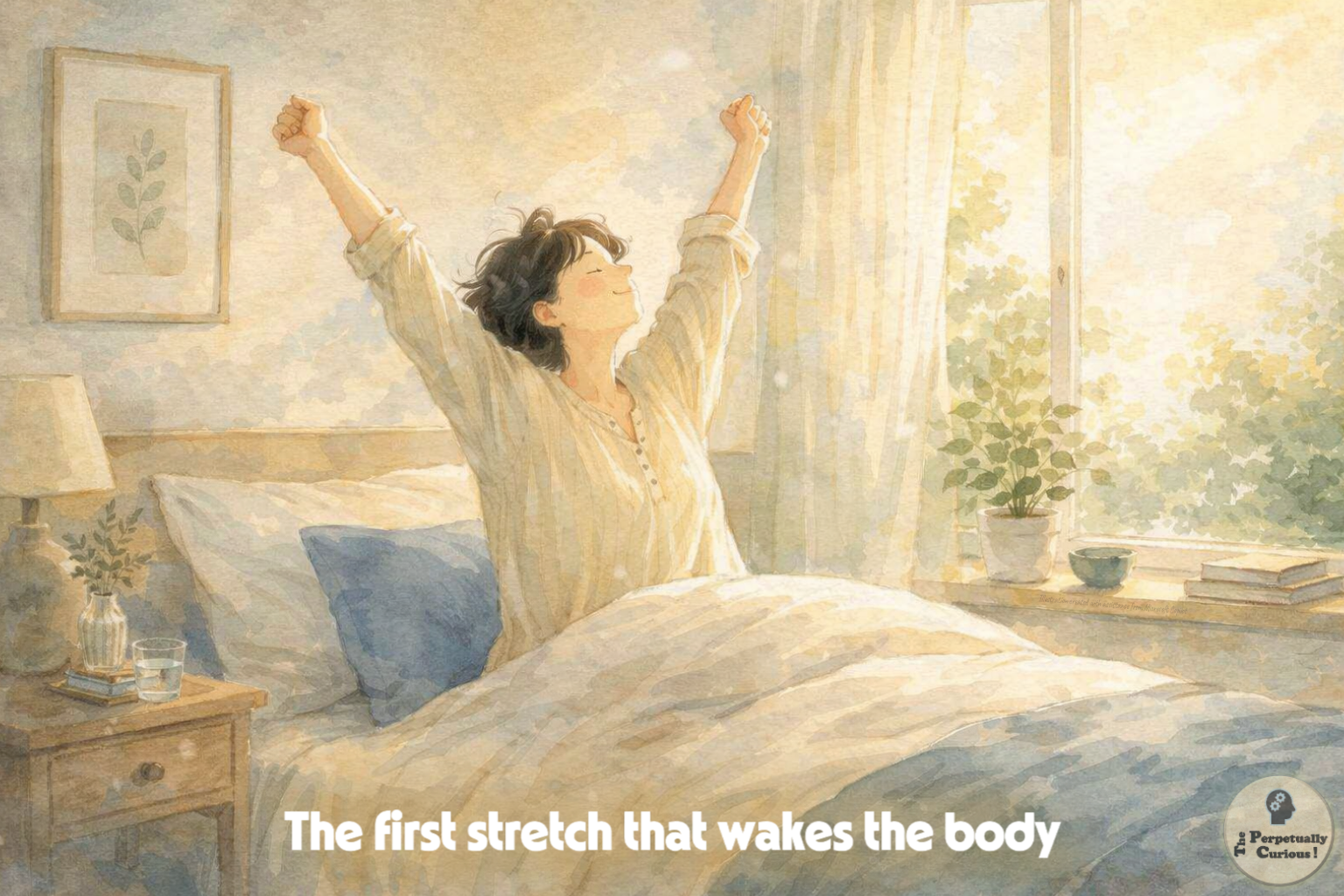
🌅 Pandiculation: How the Waking Stretch Restores Body Awareness
Before the eyes fully focus or the mind has assembled the day, the body may begin moving on its own. The arms rise, the chest opens, the back lengthens, and several muscles tighten before easing into release. This familiar sequence has a scientific name: pandiculation.