Explore by topic, question, or idea. Find articles, reflections, videos, puzzles, and curiosity pathways gathered across the site.
Press Enter or select Search. A newly typed query starts globally; filters are applied only through the visible rail.
9 results for “down light”
- The Perpetually Curious! › Canonical › PhysicsArticle
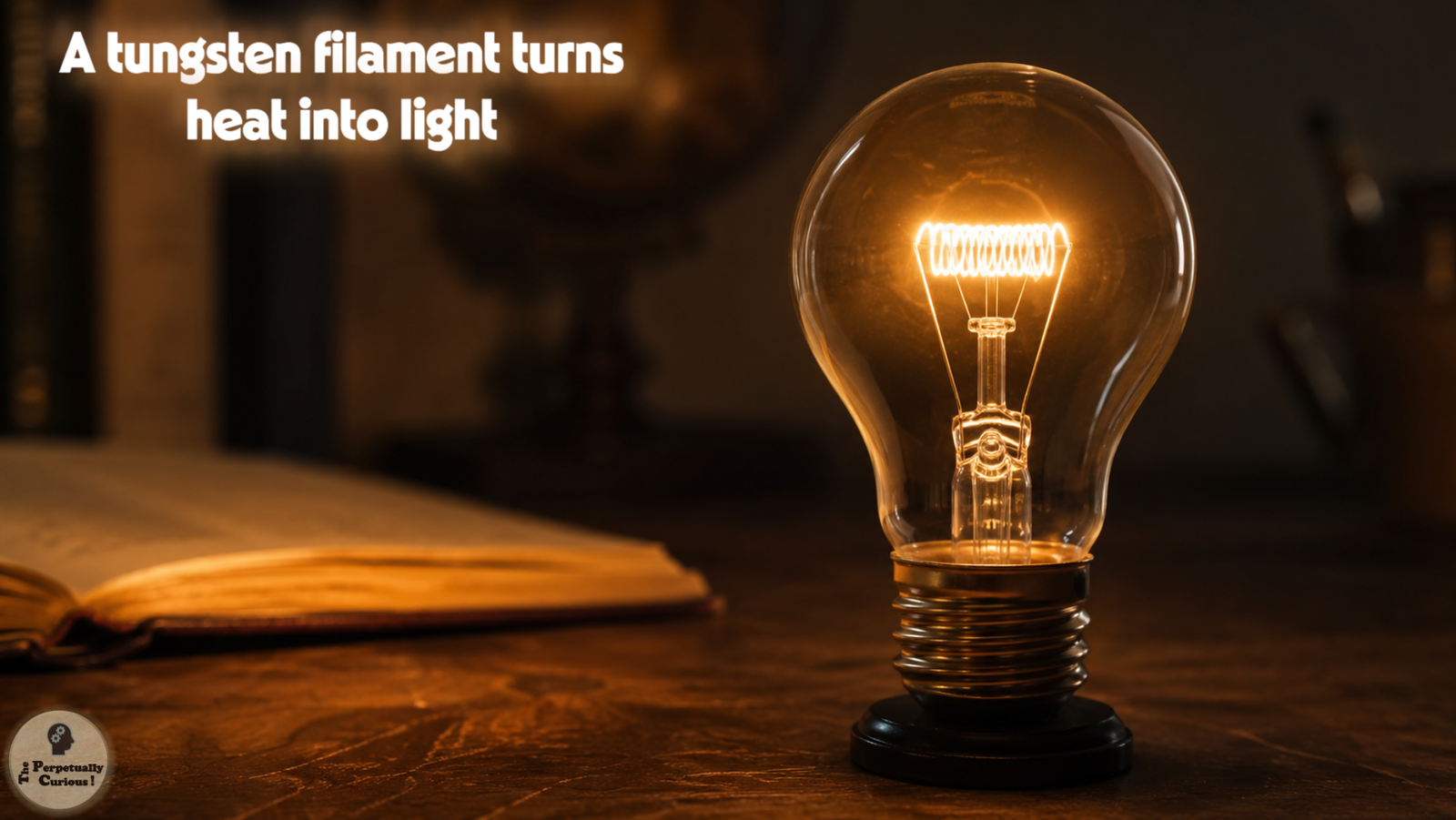
💡 Listening to Matter When It Learns to Glow: How an Incandescent Light Bulb Works
From section: 🌈 Warm light, color, and the feel of incandescence… Reducing the electrical power lowers the filament’s temperature, decreasing its brightness while shifting more of its radiation toward longer, redder wavelengths. The bulb therefore does not merely produce less light. Its glow also becomes warmer in color.
- The Perpetually Curious! › Canonical › PhysicsArticle
🌟 When Light Learns to Answer Back: The Quiet Science of Mirrors
From section: 🔍 Light, surfaces, and the law of reflectionReflection follows a simple geometric rule known as the law of reflection. The angle at which light arrives, measured from a line perpendicular to the surface, equals the angle at which it leaves. When many rays of light obey this rule together on a very smooth surface, the geometry of the scene is preserved. …
- The Perpetually Curious! › Archives › PhysicsArticle
🔬 The Light That Sees Through You: How X-Rays Illuminate the Hidden World Within
He had shielded the glowing tube with heavy black cardboard to block all visible light, yet a barium platinocyanide screen positioned some distance across the darkened room had begun to glow entirely on its own, a phenomenon far too distant to be explained by the cathode rays he was studying.
- The Perpetually Curious! › Archives › PhysicsArticle
💡 How an Incandescent Filament Turns Resistance into Warm Light
From section: When heat enters the visible spectrumWith increasing temperature, a faint red glow appears, followed by orange and then yellowish-white light as more of the spectrum enters the visible range.
- The Perpetually Curious! › Archives › PhysicsArticle
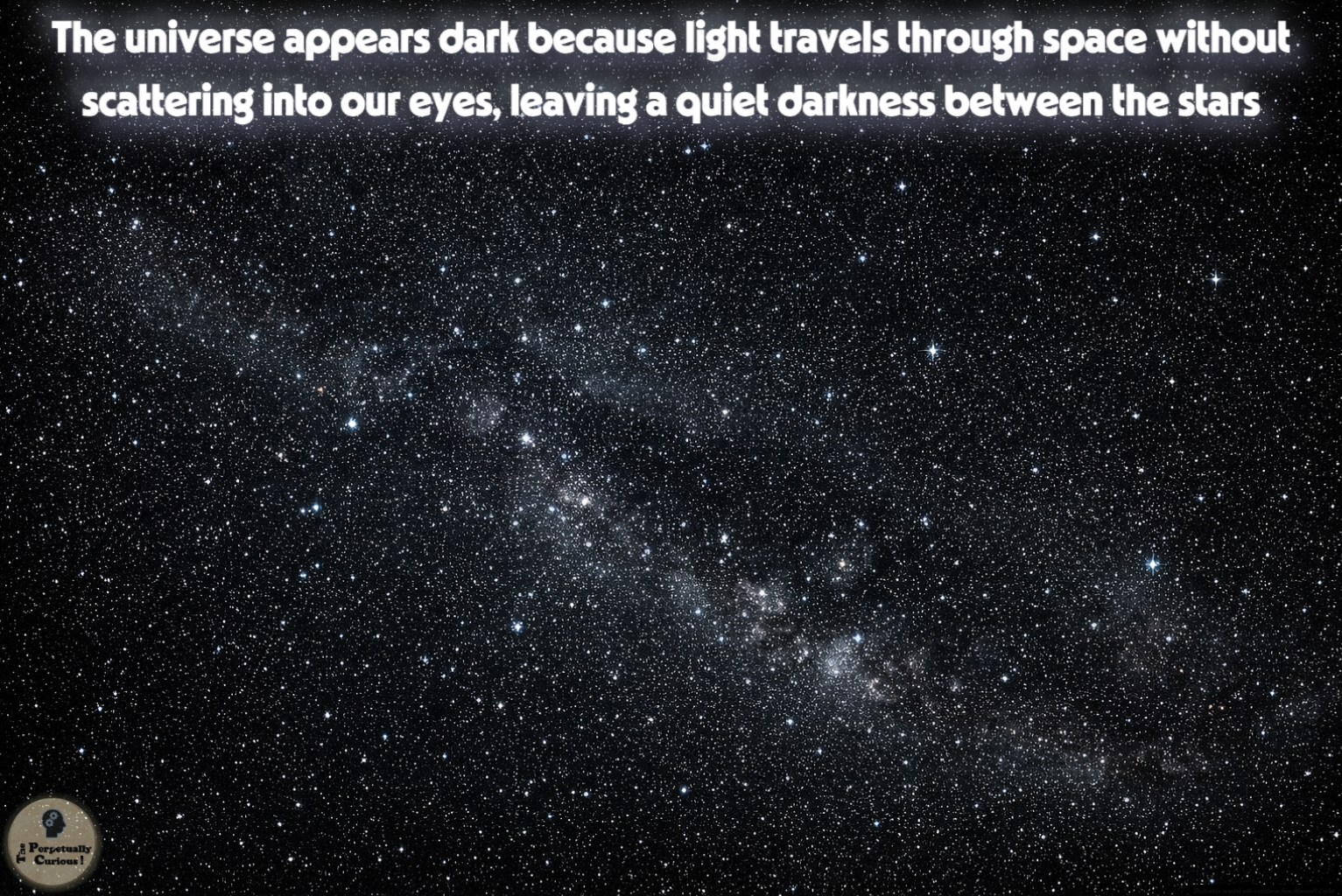
🌌 Why Space Looks Dark: Light, Matter, and the Quiet Cosmos
From section: How light becomes visibleLight becomes visible to us when it enters the eye from a source, a reflective surface, or a glowing object.
- The Perpetually Curious! › Archives › PhysicsArticle
Why Starlight Does Not Mix: How the Night Sky Keeps Each Star’s Signature Intact ✨🌌
Step outside on a clear night and look up. Light arrives from so many distant suns that the sky can feel like a single luminous fabric, stitched from countless journeys. It is natural to wonder what happens along the way.
- The Perpetually Curious! › Archives › PhysicsArticle
The Cosmic Recipe: Understanding the Physical Criteria for Star Formation 🌟
Opening the Cosmic Kitchen 🌌 In the vast expanse of our universe, where darkness stretches for light-years and cold reigns supreme, something extraordinary happens. Stars are born. This process, far from being a simple ignition, represents one of nature's most complex and beautiful phenomena.
- The Perpetually Curious! › Archives › PhysicsArticle
🌌 Tuning Into the Universe: The Hidden Symphony of Radio Waves
🌌 What the name really means Radio astronomy is the study of radio waves naturally emitted by the universe. These waves are not sound but a form of light, electromagnetic radiation that travels at the same speed in vacuum as visible light. They are part of one continuous…
- The Perpetually Curious! › Archives › PhysicsArticle
✨ Clean Chemistry: The Curious Physics Behind Soap Bubbles
From section: 🌬️ The Physics of FoamThe rainbow sheen on a bubble’s surface reveals another layer of physics: light waves reflected from the inner and outer boundaries of an ultrathin film interfere with one another, producing shifting bands of color.