Explore by topic, question, or idea. Find articles, reflections, videos, puzzles, and curiosity pathways gathered across the site.
Press Enter or select Search. A newly typed query starts globally; filters are applied only through the visible rail.
209 results for “each darkness”
- The Perpetually Curious! › Canonical › Cosmic ExplorationArticle
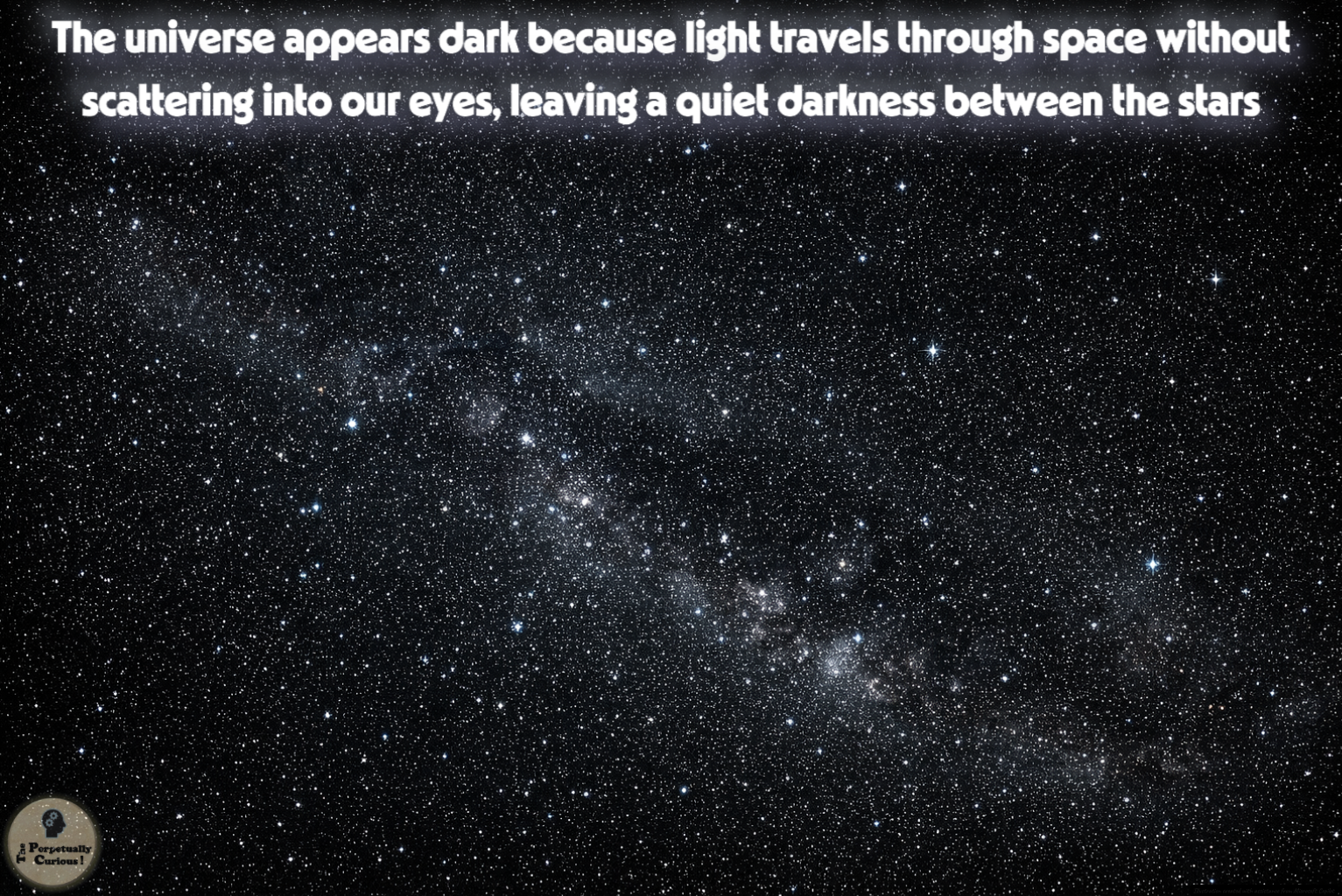
🌌 Why Space Looks Dark in a Universe Filled with Light: Understanding the Quiet Cosmos
On a clear night, the sky stretches overhead as a vast field of darkness, interrupted only by scattered stars and the faint glow of the Milky Way. This darkness feels puzzling when one considers that the universe contains an extraordinary number of stars, each emitting light in all directions.
- The Perpetually Curious! › Archives › Botanical WondersArticle
🎨 The Colorful World of Grapes: What Makes Each Variety Unique
From section: 🍇 Red, Green, or Black: What Sets Grapes Apart?Each variety carries its own blend of phytonutrients, pigments, and subtle nutritional qualities that shape both taste and potential health benefits.
- The Perpetually Curious! › Archives › PhysicsArticle
🌌 Why Space Looks Dark: Light, Matter, and the Quiet Cosmos
Space can look surprisingly dark, even in a universe filled with stars. That darkness is not simply the absence of light. It is often the result of how light travels, what it meets, and what it does not meet. On Earth, daylight becomes a bright blue sky because sunlight…
- The Perpetually Curious! › Canonical › Cosmic ExplorationArticle
🌍 When Earth First Took Shape: A Planet Born from Cosmic Dust
Earth’s story begins in a quiet arm of the Milky Way, where a drifting cloud of gas and dust moved through darkness. Over time, gravity drew part of this cloud inward, creating a rotating structure that grew denser and hotter as it contracted. At the center, heat and pressure…
- The Perpetually Curious! › Canonical › Cosmic ExplorationArticle
🌙 Quiet Worlds, Vast Stories: Some Lesser-Known Moons of Our Solar System
Most sky‑watchers can name a handful of large moons such as Ganymede, Titan, or Earth’s own Moon, yet scattered across the outer darkness are smaller, quieter companions that rarely appear in familiar summaries. These lesser-known moons do not dominate by size.
- The Perpetually Curious! › Canonical › Wilderness & Homestead CreaturesArticle
🐾 Where the Wild Paths Divide: Wolves, Foxes, and Jackals in the Dog Family
At first light, the world reveals its quiet inhabitants. A wolf’s tracks appear along the edge of a frozen river, each print pressed into the snow with deliberate weight. In a distant field, a fox pauses beside a tangle of brambles, its ears turning toward the faint rustle of hidden prey.
- The Perpetually Curious! › CanonicalReflection
Starlight as Memory
The next time darkness invites you to look up, remember that you witness not distant objects but traveling time. Each point of light completes a journey measured in years, centuries, or millennia to reach precisely where you stand. …
- The Perpetually Curious! › Archives › PhysicsArticle
Why Starlight Does Not Mix: How the Night Sky Keeps Each Star’s Signature Intact ✨🌌
Step outside on a clear night and look up. Light arrives from so many distant suns that the sky can feel like a single luminous fabric, stitched from countless journeys. It is natural to wonder what happens along the way.
- The Perpetually Curious! › Archives › ChemistryArticle
What Makes Each Element Unique? 🧪 The Power of Atomic Numbers 🔬
🔢 (Periodic Table Series, Part 1) 🌱 A Simple Beginning At first glance, the periodic table seems static, a grid of symbols and numbers. Yet hidden within its structure is a story as dynamic as the universe itself, written not in words but in numbers.
- The Perpetually Curious! › Canonical › Planet EarthArticle
🌇 When the Sky Becomes a Painting: Why Clouds Glow Red and Orange at Sunset on Earth
From section: 🌈 The three‑layer atmosphere modelThe layered behavior of Earth’s atmosphere becomes clearer when viewed as three interacting regions, each one shaping the color of the sky in a different way and each one responding to sunlight through its own physical processes.