Explore by topic, question, or idea. Find articles, reflections, videos, puzzles, and curiosity pathways gathered across the site.
Press Enter or select Search. A newly typed query starts globally; filters are applied only through the visible rail.
4 results for “fall learning colors”
- The Perpetually Curious! › Canonical › PhysicsArticle
💡 Listening to Matter When It Learns to Glow: How an Incandescent Light Bulb Works
From section: Frequently Asked Questions+Why does incandescent light often render colors naturally? Incandescent light has a smooth, continuous spectrum produced through thermal radiation. …
- The Perpetually Curious! › Canonical › PhysicsArticle
🌟 When Light Learns to Answer Back: The Quiet Science of Mirrors
From section: 💡 Did You Know✨ Some insects have highly reflective microstructures in their exoskeletons. Microscopic layers can reflect selected wavelengths of light, creating iridescent colors that shift with viewing angle. This is one expression of structural coloration, where tiny physical architecture helps shape visible color.
- The Perpetually Curious! › Archives › PhysicsArticle
✨ Clean Chemistry: The Curious Physics Behind Soap Bubbles
From section: 🌍 Every Bubble Tells a StoryThe next time someone marvels at a frothy lather, you’ll both know the chemistry and physics at play. ↗ Share this article Pass this article along to someone curious and let the learning travel.
- The Perpetually Curious! › Archives › PhysicsArticle
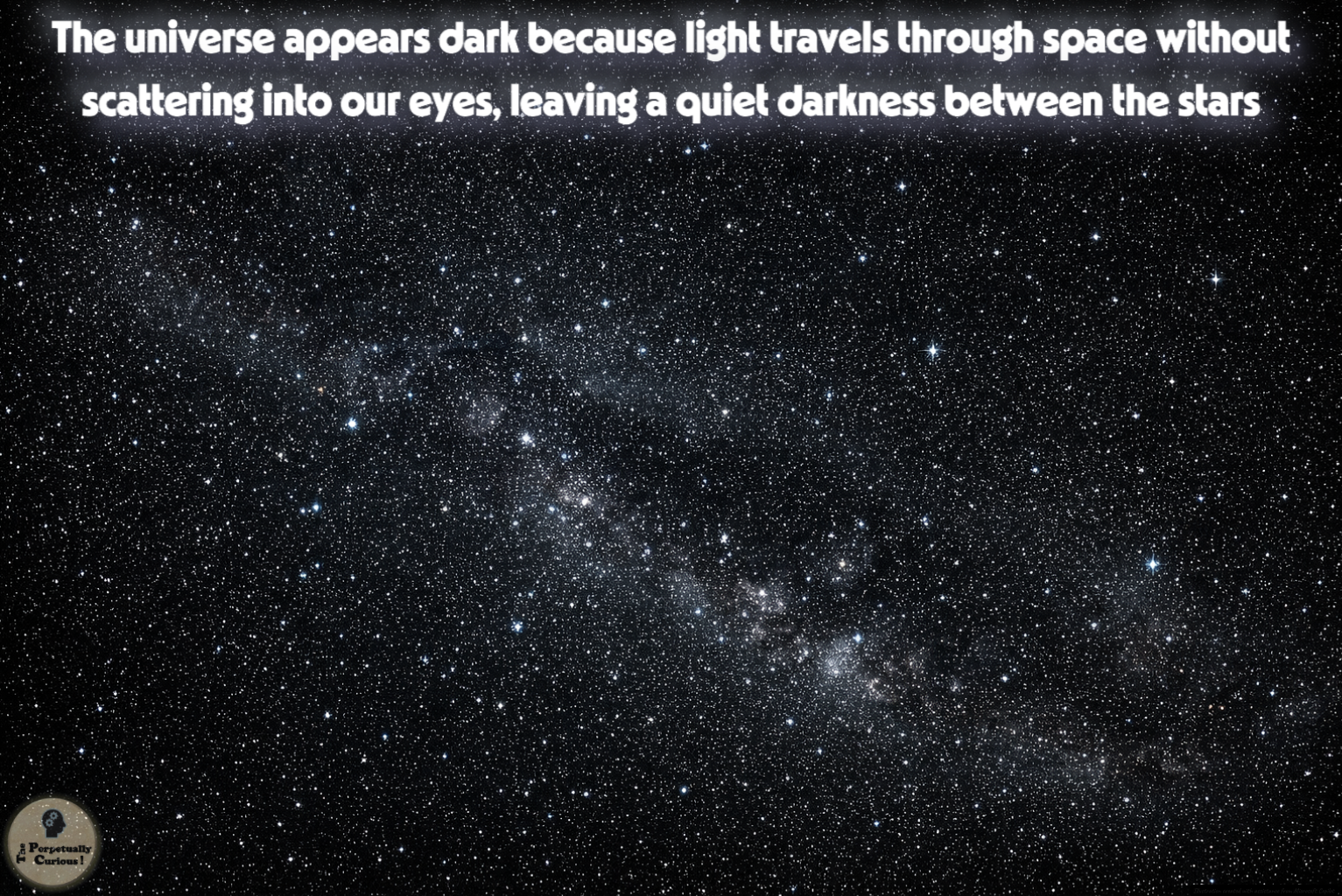
🌌 Why Space Looks Dark: Light, Matter, and the Quiet Cosmos
From section: Where the fuller cosmic question begins… 🌌 Why Space Looks Dark in a Universe Filled With Light https://www.theperpetuallycurious.org/articles/why-space-looks-dark ↗ Share this article Pass this article along to someone curious and let the learning travel.