Explore by topic, question, or idea. Find articles, reflections, videos, puzzles, and curiosity pathways gathered across the site.
Press Enter or select Search. A newly typed query starts globally; filters are applied only through the visible rail.
7 results for “microplastics in the ocean how tiny fragments travel”
- The Perpetually Curious! › Canonical › PhysicsArticle
💡 Listening to Matter When It Learns to Glow: How an Incandescent Light Bulb Works
From section: 📨 Let the light travel a little fartherIf this exploration illuminated something new, consider sharing it with friends, colleagues, or fellow curious readers. Each shared link helps this quiet story travel a little farther, connecting more people with the hidden physics inside an everyday glow. Your support is deeply appreciated.
- The Perpetually Curious! › Archives › PhysicsArticle
✨ Clean Chemistry: The Curious Physics Behind Soap Bubbles
From section: 🧪 Amphiphilic Molecules at WorkThey break the oils into tiny droplets, dispersing and emulsifying them so that water and oil can finally mix.
- The Perpetually Curious! › Archives › PhysicsArticle
🦈 Why Do Sharks Float? The Science Behind Their Buoyancy
🌊 Opening Dive Sharks are among the ocean’s most formidable creatures, yet they face a unique challenge: staying afloat without the gas‑filled swim bladders used by most bony fishes.
- The Perpetually Curious! › Archives › PhysicsArticle
🐋 How Do Whales Float? The Science of Buoyancy Beneath the Waves
Whales are the giants of the ocean, with blue whales reaching up to 200 tons. Yet they move through the water with surprising grace. If you have ever wondered how such colossal animals manage to float, sink, and swim so smoothly, the answer lies in the fascinating blend of…
- The Perpetually Curious! › Canonical › PhysicsArticle
🌟 When Light Learns to Answer Back: The Quiet Science of Mirrors
From section: 💡 Did You Know✨ Some insects have highly reflective microstructures in their exoskeletons. Microscopic layers can reflect selected wavelengths of light, creating iridescent colors that shift with viewing angle. This is one expression of structural coloration, where tiny physical architecture helps shape visible color.
- The Perpetually Curious! › Archives › PhysicsArticle
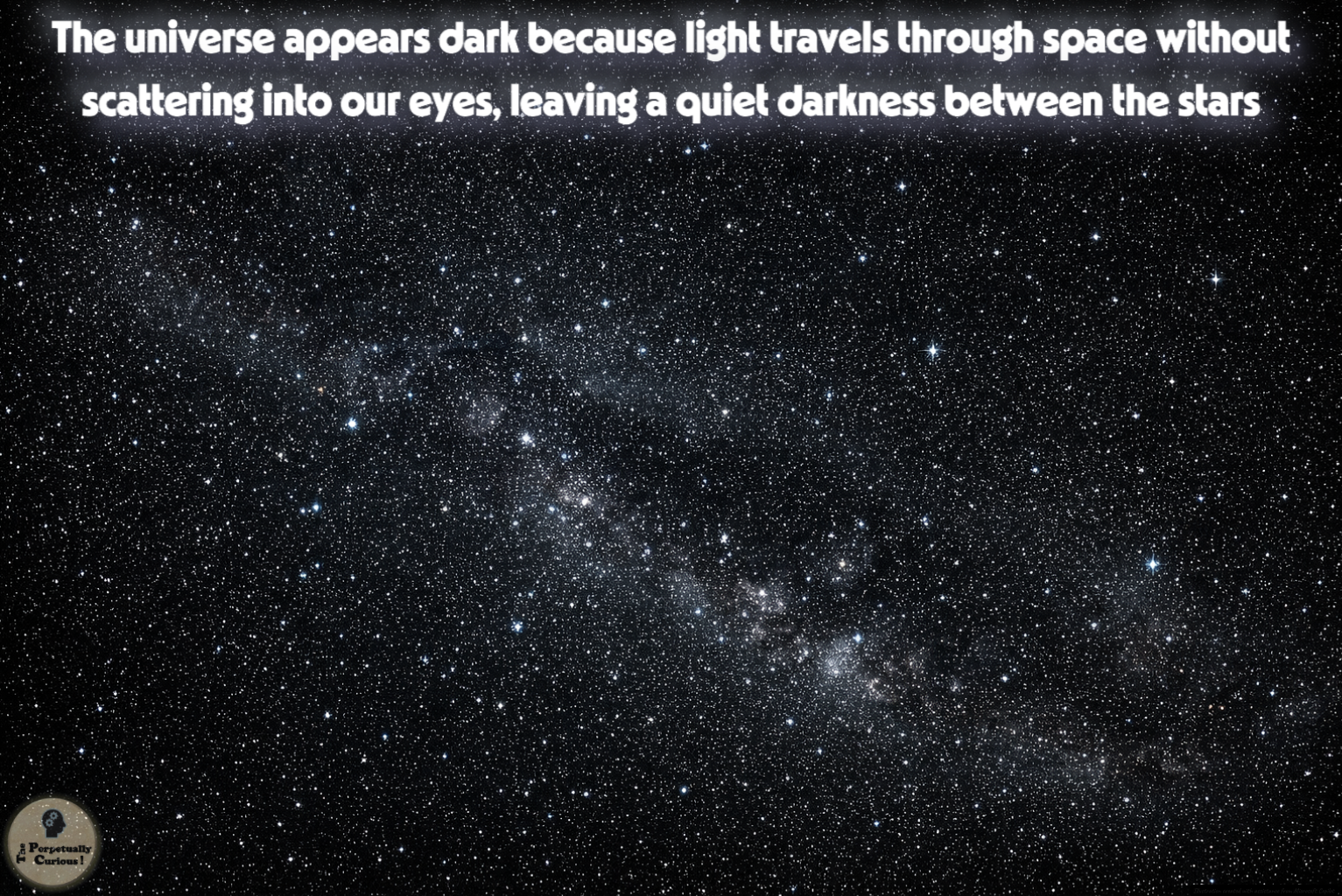
🌌 Why Space Looks Dark: Light, Matter, and the Quiet Cosmos
A flashlight beam looks visible when dust, smoke, or tiny particles scatter some of the light toward the eye.
- The Perpetually Curious! › Archives › PhysicsArticle
🌌 Tuning Into the Universe: The Hidden Symphony of Radio Waves
🌌 What the name really means Radio astronomy is the study of radio waves naturally emitted by the universe. These waves are not sound but a form of light, electromagnetic radiation that travels at the same speed in vacuum as visible light. They are part of one continuous…