Explore by topic, question, or idea. Find articles, reflections, videos, puzzles, and curiosity pathways gathered across the site.
Press Enter or select Search. A newly typed query starts globally; filters are applied only through the visible rail.
110 results for “sky in slow layers understanding earth atmospheric structure”
- The Perpetually Curious! › Archives › Cosmic ExplorationArticle
🌍 Why Earth Has a Living Atmosphere
From section: 🔭 Opening the QuestionThe question of why Earth has a stable, temperate, long‑lived atmosphere opens into a chain of ideas that stretch from the earliest days of the Solar System to the slow work of oceans, rocks, and living organisms.Read more »
- The Perpetually Curious! › Archives › Planet EarthArticle
Where Earth's Temperate Logic Ends: Understanding the Arctic Circle 🌐
Here, during summer solstice, the Sun never sets, circling horizontally around the sky and dipping lowest at local midnight while remaining visible.
- The Perpetually Curious! › Archives › Planet EarthArticle
When Nature's Fury Spirals: Understanding the Science Behind Nor'easters 🌊
Few weather phenomena capture the raw power of nature quite like a nor'easter bearing down on the Eastern Seaboard. These massive storm systems, born from the collision of opposing air masses over the Atlantic, represent some of the most complex and fascinating atmospheric dynamics on Earth.
- The Perpetually Curious! › Archives › Cosmic ExplorationArticle
🌌 When Worlds Shine: Why Some Planets Outglow Others in Our Night Sky
The night sky often feels calm and timeless, yet the brightness of the planets tells a dynamic story of light, distance, geometry, and illumination. When Venus blazes in the evening or morning sky, it can appear almost unreal, while Mars, Jupiter, and Saturn each take turns as…
- The Perpetually Curious! › Archives › Cosmic ExplorationArticle
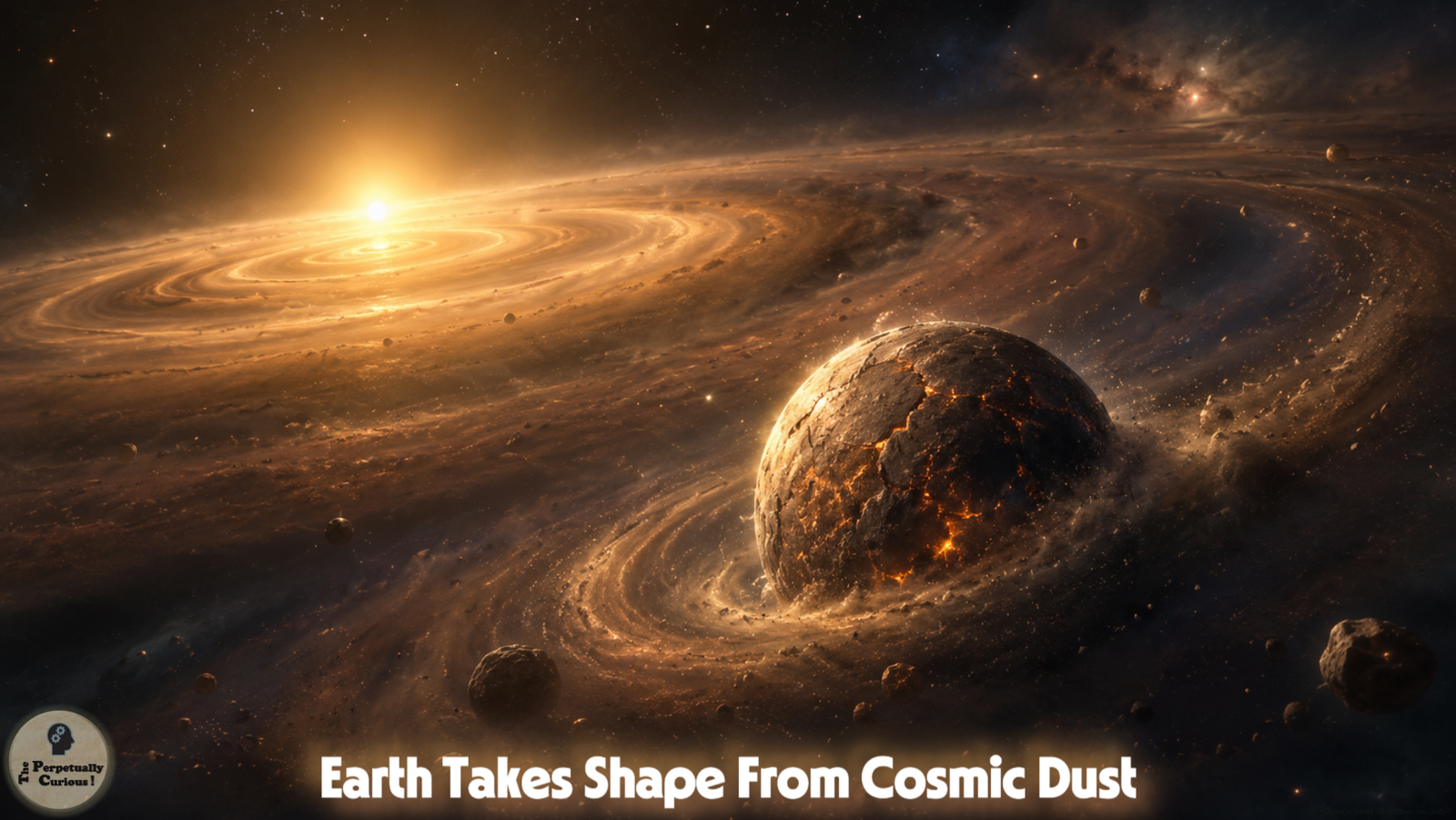
🌍 How Earth Formed: The Slow Assembly of a Young Rocky World
Earth did not appear as a finished sphere in an otherwise complete Solar System. Its beginning was distributed across a rotating disk of gas, dust, rock, and metal around the newborn Sun.
- The Perpetually Curious! › Archives › Cosmic ExplorationArticle
🌔 Lunar Eclipses: Earth’s Shadow on the Moon
🌕➡️🔴 The Allure of a Lunar Eclipse: Earth’s Shadow Play in the Night Sky Among the many wonders of the night sky, few spectacles are as enchanting as a lunar eclipse. On these special nights, our familiar Moon is transformed, slipping into Earth’s shadow.
- The Perpetually Curious! › Archives › Cosmic ExplorationArticle
☀️ Solar Eclipses Explained: The Dance of Shadow and Light
Solar eclipses are among the most captivating events in the sky. They reveal how a rare alignment of Sun, Moon, and Earth can transform the ordinary daylight landscape into something unfamiliar and striking. Daylight softens, shadows sharpen, and the familiar world takes on a new character.
- The Perpetually Curious! › Archives › Planet EarthArticle
❄️ Antarctica: Southernmost Continent’s Frozen Symphony of Silence and Light
From section: ❓ FAQ… Arctic temperatures range from −40°F to 60°F (−40°C to 15°C); Antarctica from −128°F to 50°F (−89°C to 10°C) at the coast. For more on Earth's northern frontier, see the article: 🌐 Where Earth's Temperate Logic Ends: Understanding the Arctic Circle
- The Perpetually Curious! › Archives › Planet EarthArticle
🌊 Harbor Wave, Ocean Pulse: The Science of Tsunamis from Seafloor to Shore
Some ocean hazards announce themselves with wind, foam, and a rising sky. A tsunami often does not. Far from shore, it may pass as a long, subtle lift, more like a slow breath than a breaking wave. Even the word “wave” can mislead, because a tsunami is not simply the surface…
- The Perpetually Curious! › Archives › Cosmic ExplorationArticle
The Unlikely Astronauts: What Earth’s Toughest Survivors Teach Us About the Possibility of Life Elsewhere 🦠
For decades, our search for alien life focused on finding another Earth: a comfortable, temperate world with liquid water and gentle sunshine. But life, as we have discovered, finds a way in the most hostile environments imaginable.