Explore by topic, question, or idea. Find articles, reflections, videos, puzzles, and curiosity pathways gathered across the site.
Press Enter or select Search. A newly typed query starts globally; filters are applied only through the visible rail.
247 results for “sky in slow layers understanding earth atmospheric structure”
- The Perpetually Curious! › Archives › Cosmic ExplorationArticle
The Asteroid Belt: Ancient Fragments of Our Solar System's Story 🌌
On New Year's Day 1801, Italian astronomer Giuseppe Piazzi made a discovery that would transform our understanding of the solar system. While searching for a suspected planet between Mars and Jupiter, he found something else entirely: the first of millions of rocky fragments…
- The Perpetually Curious! › Archives › Cosmic ExplorationArticle
Lunar Regolith: The Moon's Ancient Chronicle Written in Dust 🌙
Opening Reflection ✨ Imagine holding a handful of powder made from rocks that formed long before life emerged on Earth, each grain a microscopic witness to billions of years of cosmic history.
- The Perpetually Curious! › Archives › Cosmic ExplorationArticle
Worlds Beyond Worlds: The Extraordinary Story of Exoplanets 🌌
In the vast theater of space, thousands of alien worlds dance around distant stars, each one rewriting our understanding of what a planet can be.Read more »
- The Perpetually Curious! › Archives › Cosmic ExplorationArticle
☀️ Our Sun’s Mass | Also Called the Solar Mass | The Celestial Mass Scale
In astronomy, our Sun’s mass is the definition of one solar mass, the standard unit used to compare the masses of stars and other celestial objects. This single measure anchors our understanding of the cosmos, allowing astronomers to place everything from small planets to…
- The Perpetually Curious! › Archives › Cosmic ExplorationArticle
🌌 Planetary Names Explained: From Ancient Gods to Modern Science
💡 Have you ever wondered why the planets in our solar system bear such distinctive names? From swift Mercury to majestic Jupiter, these names reflect ancient traditions that connect cultural understanding with the science of the skies. Read more »
- The Perpetually Curious! › Archives › Cosmic ExplorationArticle
💥 Neutron Stars: Cosmic Heavyweights That Defy Imagination
What Is a Neutron Star, and Why Do They Matter? Imagine holding a teaspoon that weighs more than every skyscraper on Earth combined. Neutron stars are cosmic heavyweights, dense beyond anything we know and filled with mysteries at the frontier of physics. Read more »
- The Perpetually Curious! › Archives › Wilderness & Homestead CreaturesArticle
🕊️ Soaring Beyond Horizons: The Remarkable Albatross
Across the vast oceans, where winds sweep unbroken for thousands of miles, one bird reigns supreme: the albatross. Belonging to the family Diomedeidae, these seabirds have evolved into some of Earth’s most extraordinary long-distance travelers.
- The Perpetually Curious! › Archives › Botanical WondersArticle
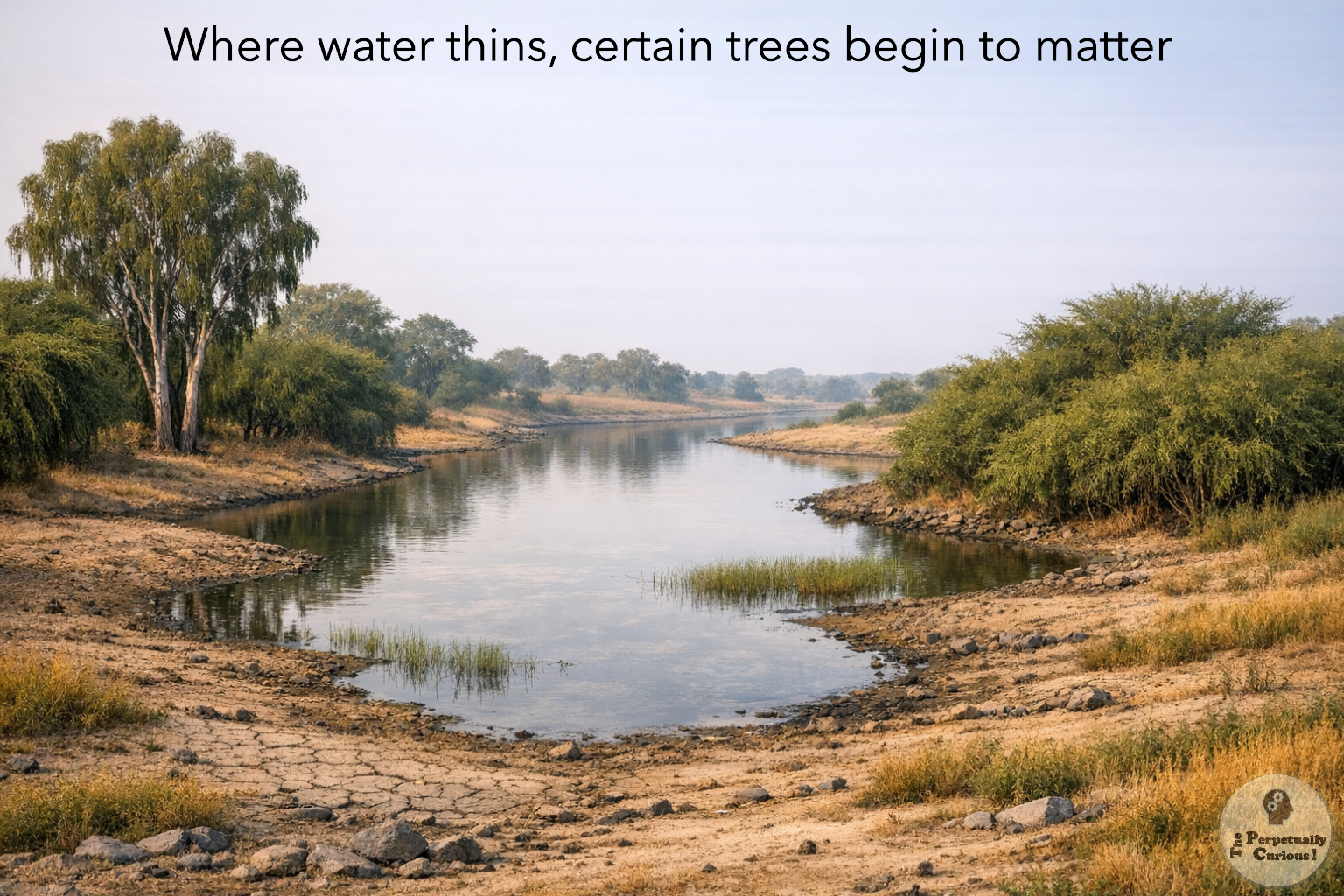
💧 Seasonal Ponds and Root Depth in South India
From section: Where the full story continuesThe main website article keeps the fuller structure, including the South Indian species context, the distinction between native and introduced plants, the hydrological nuance around eucalyptus and Prosopis, and the quieter human dimension of livelihoods, land use, and careful scientific language.
- The Perpetually Curious! › ArchivesGateway
TPC8‑QH‑CHEM‑003 🧪 Chemistry | ⚛️ Atomic Structure and Chemical Behavior
🧪 Chemistry Quiz: CHEM‑003 | Atomic Structure and Chemical Behavior 👉 Answer all 5 questions by clicking the option you believe is correct. Each choice you make will be highlighted. Once you have completed the quiz, select “Finish Quiz” to view your results and explanations.
- The Perpetually Curious! › ArchivesGateway
TPC8‑QH‑CHEM‑009 🧪 Chemistry | 🌀 Atomic Structure & Quantum Theory
🧪 Chemistry Quiz: CHEM‑009 | Atomic Structure & Quantum Theory 👉 Answer all 5 questions by clicking the option you believe is correct. Each choice you make will be highlighted. Once you have completed the quiz, select “Finish Quiz” to view your results and explanations.