Explore by topic, question, or idea. Find articles, reflections, videos, puzzles, and curiosity pathways gathered across the site.
Press Enter or select Search. A newly typed query starts globally; filters are applied only through the visible rail.
40 results for “sky in slow layers understanding earth atmospheric structure”
- The Perpetually Curious! › Archives › Cosmic ExplorationArticle
Lunar Regolith: The Moon's Ancient Chronicle Written in Dust 🌙
Opening Reflection ✨ Imagine holding a handful of powder made from rocks that formed long before life emerged on Earth, each grain a microscopic witness to billions of years of cosmic history.
- The Perpetually Curious! › Archives › Cosmic ExplorationArticle
Worlds Beyond Worlds: The Extraordinary Story of Exoplanets 🌌
In the vast theater of space, thousands of alien worlds dance around distant stars, each one rewriting our understanding of what a planet can be.Read more »
- The Perpetually Curious! › Archives › Cosmic ExplorationArticle
☀️ Our Sun’s Mass | Also Called the Solar Mass | The Celestial Mass Scale
In astronomy, our Sun’s mass is the definition of one solar mass, the standard unit used to compare the masses of stars and other celestial objects. This single measure anchors our understanding of the cosmos, allowing astronomers to place everything from small planets to…
- The Perpetually Curious! › Archives › Cosmic ExplorationArticle
🌌 Planetary Names Explained: From Ancient Gods to Modern Science
💡 Have you ever wondered why the planets in our solar system bear such distinctive names? From swift Mercury to majestic Jupiter, these names reflect ancient traditions that connect cultural understanding with the science of the skies. Read more »
- The Perpetually Curious! › Archives › Cosmic ExplorationArticle
💥 Neutron Stars: Cosmic Heavyweights That Defy Imagination
What Is a Neutron Star, and Why Do They Matter? Imagine holding a teaspoon that weighs more than every skyscraper on Earth combined. Neutron stars are cosmic heavyweights, dense beyond anything we know and filled with mysteries at the frontier of physics. Read more »
- The Perpetually Curious! › Archives › Cosmic ExplorationArticle
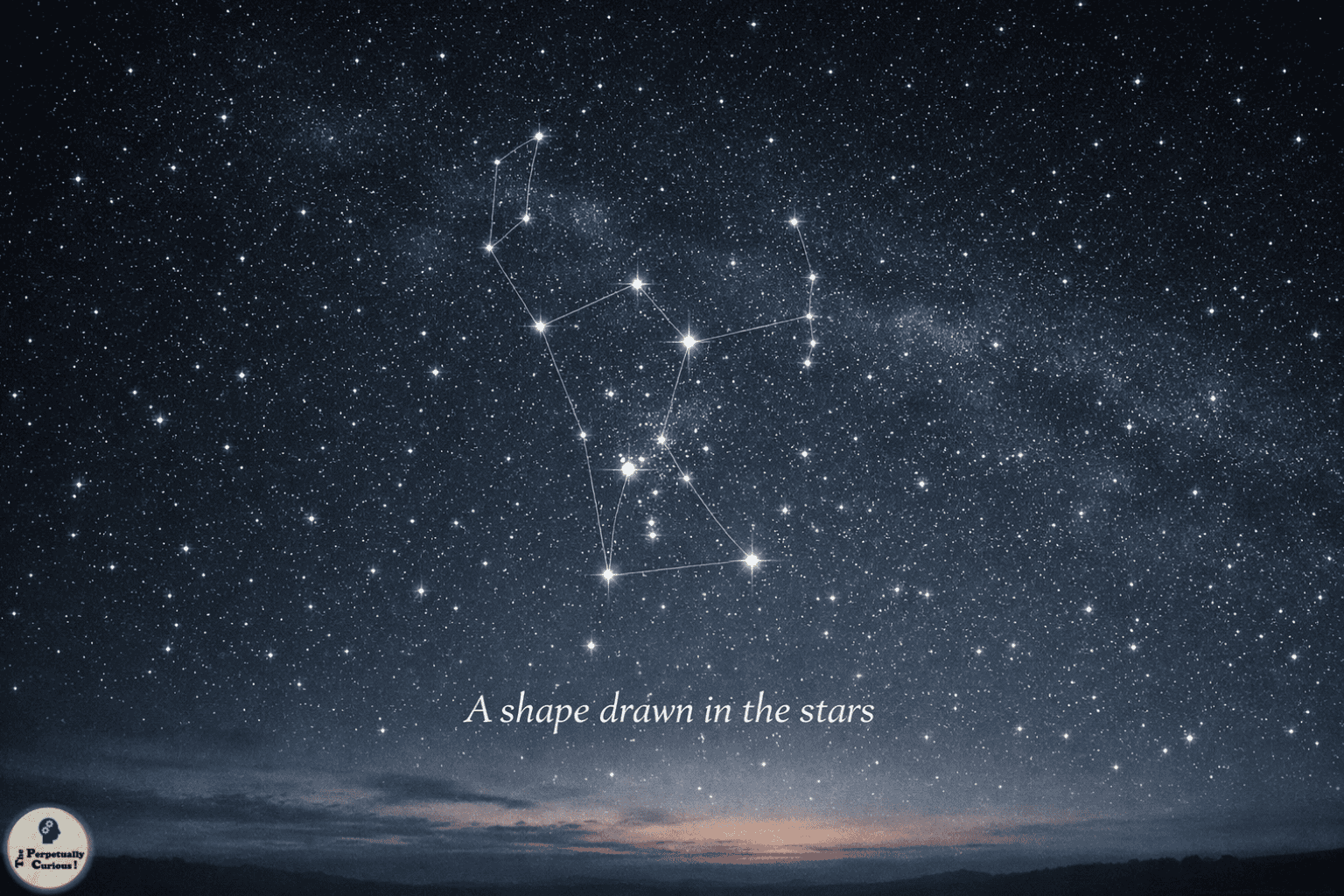
🌌 Constellations: How Star Patterns Help Us Find Our Way
At first glance, constellations look like drawings placed gently across the night. A hunter, a cross, a scorpion, a bear, or a bright line of stars can seem almost intentional, as though the sky itself has arranged symbols for us to find.
- The Perpetually Curious! › Archives › Cosmic ExplorationArticle
The Universe's Ancient Whisper: Decoding the Cosmic Microwave Background 🌌
From section: When Static Revealed Creation 📡Little did they know that this stubborn interference would soon reshape humanity's understanding of cosmic origins.
- The Perpetually Curious! › Archives › Cosmic ExplorationArticle
🔭 The Ten Largest Moons in Our Solar System: A Journey Through Worlds of Ice, Fire, and Hidden Oceans
The long tradition of naming these worlds after mythological figures reflects the cultural patterns embedded in planetary names, which often mirror the stories humans have projected onto the night sky.Read more »
- The Perpetually Curious! › Videos & Podcasts › Cosmic ExplorationPodcast
🌌 Planetary Names Explained: From Ancient Gods to Modern Science | Cosmic Exploration Series Podcast
#PlanetNames #SolarSystem #Astronomy 🪐 Why are the planets named Mercury, Venus, Earth, Mars, Jupiter, Saturn, Uranus, and Neptune? This astronomy podcast explores the origins and meanings of the planet names in our solar system, revealing how ancient observation, mythology…
- The Perpetually Curious! › Videos & Podcasts › Cosmic ExplorationPodcast
HD 100546 b: Unraveling a Cosmic Mystery | Cosmic Exploration Series Podcast
Watch on TPC YouTube ↗ Exoplanets & formation 🪐 HD 100546 b: Unraveling a Cosmic Mystery A young distant system opens questions about planetary formation, gas giants, disk structure, and how astronomers interpret emerging worlds.