Explore by topic, question, or idea. Find articles, reflections, videos, puzzles, and curiosity pathways gathered across the site.
Press Enter or select Search. A newly typed query starts globally; filters are applied only through the visible rail.
71 results for “the hyena paradox power care and clan life in africa night”
- The Perpetually Curious! › Archives › Botanical WondersArticle
The Banyan Tree: Nature's Living Cathedral 🌳
Opening: Where One Becomes Many In the botanical world, few organisms challenge our understanding of individuality quite like the banyan tree. Ficus benghalensis, as scientists know it, can begin life as an epiphyte germinating in the branches of another tree, though it can also…
- The Perpetually Curious! › Archives › Cosmic ExplorationArticle
🌔 Lunar Eclipses: Earth’s Shadow on the Moon
🌕➡️🔴 The Allure of a Lunar Eclipse: Earth’s Shadow Play in the Night Sky Among the many wonders of the night sky, few spectacles are as enchanting as a lunar eclipse. On these special nights, our familiar Moon is transformed, slipping into Earth’s shadow.
- The Perpetually Curious! › Archives › Wilderness & Homestead CreaturesArticle
🦜 More Than a Tongue: The Surprising Science of Why Animals Cannot Talk
Language is so woven into human life that it is easy to forget how unlikely it is. Across millions of animal species, only one lineage learned to shape breath into words, to give sound the weight of meaning, and to speak.
- The Perpetually Curious! › Archives › Cosmic ExplorationArticle
The Cosmic Clock: How Stars Age Through Billions of Years ⏰
When we gaze at the night sky, the stars appear eternal and unchanging. Yet our Sun offers the perfect window into stellar aging. Currently 4.6 billion years old and middle-aged by stellar standards, it demonstrates the stable hydrogen burning that characterizes stellar prime.
- The Perpetually Curious! › Archives › Cosmic ExplorationArticle
Lunar Regolith: The Moon's Ancient Chronicle Written in Dust 🌙
Opening Reflection ✨ Imagine holding a handful of powder made from rocks that formed long before life emerged on Earth, each grain a microscopic witness to billions of years of cosmic history.
- The Perpetually Curious! › Archives › Biology & HealthArticle
The Brain's Hidden River: Understanding Cerebrospinal Fluid and Its Vital Journey 💧
A clear, life-sustaining fluid flows through channels within your brain and spine every moment of every day, yet most people never know it exists. This is the story of cerebrospinal fluid, the remarkable substance that bathes, nourishes, and protects your nervous system.Read…
- The Perpetually Curious! › Archives › Biology & HealthArticle
🩸 Blood Types Explained: Composition, Classification, and Compatibility
💓 The River Within Us Blood is often called the river of life, and for good reason. Flowing through every organ and tissue, it sustains us by transporting oxygen, nutrients, hormones, and immune defenses. Without it, the body’s intricate systems would quickly fail.
- The Perpetually Curious! › Archives › Wilderness & Homestead CreaturesArticle
𓅦 The Marvels of Ostrich Evolution and Adaptation
Ostriches are among Africa’s most iconic animals, and far more than just large, flightless birds. With eyes bigger than those of any other land animal and legs built for 43 mph sprints, they are living showcases of evolution and adaptation.
- The Perpetually Curious! › Archives › Environment & SustainabilityArticle
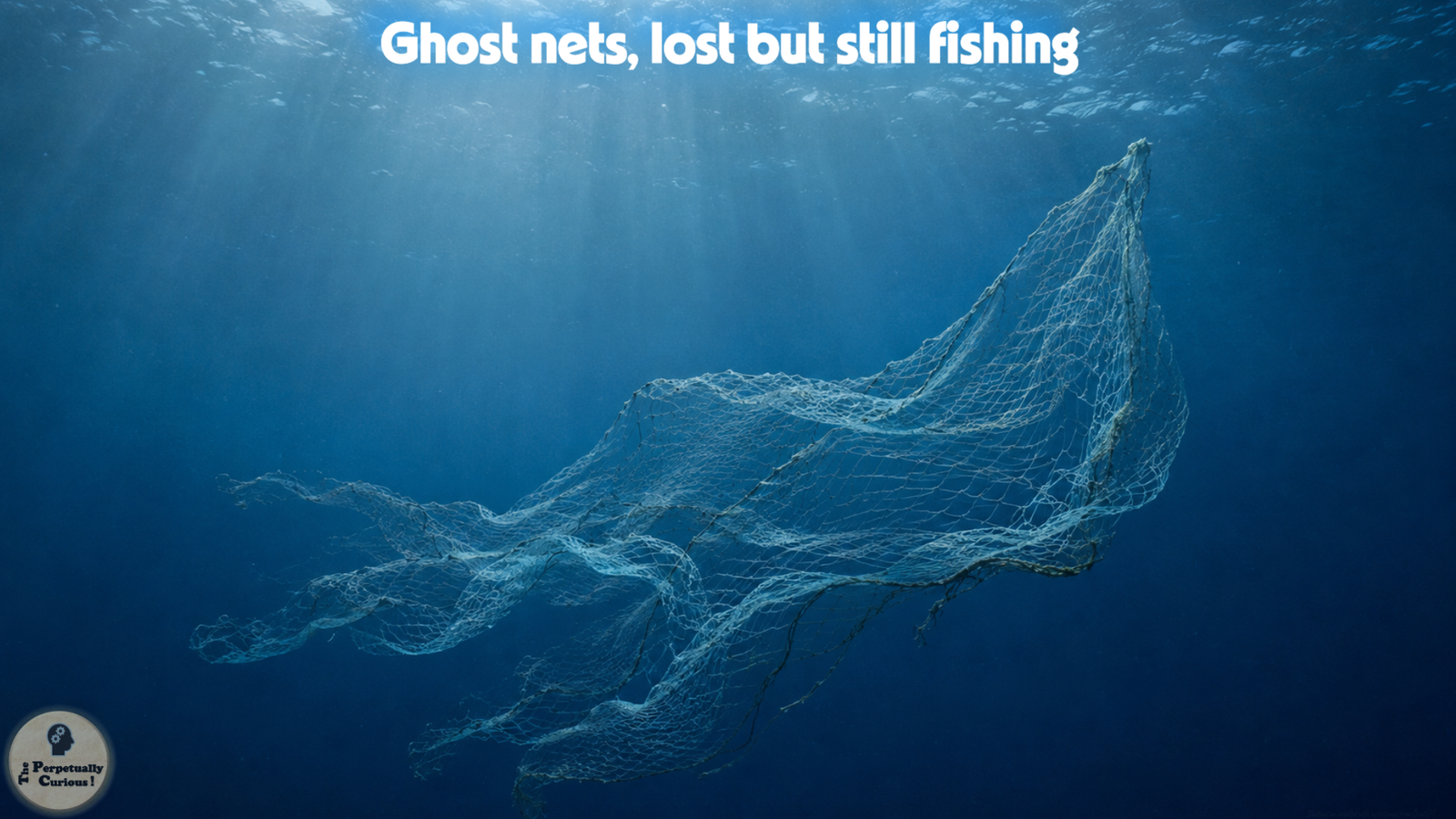
🕸️ Ghost Nets: Silent Killers Threatening Our Oceans and Reefs
🌊 Beneath the calm surface of the ocean, a hidden danger can keep moving long after people lose sight of it: ghost nets. These abandoned, lost, or discarded fishing nets may drift through open water, settle on reefs, tangle with other debris, or remain suspended where marine…
- The Perpetually Curious! › Archives › Planet EarthArticle
Where Earth's Temperate Logic Ends: Understanding the Arctic Circle 🌐
The Arctic Circle marks more than a line on our maps. At approximately 66.5 degrees north latitude (about 66°30′ N), this invisible boundary transforms how our planet receives light, how ecosystems function, and how humans experience the passage of time itself.