Explore by topic, question, or idea. Find articles, reflections, videos, puzzles, and curiosity pathways gathered across the site.
Press Enter or select Search. A newly typed query starts globally; filters are applied only through the visible rail.
19 results for “through the ages the naming of the months in our calendar history art culture podcast tpc8”
- The Perpetually Curious! › Archives › Cosmic ExplorationArticle
🌔 Lunar Eclipses: Earth’s Shadow on the Moon
🌕➡️🔴 The Allure of a Lunar Eclipse: Earth’s Shadow Play in the Night Sky Among the many wonders of the night sky, few spectacles are as enchanting as a lunar eclipse. On these special nights, our familiar Moon is transformed, slipping into Earth’s shadow.
- The Perpetually Curious! › Archives › Cosmic ExplorationArticle
☀️ Solar Eclipses Explained: The Dance of Shadow and Light
Solar eclipses are among the most captivating events in the sky. They reveal how a rare alignment of Sun, Moon, and Earth can transform the ordinary daylight landscape into something unfamiliar and striking. Daylight softens, shadows sharpen, and the familiar world takes on a new character.
- The Perpetually Curious! › Archives › Cosmic ExplorationArticle
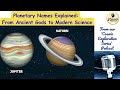
🌌 Planetary Names Explained: From Ancient Gods to Modern Science
💡 Have you ever wondered why the planets in our solar system bear such distinctive names? From swift Mercury to majestic Jupiter, these names reflect ancient traditions that connect cultural understanding with the science of the skies. Read more »
- The Perpetually Curious! › Archives › Cosmic ExplorationArticle
🔭 The Ten Largest Moons in Our Solar System: A Journey Through Worlds of Ice, Fire, and Hidden Oceans
To explore the ten largest moons is to follow a path through the outer solar system, where ice and rock shape worlds that are both familiar and profoundly alien.
- The Perpetually Curious! › Archives › Cosmic ExplorationArticle
💫 When Galaxies Feast: The Quiet Art of Cosmic Cannibalism
Galaxies often appear serene when viewed from a distance, as if they drift through the universe in gentle isolation. Yet their histories are shaped by encounters that unfold over immense spans of time. These encounters are not always dramatic or violent.
- The Perpetually Curious! › Archives › Cosmic ExplorationArticle
🌌 When Stars Become Worlds: A Journey Through the Largest Stars We Know
The largest stars in the universe are not simply scaled-up versions of the Sun. They are vast, unstable, and luminous structures whose outer layers drift in slow, turbulent motion. Their atmospheres are so extended that the idea of a clear surface begins to dissolve into gradients of thinning gas.
- The Perpetually Curious! › Archives › Cosmic ExplorationArticle
The Cosmic Clock: How Stars Age Through Billions of Years ⏰
When we gaze at the night sky, the stars appear eternal and unchanging. Yet our Sun offers the perfect window into stellar aging. Currently 4.6 billion years old and middle-aged by stellar standards, it demonstrates the stable hydrogen burning that characterizes stellar prime.
- The Perpetually Curious! › Archives › Cosmic ExplorationArticle
The Moon's Ancient Dance: Understanding Lunar Phases Through Science and Story 🌙
Every approximately 29.5 days, Earth’s sole natural satellite completes a shape-shifting performance that has captivated humanity since our species first gazed skyward.
- The Perpetually Curious! › Archives › Cosmic ExplorationArticle
🌌 The Hunt for the Invisible: Understanding Dark Matter Through Science's Greatest Detective Story
The universe is keeping a secret from us. About 85 percent of all the matter that exists remains stubbornly invisible, refusing to interact with light yet shaping everything we see. This invisible substance, which scientists call dark matter, represents one of the most profound…
- The Perpetually Curious! › Archives › Cosmic ExplorationArticle
Cosmic Eyes: How Humanity's Space Telescopes Unveil the Universe's Hidden Realms 🔭
The universe radiates stories across wavelengths our eyes cannot detect. From radio whispers to gamma-ray shouts, cosmic phenomena broadcast their secrets through an electromagnetic spectrum far broader than the narrow rainbow of human vision.