Explore by topic, question, or idea. Find articles, reflections, videos, puzzles, and curiosity pathways gathered across the site.
Press Enter or select Search. A newly typed query starts globally; filters are applied only through the visible rail.
267 results for “through the ages the naming of the months in our calendar history art culture podcast tpc8”
- The Perpetually Curious! › Archives › Cosmic ExplorationArticle
Cosmic Eyes: How Humanity's Space Telescopes Unveil the Universe's Hidden Realms 🔭
The universe radiates stories across wavelengths our eyes cannot detect. From radio whispers to gamma-ray shouts, cosmic phenomena broadcast their secrets through an electromagnetic spectrum far broader than the narrow rainbow of human vision.
- The Perpetually Curious! › Archives › Biology & HealthArticle
The Symphony of Time: Understanding Our Body's Multiple Biological Clocks 🕰️
Temporal Embodiment: We Are Made of Time ⏳ Human existence unfolds through rhythms that most of us never consciously perceive. From the rapid pulsing of neural oscillations to various endocrine rhythms including menstrual cycles, our bodies maintain an intricate temporal…
- The Perpetually Curious! › Archives › PhysicsArticle
⚖️ Solar Luminosity: The Universal Stellar Power Scale
☀️ Every second, our Sun unleashes energy equivalent to 1.8 billion Tsar Bombas, the most powerful nuclear weapon ever detonated. Yet this cosmic violence sustains all earthly life through a number that has become astronomy's gold standard: 3.828×10²⁶ watts.
- The Perpetually Curious! › Archives › ChemistryArticle
The Noble Elements: Nature's Perfect Solitude 🌌
🔢 (Periodic Table Series, Part 3) In the rightmost column of the periodic table dwells a family of elements that have mastered the art of being complete unto themselves.
- The Perpetually Curious! › Archives › Biology & HealthArticle
The Second Brain Speaks First: When Parkinson's Disease Begins in Your Belly 🧠
Opening: The Conversation You Never Knew You Were Having 💭 Deep within your belly lies a second brain: the enteric nervous system, an actual network of 200 to 600 million neurons woven through your gut walls. These neurons control digestion independently, without needing any…
- The Perpetually Curious! › Archives › Environment & SustainabilityArticle
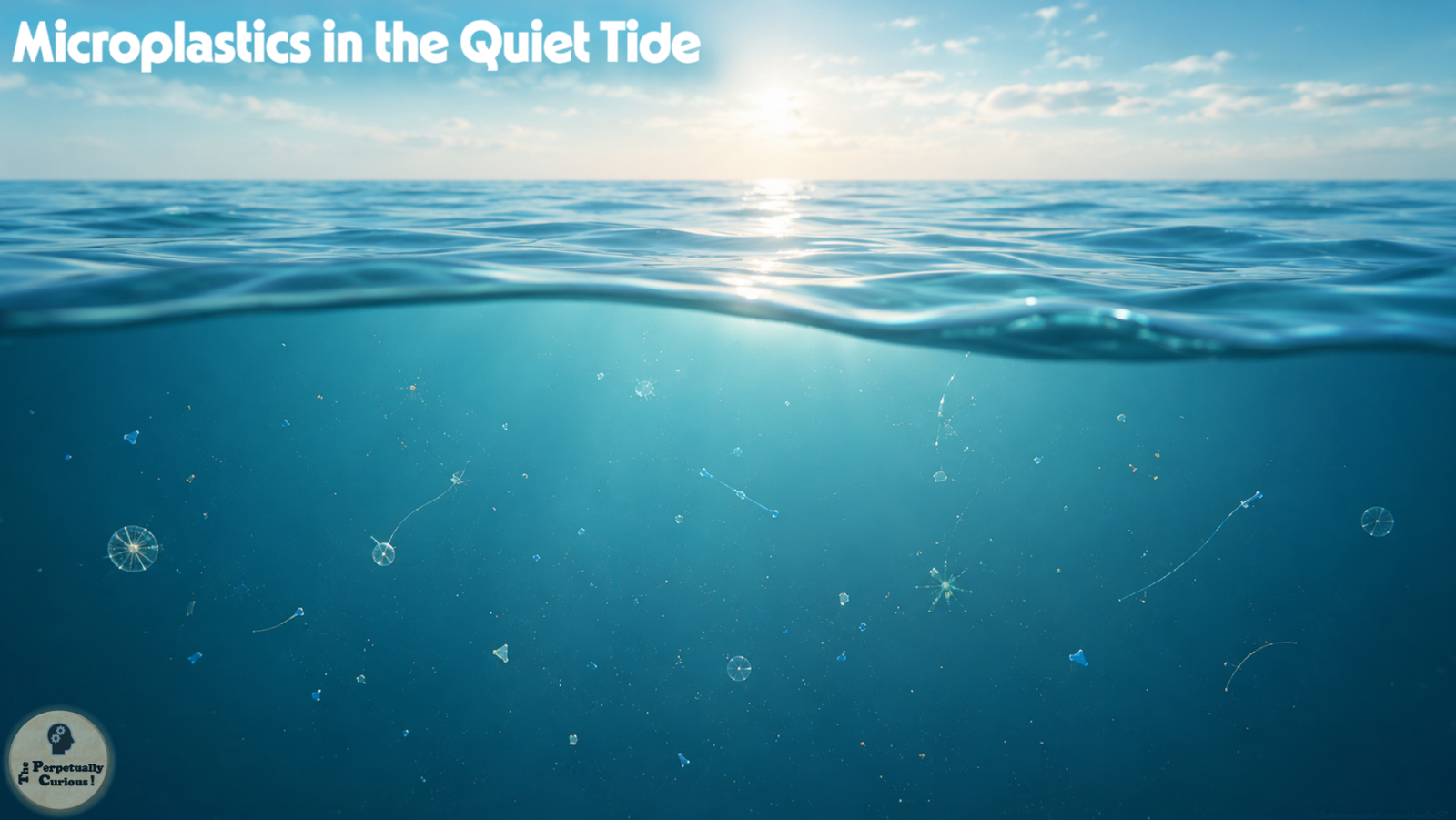
🌊 Microplastics in the Ocean: How Tiny Fragments Travel
Microplastics in the ocean are not only small pieces of plastic. They are mobile fragments, shaped by weathering, water movement, and the living systems they pass through.
- The Perpetually Curious! › Archives › Environment & SustainabilityArticle
From Rainforest Floor to Landfill Core: How Nature's Decomposers Are Learning to Eat Our Plastic Problem 🍄
In 2011, undergraduate students trudging through Ecuador's rainforest made an accidental discovery that would reshape our approach to plastic waste. Their equipment bag, supposedly sealed against moisture, had become lunch for an unexpected guest.
- The Perpetually Curious! › Archives › Environment & SustainabilityArticle
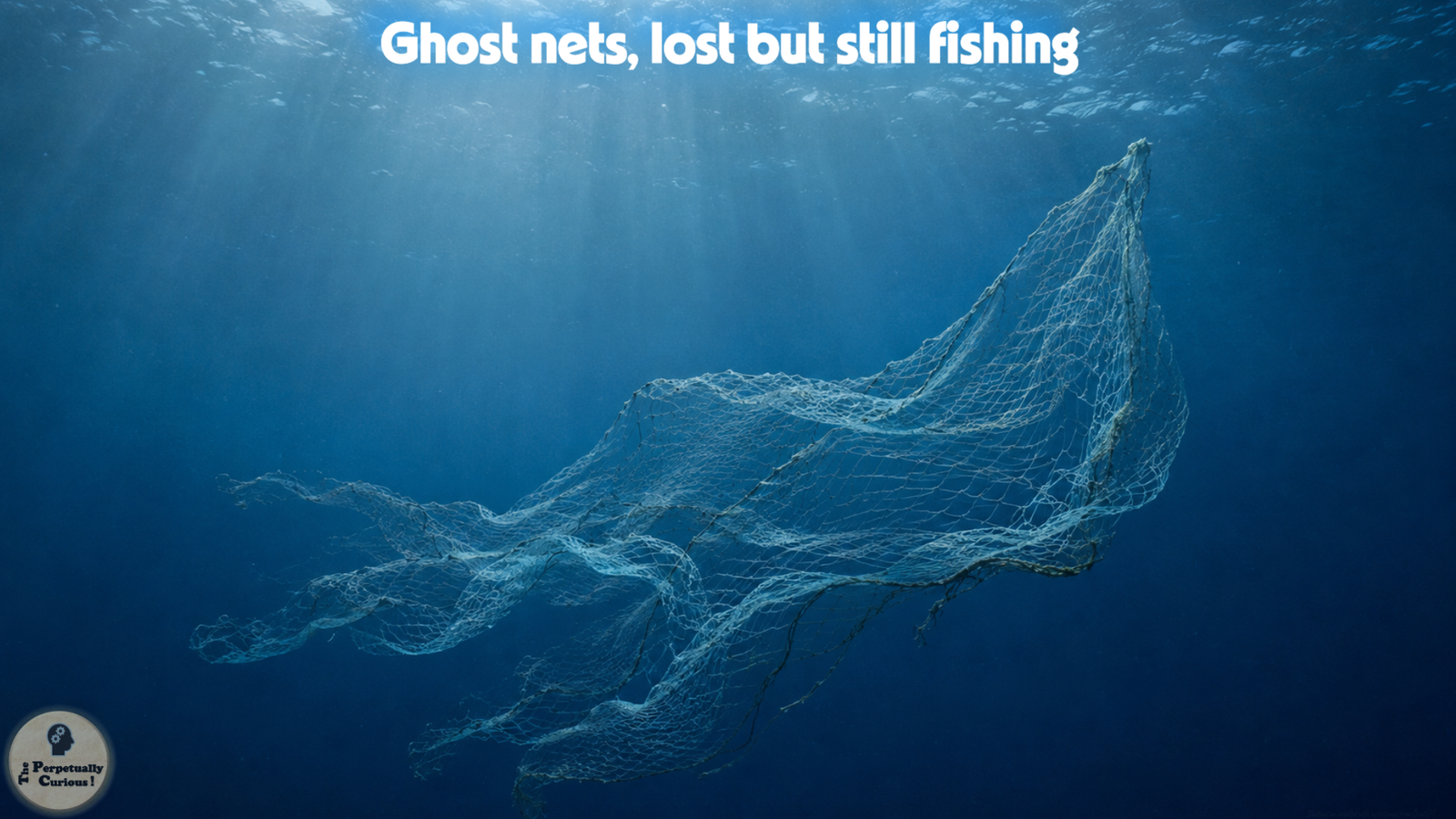
🕸️ Ghost Nets: Silent Killers Threatening Our Oceans and Reefs
🌊 Beneath the calm surface of the ocean, a hidden danger can keep moving long after people lose sight of it: ghost nets. These abandoned, lost, or discarded fishing nets may drift through open water, settle on reefs, tangle with other debris, or remain suspended where marine…
- The Perpetually Curious! › Archives › Botanical WondersArticle
🌲 The Wood Wide Web: How Trees Whisper Beneath Our Feet
When you walk through a forest, you might first notice the crunch of leaves underfoot, the shafts of sunlight filtering through the canopy, or the rich scent of earth in the air. Yet beneath your feet lies another world, an unseen network as alive and dynamic as any city.
- The Perpetually Curious! › Archives › Wilderness & Homestead CreaturesArticle
🐻 Sleeping Giants of Winter: How Bear Hibernation Rewrites the Rules of Survival
❄️ A quiet den beneath the snow Winter settles slowly across northern forests. Snow gathers on branches, streams stiffen under thin ice, and deep beneath roots or rock a bear curls into a darkened den. For months this large mammal generally will not eat, drink, urinate, or defecate.