Explore by topic, question, or idea. Find articles, reflections, videos, puzzles, and curiosity pathways gathered across the site.
Press Enter or select Search. A newly typed query starts globally; filters are applied only through the visible rail.
169 results for “tides of plastic microplastic pollution in the oceans and its journey back to us”
- The Perpetually Curious! › Canonical › Environment & SustainabilityArticle
🔄 Tides of Plastic: Microplastic Pollution in the Oceans and Its Journey Back to Us
Their journey begins with movement. Plastic fragments leave roads, rivers, shorelines, vessels, and cities, then enter waters that do not hold still. …
- The Perpetually Curious! › Archives › Environment & SustainabilityArticle
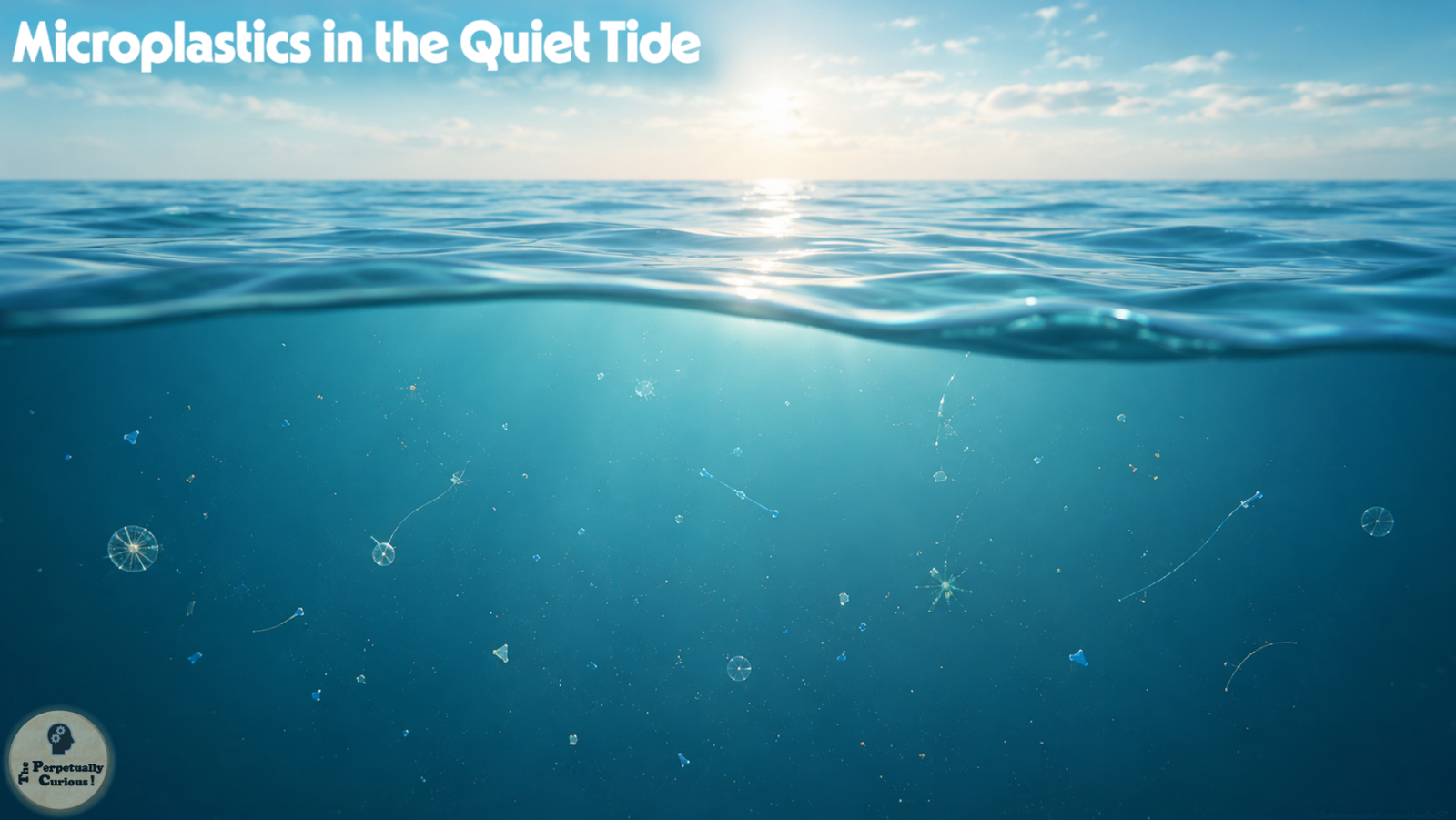
🌊 Microplastics in the Ocean: How Tiny Fragments Travel
Microplastics in the ocean are not only small pieces of plastic. They are mobile fragments, shaped by weathering, water movement, and the living systems they pass through.
- The Perpetually Curious! › CanonicalGateway
🌱 Environment & Sustainability | ✍️ Articles
From section: 🧪 Pollution & ContaminationTides of Plastic: Microplastic Pollution in the Oceans and Its Journey Back to Us
- The Perpetually Curious! › Canonical › Planet EarthArticle
🌊 Where the Salt Stays: Why the Ocean Is Salty but Rivers and Most Lakes Are Fresh
From section: 💡 Did You Know🧂 Salt can move from ocean to rock and back again. When seawater evaporates in restricted basins, minerals can crystallize into evaporite deposits. …
- The Perpetually Curious! › Canonical › Wilderness & Homestead CreaturesArticle
🧫 Tides of Chemical Worlds: How Animals Meet the Molecules Around Them
Before an animal sees or hears another creature, it often meets its chemistry first. Across forests, oceans, and grasslands, animals move through landscapes shaped not only by terrain and climate, but also by chemistry.
- The Perpetually Curious! › Canonical › Environment & SustainabilityArticle
🕸️ Ghost Nets, Silent Drifters: How Lost Fishing Gear Haunts the Ocean
From section: 🌍 Ghost nets and the story of ocean plasticsAs nets fray and fragment, they can also contribute to microplastic pollution. These smaller particles may be ingested by fish, invertebrates, and other organisms. …
- The Perpetually Curious! › Archives › Environment & SustainabilityArticle
From Rainforest Floor to Landfill Core: How Nature's Decomposers Are Learning to Eat Our Plastic Problem 🍄
Inside, a fuzzy interloper was quietly digesting polyurethane plastic, transforming synthetic polymer chains back into simple compounds.
- The Perpetually Curious! › Archives › Cosmic ExplorationArticle
🔭 The Ten Largest Moons in Our Solar System: A Journey Through Worlds of Ice, Fire, and Hidden Oceans
The solar system is often introduced as a family of planets circling the Sun, yet some of its most remarkable landscapes belong to the moons that accompany those planets. These moons are not passive companions. They are worlds with their own histories, atmospheres, oceans, and internal heat.
- The Perpetually Curious! › Canonical › Biology & HealthArticle
🧠 The Brain’s Guarded Border: How the Blood-Brain Barrier Protects Us and Complicates Treatment
From section: 🚦 A border that sorts rather than seals… Insulin and transferrin-related pathways, for example, allow selected cargo to be taken into endothelial cells and moved across them. In the opposite direction, efflux pumps can recognize many foreign compounds and send them back toward the blood. …
- The Perpetually Curious! › Canonical › PhysicsArticle
🌟 When Light Learns to Answer Back: The Quiet Science of Mirrors
… Understanding how mirrors work invites us to follow light on that journey, and from that journey, the story of reflection unfolds into physics, materials science, perception, technology, and culture.