Explore by topic, question, or idea. Find articles, reflections, videos, puzzles, and curiosity pathways gathered across the site.
Press Enter or select Search. A newly typed query starts globally; filters are applied only through the visible rail.
122 results for “understanding the world traditional medicine systems a cultural and historical perspective”
- The Perpetually Curious! › Archives › Wilderness & Homestead CreaturesArticle
🐝 Two Wasp Approaches to Securing the Next Generation: Builders vs. Infiltrators in Nature
📖 Introduction Wasps are among the most versatile predators in the insect world, and their methods for raising young are as varied as their shapes and colors.
- The Perpetually Curious! › Archives › Cosmic ExplorationArticle
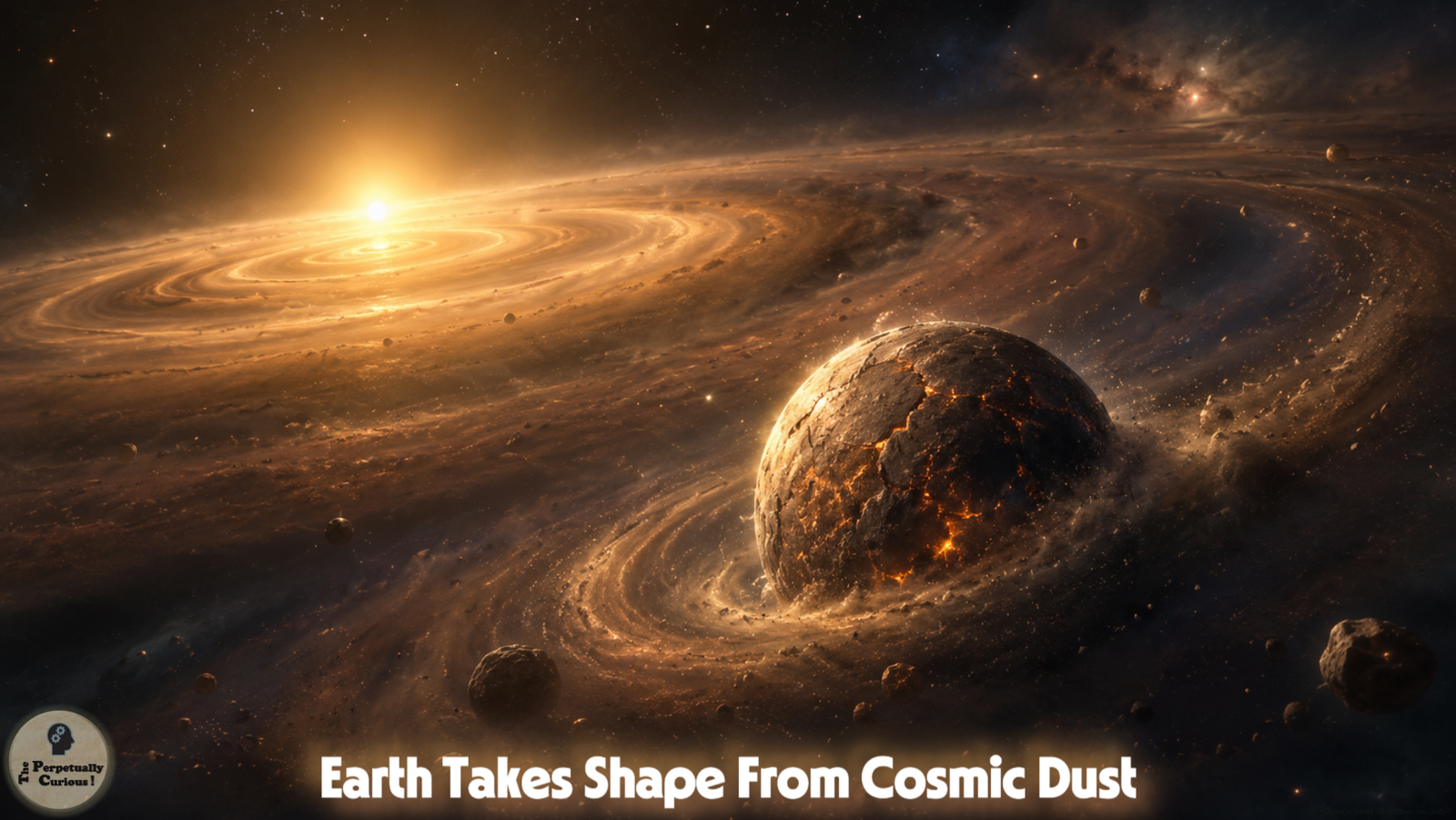
🌍 How Earth Formed: The Slow Assembly of a Young Rocky World
From section: When Gravity Began to Amplify GrowthA larger world exerted a stronger gravitational pull and could participate in increasingly energetic collisions.
- The Perpetually Curious! › Archives › Cosmic ExplorationArticle
🌌 The Silent Storm Above: Understanding Our Orbital Debris Challenge
The night sky appears serene and infinite, yet beyond our atmosphere swirls an invisible tempest of our own making. ESA estimates about 140 million debris fragments in the 0.04 to 0.4 inch (1 mm to 1 cm) range, plus about 1.2 million objects between 0.4 and 4 inches (1 to 10…
- The Perpetually Curious! › Archives › Biology & HealthArticle
The Symphony of Time: Understanding Our Body's Multiple Biological Clocks 🕰️
Temporal Embodiment: We Are Made of Time ⏳ Human existence unfolds through rhythms that most of us never consciously perceive. From the rapid pulsing of neural oscillations to various endocrine rhythms including menstrual cycles, our bodies maintain an intricate temporal…
- The Perpetually Curious! › Archives › PhysicsArticle
⚗️ The Invisible Revolution: Understanding the Ancient Art and Modern Science of Glass Manufacturing
Where Sand Becomes Transparent 🏛️ Glass surrounds us so completely that we rarely pause to consider its profound mystery. This transparent solid, neither truly liquid nor conventionally crystalline, represents one of humanity's most transformative discoveries.
- The Perpetually Curious! › Archives › Biology & HealthArticle
When the Echo Remains: Understanding Post-Viral Reflux in Children and Adults 🌙
The clock reads 3:17 AM when the coughing starts again. Not the sharp bark of a cold, but that wet, choking sound every parent learns to recognize with dread. Your child sits up, eyes wide with panic, as stomach acid burns its way up their throat.
- The Perpetually Curious! › Archives › Botanical WondersArticle
🌿 How Plants Tell Time: The Quiet Clocks That Shape the Living World
Imagine a morning glory on a warm summer morning. Long before the first direct sunlight reaches its petals, the bud begins to loosen, cells take up water, and the flower slowly unfurls. Even when light conditions vary, it tends to follow a familiar daily rhythm for some time.
- The Perpetually Curious! › Archives › PhysicsArticle
The Cosmic Recipe: Understanding the Physical Criteria for Star Formation 🌟
Opening the Cosmic Kitchen 🌌 In the vast expanse of our universe, where darkness stretches for light-years and cold reigns supreme, something extraordinary happens. Stars are born. This process, far from being a simple ignition, represents one of nature's most complex and beautiful phenomena.
- The Perpetually Curious! › Archives › Cosmic ExplorationArticle
🌌 The Hunt for the Invisible: Understanding Dark Matter Through Science's Greatest Detective Story
The universe is keeping a secret from us. About 85 percent of all the matter that exists remains stubbornly invisible, refusing to interact with light yet shaping everything we see. This invisible substance, which scientists call dark matter, represents one of the most profound…
- The Perpetually Curious! › Archives › Planet EarthArticle
Where Earth's Temperate Logic Ends: Understanding the Arctic Circle 🌐
The Arctic Circle marks more than a line on our maps. At approximately 66.5 degrees north latitude (about 66°30′ N), this invisible boundary transforms how our planet receives light, how ecosystems function, and how humans experience the passage of time itself.