Explore by topic, question, or idea. Find articles, reflections, videos, puzzles, and curiosity pathways gathered across the site.
Press Enter or select Search. A newly typed query starts globally; filters are applied only through the visible rail.
32 results for “vertical worlds the 14 lokas in ancient indian cosmology”
- The Perpetually Curious! › Canonical › Cosmic ExplorationArticle
The Cosmic Recipe: Understanding the Physical Criteria for Star Formation 🌟
From section: ✨ Conclusion: the continuing story of stellar birthThe recipe began in cold darkness, with gravity working patiently through gas and dust. It ends not with a single finished object but with continuity: a star, a disk, possible worlds, and matter that may one day return to the next generation of stellar birth.
- The Perpetually Curious! › Archives › Cosmic ExplorationArticle
🌍 Why Earth Has a Living Atmosphere
A Cosmic Story of Gravity, Distance, and the Long Evolution of Air 🔭 Opening the Question Every planet carries a story in the sky above it. Some worlds hold thick blankets of gas, others keep only a faint whisper, and many have none at all.
- The Perpetually Curious! › Canonical › Cosmic ExplorationArticle
🛰️ When Fire Meets Air: How Spacecraft Reenter Earth’s Atmosphere
High above Earth’s landscapes, spacecraft trace arcs through a realm where air gradually thins toward the quiet of orbit. Launch carries them outward through Earth’s layered atmosphere, but return brings the same atmospheric envelope into a very different role.
- The Perpetually Curious! › Archives › Cosmic ExplorationArticle
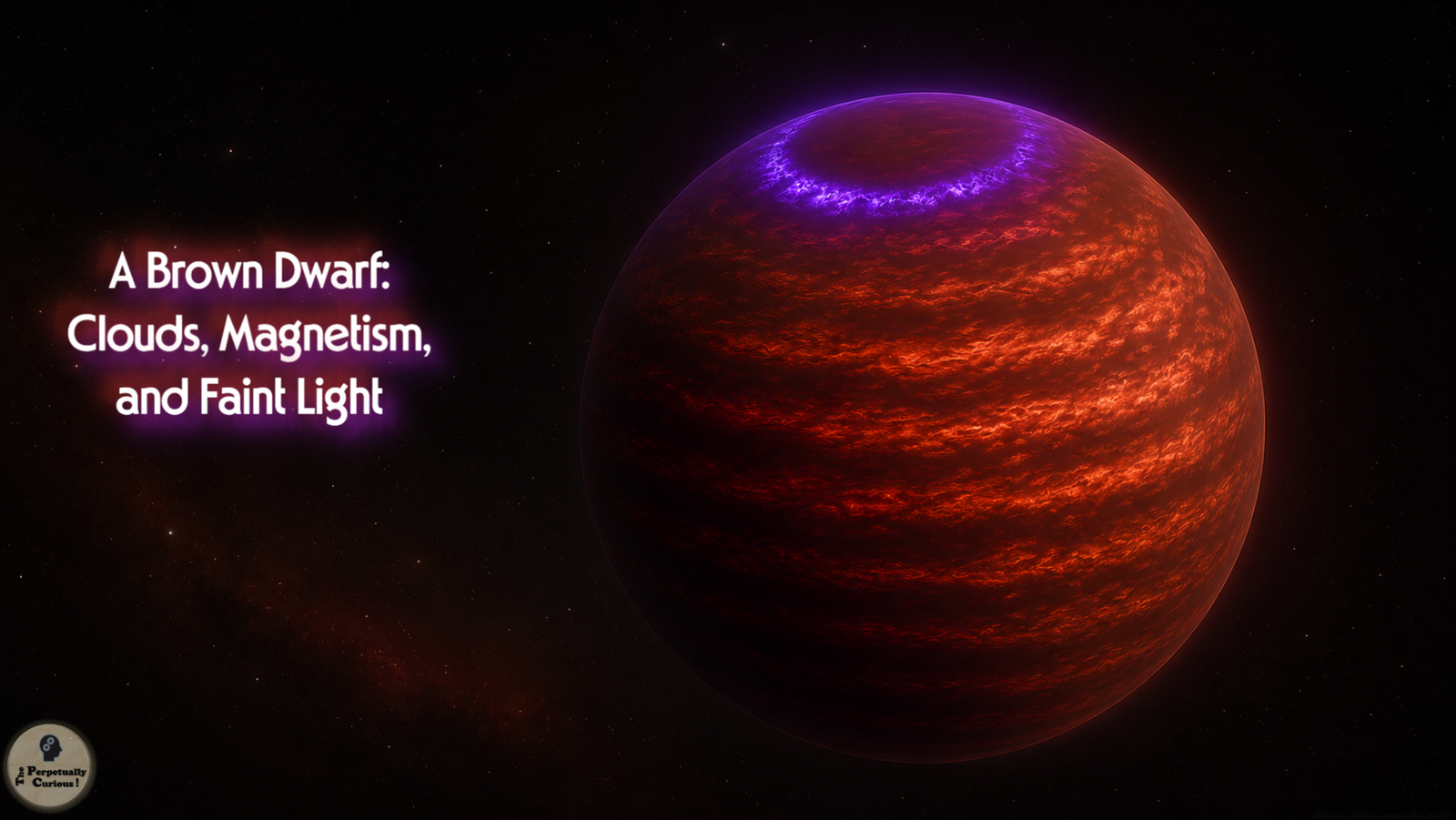
🌟 Brown Dwarfs: Why Stellar Ignition Never Takes Hold
From section: 🌌 A life powered by stored heatThat distinction turns a narrow difference in mass into an entirely different cosmic biography, revealing how gravity, heat, pressure, and quantum physics divide the smallest stars from the dark worlds beside them.
- The Perpetually Curious! › Archives › Cosmic ExplorationArticle
☀️ Solar Eclipses Explained: The Dance of Shadow and Light
Solar eclipses are among the most captivating events in the sky. They reveal how a rare alignment of Sun, Moon, and Earth can transform the ordinary daylight landscape into something unfamiliar and striking. Daylight softens, shadows sharpen, and the familiar world takes on a new character.
- The Perpetually Curious! › Archives › Cosmic ExplorationArticle
The Unlikely Astronauts: What Earth’s Toughest Survivors Teach Us About the Possibility of Life Elsewhere 🦠
For decades, our search for alien life focused on finding another Earth: a comfortable, temperate world with liquid water and gentle sunshine. But life, as we have discovered, finds a way in the most hostile environments imaginable.
- The Perpetually Curious! › Archives › Cosmic ExplorationArticle
When the Sky Falls: Extraordinary Precipitation Across Our Solar System 🌧️
We call it rain when water falls from Earth's clouds, but that simple word stretches and transforms across our solar system into phenomena that challenge our earthbound vocabulary. Should we call it rain when methane cascades onto Titan's hydrocarbon shores?
- The Perpetually Curious! › Archives › Cosmic ExplorationArticle
🪐 HD 100546 b: Unraveling a Cosmic Mystery
Astronomy enthusiasts may find HD 100546 b especially compelling: a candidate gas giant located about 359 light‑years away in the constellation Musca, identified through Gaia DR3 measurements.
- The Perpetually Curious! › Archives › Cosmic ExplorationArticle
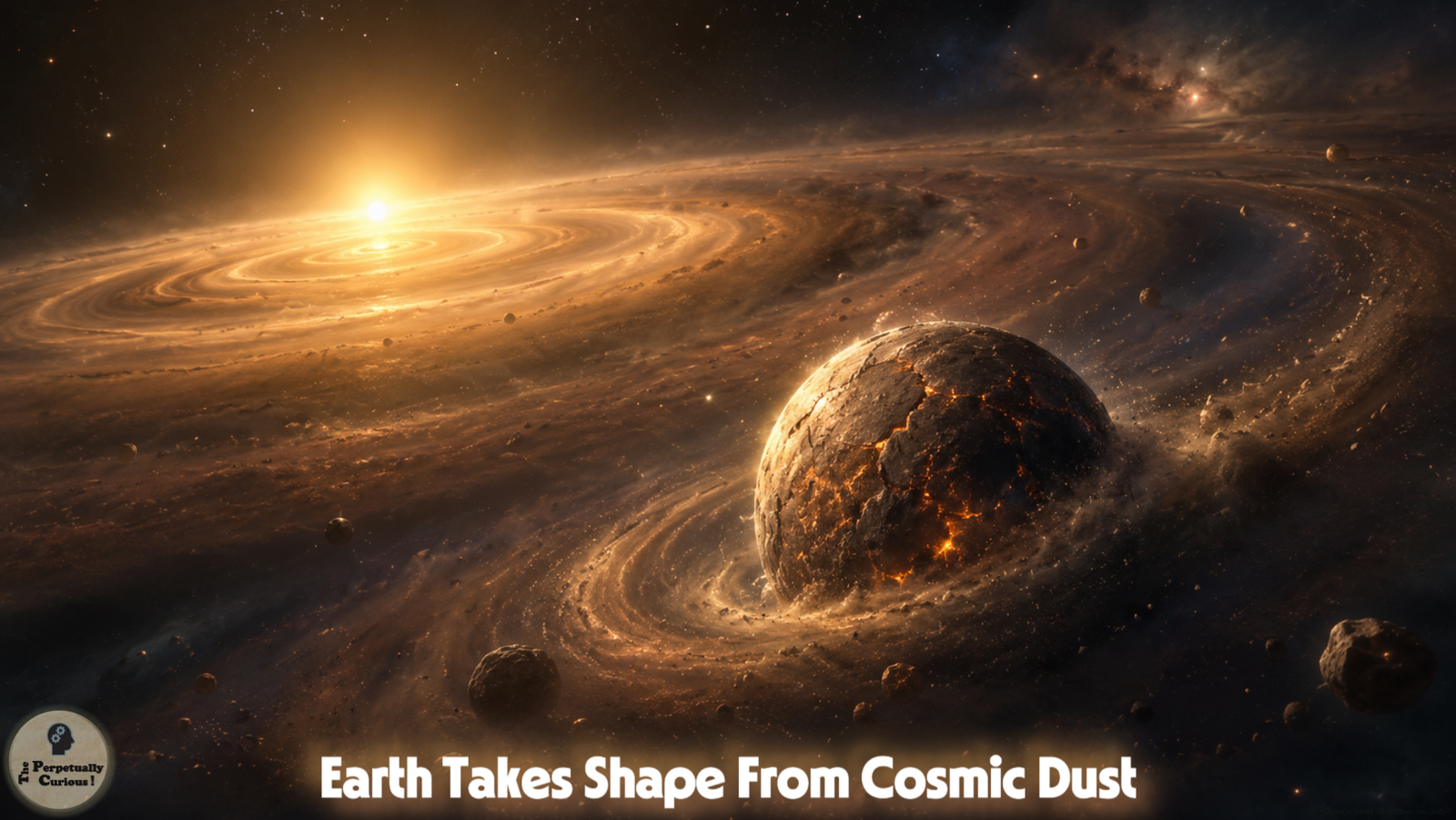
🌍 How Earth Formed: The Slow Assembly of a Young Rocky World
Earth did not appear as a finished sphere in an otherwise complete Solar System. Its beginning was distributed across a rotating disk of gas, dust, rock, and metal around the newborn Sun.
- The Perpetually Curious! › Archives › Cosmic ExplorationArticle
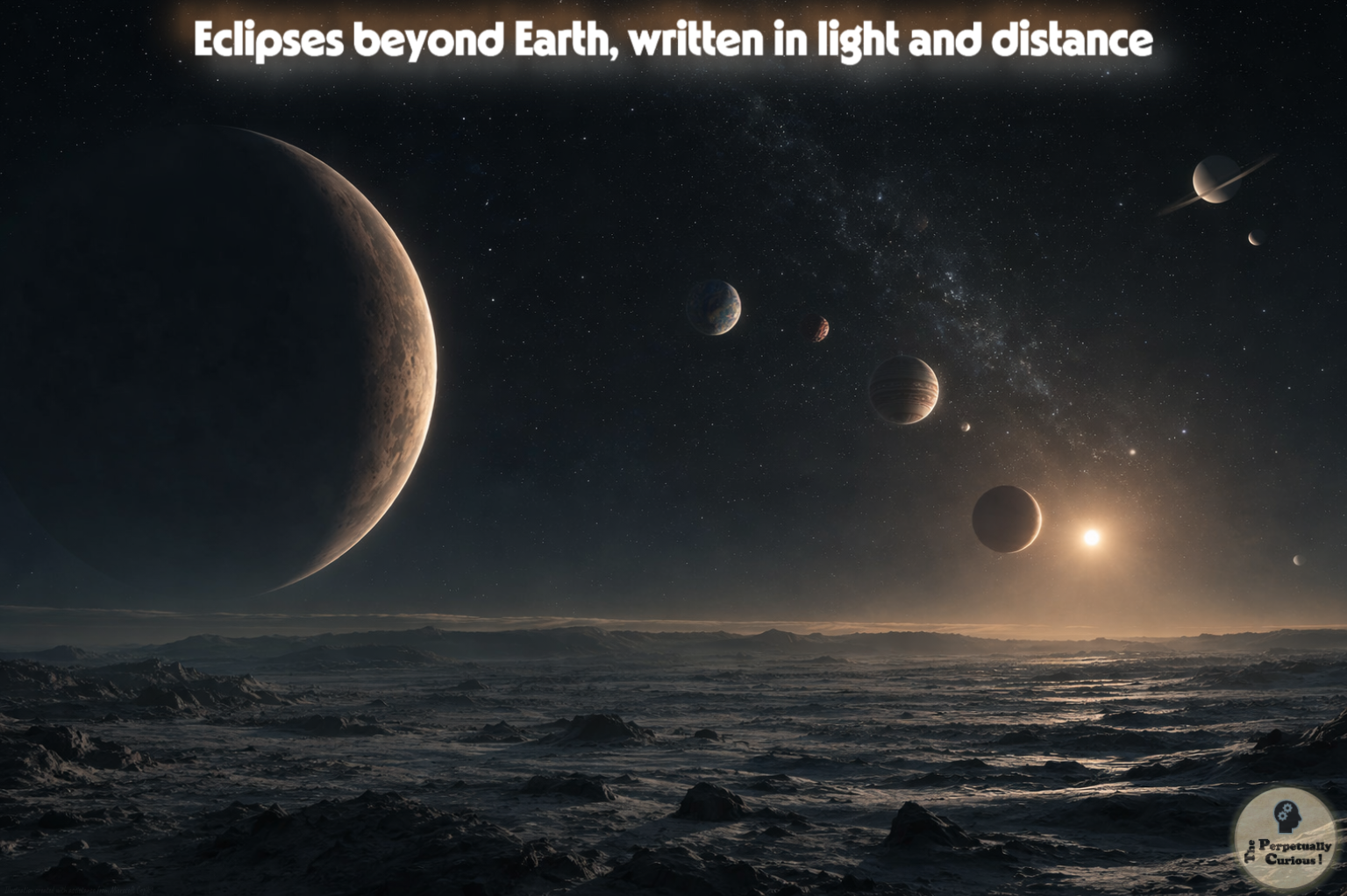
🌘 Eclipses Across the Solar System: When Shadows Travel
An eclipse can feel like a rare celestial exception, but the underlying arrangement is simple. A light source shines, one world blocks that light, and another surface receives the shadow. On Earth, the Sun, Moon, and our planet create the examples we know best.