Explore by topic, question, or idea. Find articles, reflections, videos, puzzles, and curiosity pathways gathered across the site.
Press Enter or select Search. A newly typed query starts globally; filters are applied only through the visible rail.
188 results for “when light learns to answer back the quiet science of mirrors”
- The Perpetually Curious! › Archives › PhysicsArticle
🔬 The Light That Sees Through You: How X-Rays Illuminate the Hidden World Within
On the evening of November 8, 1895, a quiet laboratory in Würzburg, Germany, became the setting for one of science's most luminous accidents. Wilhelm Conrad Röntgen, a methodical and deeply curious physicist, had been experimenting with cathode ray tubes, which were sealed glass…
- The Perpetually Curious! › Archives › Food & LifestyleArticle
🌾 From Seed to Shimmering Skillet: The Quiet Science of Cooking Oils
A bottle of cooking oil often appears simple and familiar, yet its journey from seed to liquid light is far more intricate than its calm surface suggests. Inside every seed lies a quiet reservoir of stored energy, a compact promise of future growth.
- The Perpetually Curious! › Archives › Planet EarthArticle
The Science of Snow Whiteness: A Journey Through Light and Ice ❄️
From section: Introduction ❄️This transformation from the clarity of simple ice to the collective whiteness of snowfall reveals fundamental principles about how light interacts with matter.
- The Perpetually Curious! › Archives › PhysicsArticle
🐋 How Do Whales Float? The Science of Buoyancy Beneath the Waves
Whales are the giants of the ocean, with blue whales reaching up to 200 tons. Yet they move through the water with surprising grace. If you have ever wondered how such colossal animals manage to float, sink, and swim so smoothly, the answer lies in the fascinating blend of…
- The Perpetually Curious! › Archives › PhysicsArticle
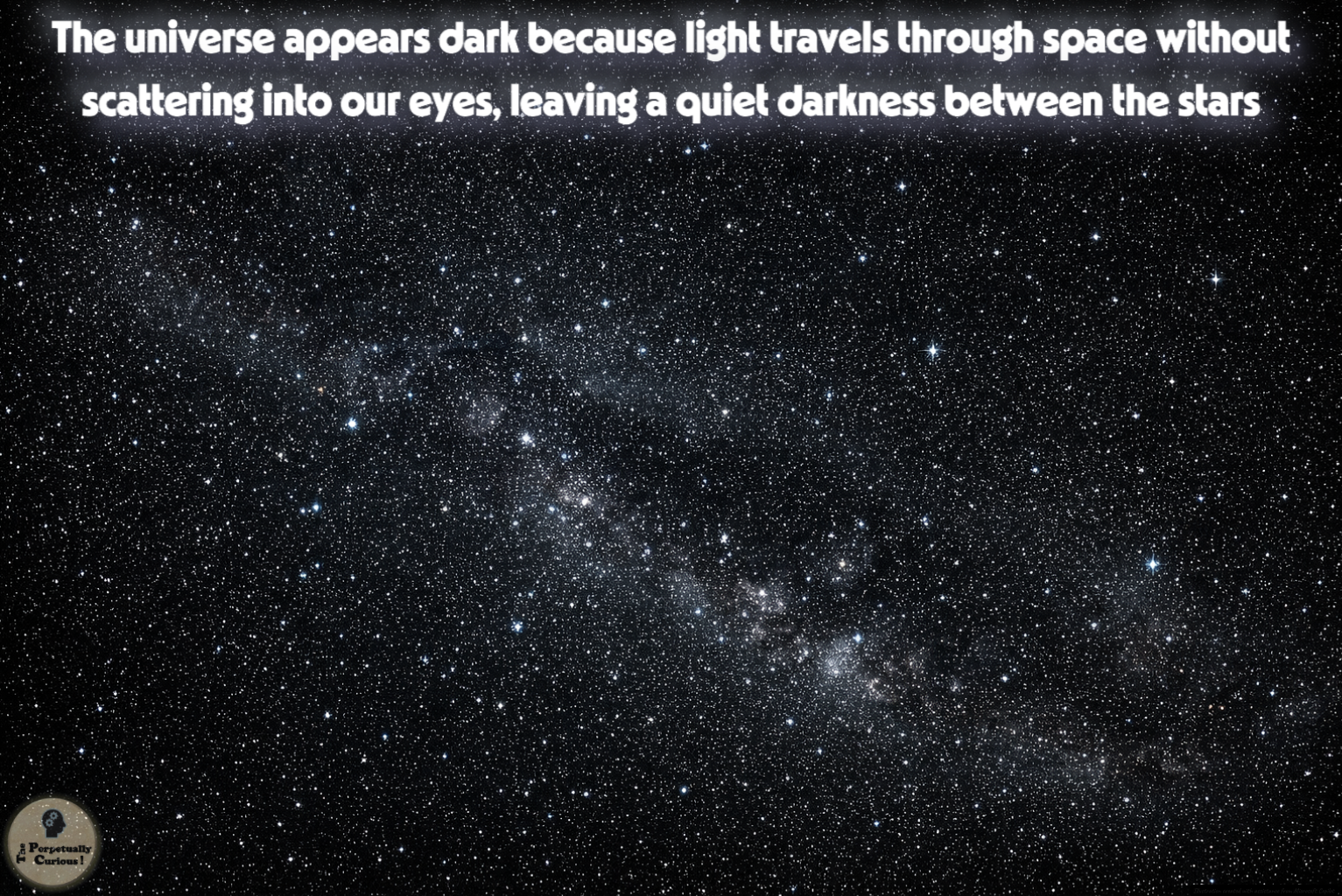
🌌 Why Space Looks Dark: Light, Matter, and the Quiet Cosmos
From section: How light becomes visibleHow light becomes visible Light becomes visible to us when it enters the eye from a source, a reflective surface, or a glowing object.
- The Perpetually Curious! › Archives › PhysicsArticle
🌫️ How Radar Listens to the Sky: The Quiet Science Behind the Sweep
A radar dish turning slowly against the horizon often feels like a quiet sentinel, listening for stories carried on invisible waves. Although the technology is rooted in physics and engineering, its practice has a quiet elegance, as radar sends brief pulses of energy into the…
- The Perpetually Curious! › Archives › Botanical WondersArticle
The Sweet Science of Stevia: Nature's Molecular Marvel 🌿
From section: Introduction: Where Ancient Wisdom Meets Modern Science 🔬Introduction: Where Ancient Wisdom Meets Modern Science 🔬 For generations, the Guaraní people of Paraguay have known what molecular biologists would take decades to understand.
- The Perpetually Curious! › Archives › Botanical WondersArticle
🌳 The Art and Science of Bonsai: Crafting Living Harmony in Miniature Trees
🌱 Bonsai is far more than horticulture It is living art, science, and a journey that blends ancient wisdom with creativity. This guide explores everything from species selection and soil science to philosophy, advanced techniques, and the vibrant community that keeps the…
- The Perpetually Curious! › Archives › Planet EarthArticle
❄️ Antarctica: Southernmost Continent’s Frozen Symphony of Silence and Light
From section: ❓ FAQ… What appears as snow is often just old snow being blown around by katabatic winds that in rare extremes have been recorded near 200 mph (320 km/h). To understand why this ancient snow appears brilliantly white, see our related article: ✍️ The Science of Snow Whiteness: A Journey Through Light and Ice ❄️
- The Perpetually Curious! › Archives › Botanical WondersArticle
🌿 How Plants Tell Time: The Quiet Clocks That Shape the Living World
Imagine a morning glory on a warm summer morning. Long before the first direct sunlight reaches its petals, the bud begins to loosen, cells take up water, and the flower slowly unfurls. Even when light conditions vary, it tends to follow a familiar daily rhythm for some time.