Explore by topic, question, or idea. Find articles, reflections, videos, puzzles, and curiosity pathways gathered across the site.
Press Enter or select Search. A newly typed query starts globally; filters are applied only through the visible rail.
22 results for “when worlds shine why some planets outglow others in our night sky”
- The Perpetually Curious! › Archives › Botanical WondersArticle
🌳🍂 Harmony of Hues: Painting the Landscape with Crimson and Gold
🍁 Have you ever wondered why many leaves do not simply fade in autumn, but instead ignite into crimson, gold, and amber while others settle quietly into softer browns?
- The Perpetually Curious! › Archives › Botanical WondersArticle
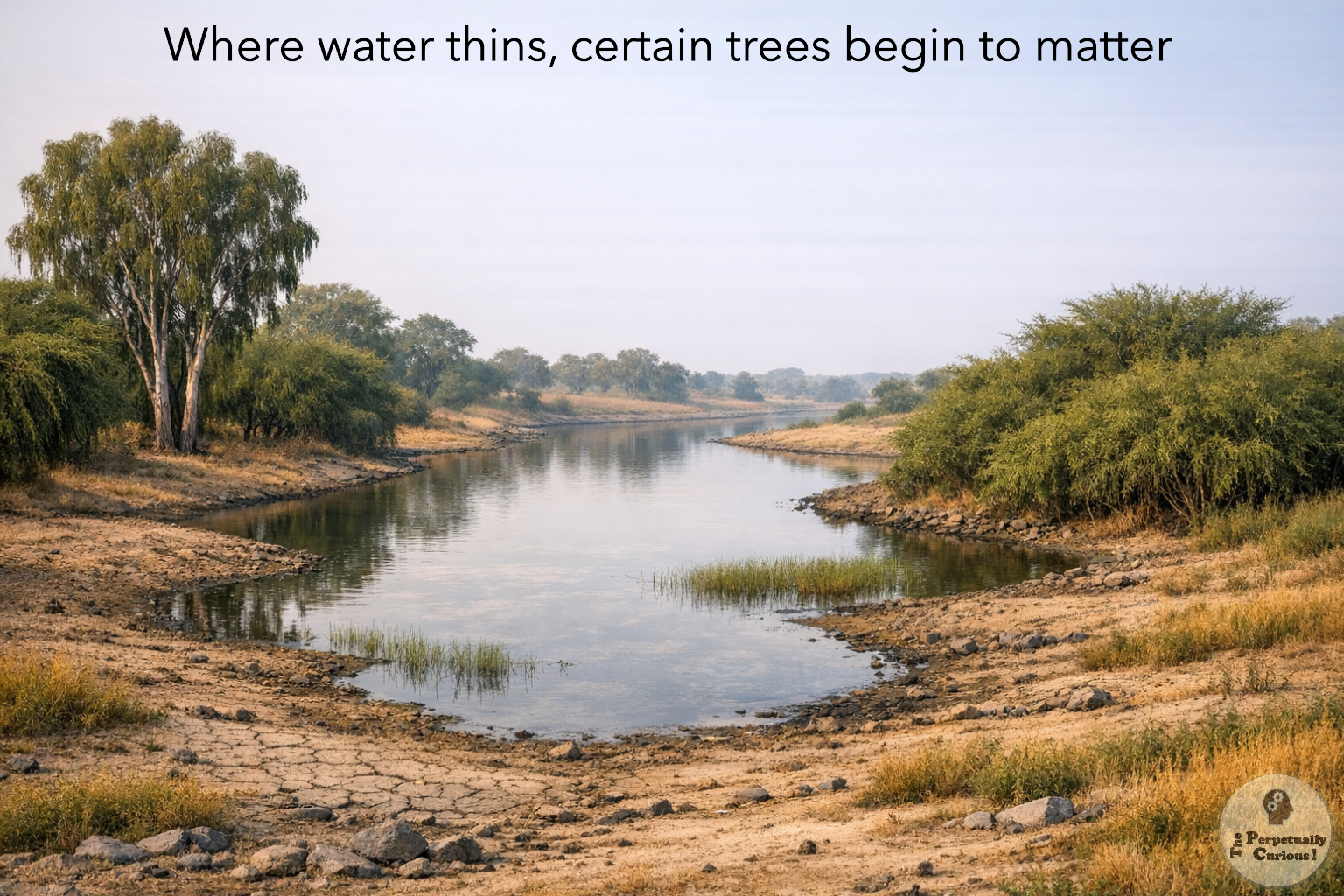
💧 Seasonal Ponds and Root Depth in South India
Seasonal ponds often look still from a distance, yet their edges can hold some of the most active negotiations in a dry landscape. In parts of South India, stored rainwater, shallow aquifers, dry soil, and plant roots meet in a narrow zone where each season leaves its mark.
- The Perpetually Curious! › Archives › Botanical WondersArticle
🎨 The Colorful World of Grapes: What Makes Each Variety Unique
🍇 Red, Green, or Black: What Sets Grapes Apart? Grapes have long captured our attention with their vibrant colors and diverse flavors. Yet beyond their appearance lies a fascinating story of plant chemistry and nutrition.
- The Perpetually Curious! › Archives › Botanical WondersArticle
The Sweet Science of Stevia: Nature's Molecular Marvel 🌿
From section: Introduction: Where Ancient Wisdom Meets Modern Science 🔬Today, as we decode the molecular recognition principles behind taste perception, we discover that this traditional knowledge anticipated some of the most sophisticated principles in biochemistry.Read more »
- The Perpetually Curious! › Archives › Botanical WondersArticle
The Riverbank Architect: Discovering the Remarkable Arjuna Tree 🌊
The Arjuna tree (Terminalia arjuna) shapes entire landscapes across South Asia, engineering riverbanks with living architecture that typically reaches 65 to 82 feet (around 20 to 25 meters), with some specimens growing even taller.Read more »
- The Perpetually Curious! › Archives › Botanical WondersArticle
🌱 Grafting: Where Science and Art Take Root
From section: 🌿 What is grafting?While horticultural grafting of monocots is generally impractical, recent laboratory research has demonstrated embryonic grafts in some monocot groups, though these remain experimental and are not used in standard practice.
- The Perpetually Curious! › Archives › Botanical WondersArticle
The Banyan Tree: Nature's Living Cathedral 🌳
Opening: Where One Becomes Many In the botanical world, few organisms challenge our understanding of individuality quite like the banyan tree. Ficus benghalensis, as scientists know it, can begin life as an epiphyte germinating in the branches of another tree, though it can also…
- The Perpetually Curious! › Archives › Botanical WondersArticle
🌲 The Wood Wide Web: How Trees Whisper Beneath Our Feet
When you walk through a forest, you might first notice the crunch of leaves underfoot, the shafts of sunlight filtering through the canopy, or the rich scent of earth in the air. Yet beneath your feet lies another world, an unseen network as alive and dynamic as any city.
- The Perpetually Curious! › Archives › Botanical WondersArticle
🎍 Rising Fast: The Skyward Wonder of Asian Bamboo
🌱 A Botanical Marvel Bamboo has long been celebrated as a symbol of strength and flexibility, but it also holds a rare distinction in the plant kingdom: it is among the fastest-growing land plants.
- The Perpetually Curious! › Archives › Botanical WondersArticle
🍊 Citrus Family Tree: How Ancient Lineages Became Familiar Fruits
Papeda lineages also matter in the ancestry of some limes, but the central pattern is already visible in those three ancestral pillars.