Explore by topic, question, or idea. Find articles, reflections, videos, puzzles, and curiosity pathways gathered across the site.
Press Enter or select Search. A newly typed query starts globally; filters are applied only through the visible rail.
244 results for “where earth creatures to quiet ink”
- The Perpetually Curious! › Archives › Planet EarthArticle
🌊 Harbor Wave, Ocean Pulse: The Science of Tsunamis from Seafloor to Shore
Some ocean hazards announce themselves with wind, foam, and a rising sky. A tsunami often does not. Far from shore, it may pass as a long, subtle lift, more like a slow breath than a breaking wave. Even the word “wave” can mislead, because a tsunami is not simply the surface…
- The Perpetually Curious! › Archives › Wilderness & Homestead CreaturesArticle
🦜 More Than a Tongue: The Surprising Science of Why Animals Cannot Talk
Language is so woven into human life that it is easy to forget how unlikely it is. Across millions of animal species, only one lineage learned to shape breath into words, to give sound the weight of meaning, and to speak.
- The Perpetually Curious! › Archives › Wilderness & Homestead CreaturesArticle
🦍 Circles of Care: Understanding the Family Lives of Great Apes
Opening: Where Intelligence Meets Tenderness 🌿 In the shrinking forests of Africa and Southeast Asia, four remarkable species demonstrate nature's varied approaches to nurturing consciousness.
- The Perpetually Curious! › Archives › Wilderness & Homestead CreaturesArticle
The Symphony of Stripes: Decoding Nature's Most Elegant Barcode 🦓
Where Mathematics Meets Majesty ✨ A zebra against the African sunrise creates a living masterwork, stripes that have inspired human art and science for millennia.
- The Perpetually Curious! › Archives › Wilderness & Homestead CreaturesArticle
🐌 Nature's Time Travelers: The Extraordinary Art of Snail Estivation
In March 1850, William Baird, a shell expert at the British Museum, noticed something peculiar about a desert snail in the mollusk collection. The specimen from Egypt, collected four years earlier and presumed dead, showed signs beneath its sealed shell opening (its epiphragm).
- The Perpetually Curious! › Archives › Wilderness & Homestead CreaturesArticle
🦈 Scars That Speak: Shark Survival Stories Etched in Skin
Introduction 🌊 Every scar on a shark tells a story, each a record as unique as the path that shark has traveled through its environment. These marks are not just wounds. They are survival records that reveal the hidden dramas of the ocean.
- The Perpetually Curious! › Archives › Wilderness & Homestead CreaturesArticle
🐧 Penguin Diversity: Exploring Species, Adaptations, and Habitats
Prelude: Beyond the Ice When most people picture penguins, they imagine black and white birds waddling across Antarctic ice. But the truth is far richer. Penguins are classified into about eighteen species across six genera: great, brush tailed, crested, banded, little, and yellow eyed.
- The Perpetually Curious! › Archives › Wilderness & Homestead CreaturesArticle
🐝 Two Wasp Approaches to Securing the Next Generation: Builders vs. Infiltrators in Nature
📖 Introduction Wasps are among the most versatile predators in the insect world, and their methods for raising young are as varied as their shapes and colors.
- The Perpetually Curious! › Archives › Wilderness & Homestead CreaturesArticle
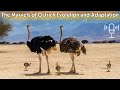
𓅦 The Marvels of Ostrich Evolution and Adaptation
Ostriches are among Africa’s most iconic animals, and far more than just large, flightless birds. With eyes bigger than those of any other land animal and legs built for 43 mph sprints, they are living showcases of evolution and adaptation.
- The Perpetually Curious! › Archives › Wilderness & Homestead CreaturesArticle
🦩 Why Do Flamingos Stand on One Leg? The Science Behind Their Iconic Pose
Flamingos are instantly recognizable for their vivid pink plumage, long slender legs, and graceful presence in shallow lakes and lagoons. Among their most distinctive traits is the habit of standing on one leg, a posture that often appears serene and effortless. This behavior is…