Explore by topic, question, or idea. Find articles, reflections, videos, puzzles, and curiosity pathways gathered across the site.
Press Enter or select Search. A newly typed query starts globally; filters are applied only through the visible rail.
114 results for “why space looks dark in a universe filled with light understanding the quiet cosmos”
- The Perpetually Curious! › Archives › Cosmic ExplorationArticle
The Universe's Greatest Mystery: Why You Exist at All 🌌
The Cosmic Coin Flip That Created Everything In the universe's first moments after the Big Bang, the universe played a game of annihilation that should have left nothing behind. Matter met antimatter in a cosmic battlefield, particle pairs destroying each other in perfect flashes of pure energy.
- The Perpetually Curious! › Archives › Planet EarthArticle
Where Earth's Temperate Logic Ends: Understanding the Arctic Circle 🌐
The Arctic Circle marks more than a line on our maps. At approximately 66.5 degrees north latitude (about 66°30′ N), this invisible boundary transforms how our planet receives light, how ecosystems function, and how humans experience the passage of time itself.
- The Perpetually Curious! › Archives › Biology & HealthArticle
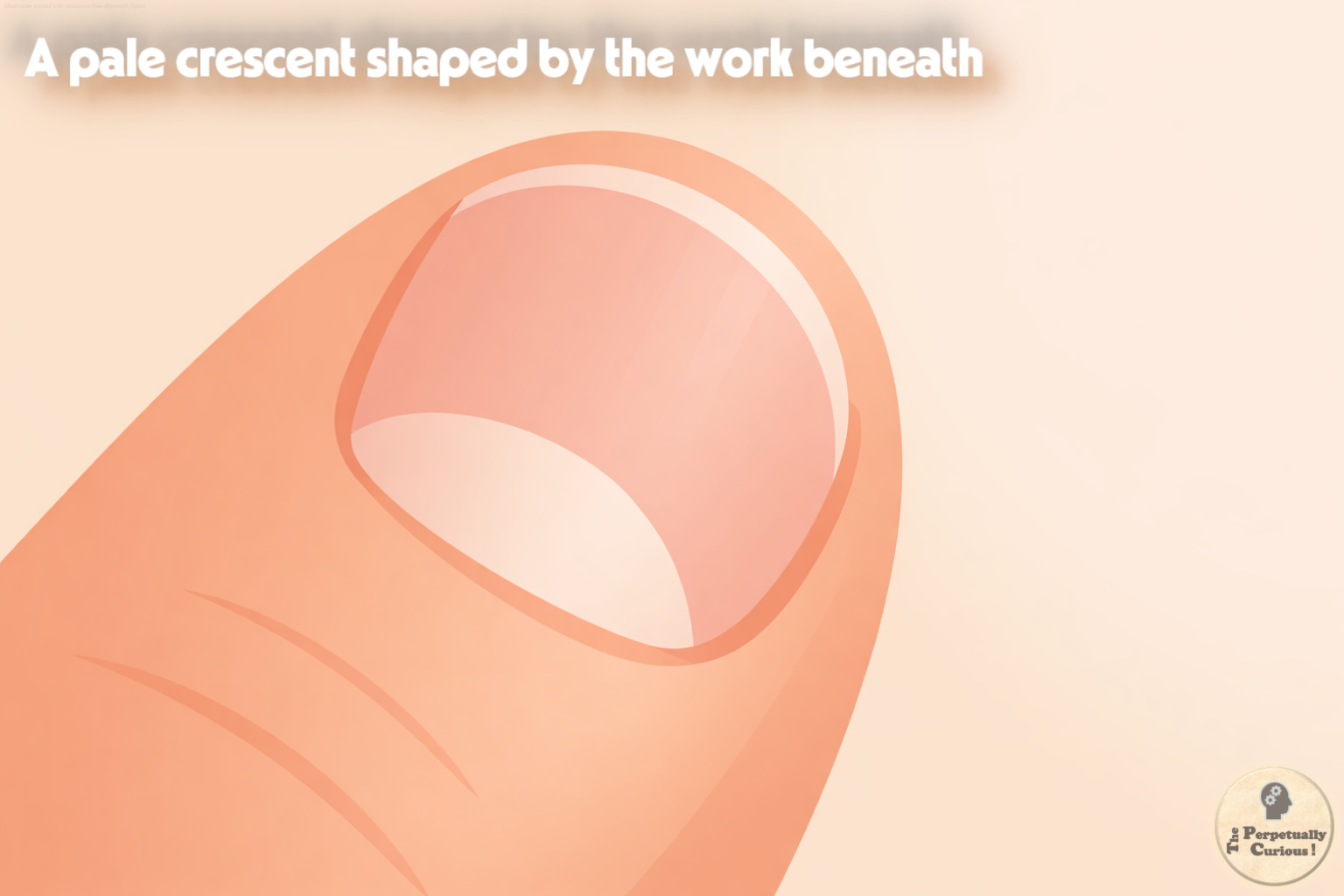
🌙 White Half Moon on Nails: The Quiet Growth Zone Beneath
From section: The crescent begins in the matrixThat is why the lunula looks whitish while the rest of the nail often looks more pink.
- The Perpetually Curious! › Archives › Cosmic ExplorationArticle
🌌 When Worlds Shine: Why Some Planets Outglow Others in Our Night Sky
When these ideas come together, the familiar points of light become characters in a quiet celestial drama.Read more »
- The Perpetually Curious! › Archives › History, Arts, and CultureArticle
🌍 Understanding the World's Traditional Medicine Systems: A Cultural and Historical Perspective
From section: The Ancient Roots of Healing Wisdom 🌿This exploration offers a window into these traditional systems, examining their historical foundations, core principles, and place within our modern understanding of healthcare.Read more »
- The Perpetually Curious! › Archives › PhysicsArticle
🌍 When Worlds Pull: Gravity Across the Planets and What It Reveals About Them
Gravity is the quiet sculptor of the cosmos. It shapes the paths of planets, guides the drift of moons, and anchors every step taken on the surface of a world. When we compare gravity across the Solar System, we begin to see how each planet carries its own gravitational signature.
- The Perpetually Curious! › Archives › Botanical WondersArticle
Rubber Production Explained: From Tree Latex to Durable Elasticity 🌿
From Milky Latex to Elastic Resilience, and the Quiet Science Behind It A tire hums over rain-dark pavement. A rubber band stretches, and returns. A gasket holds pressure where metal meets metal. A glove yields to motion without tearing.
- The Perpetually Curious! › Archives › Cosmic ExplorationArticle
🌌 The Cosmic Silence: Unraveling the Fermi Paradox in an Age of Discovery
In 1950, physicist Enrico Fermi posed a question that still feels disarmingly direct: “Where is everybody?” It was not a claim about what must exist, but a moment of clear reasoning in a universe that seems generous with stars and unexpectedly quiet with replies.Read more »
- The Perpetually Curious! › Archives › Cosmic ExplorationArticle
Worlds Beyond Worlds: The Extraordinary Story of Exoplanets 🌌
In the vast theater of space, thousands of alien worlds dance around distant stars, each one rewriting our understanding of what a planet can be.Read more »
- The Perpetually Curious! › Archives › Cosmic ExplorationArticle
☀️ Our Sun’s Mass | Also Called the Solar Mass | The Celestial Mass Scale
In astronomy, our Sun’s mass is the definition of one solar mass, the standard unit used to compare the masses of stars and other celestial objects. This single measure anchors our understanding of the cosmos, allowing astronomers to place everything from small planets to…