Explore by topic, question, or idea. Find articles, reflections, videos, puzzles, and curiosity pathways gathered across the site.
Press Enter or select Search. A newly typed query starts globally; filters are applied only through the visible rail.
241 results for “why space looks dark in a universe filled with light understanding the quiet cosmos”
- The Perpetually Curious! › Archives › Biology & HealthArticle
The Symphony of Time: Understanding Our Body's Multiple Biological Clocks 🕰️
Temporal Embodiment: We Are Made of Time ⏳ Human existence unfolds through rhythms that most of us never consciously perceive. From the rapid pulsing of neural oscillations to various endocrine rhythms including menstrual cycles, our bodies maintain an intricate temporal…
- The Perpetually Curious! › Archives › PhysicsArticle
⚗️ The Invisible Revolution: Understanding the Ancient Art and Modern Science of Glass Manufacturing
Where Sand Becomes Transparent 🏛️ Glass surrounds us so completely that we rarely pause to consider its profound mystery. This transparent solid, neither truly liquid nor conventionally crystalline, represents one of humanity's most transformative discoveries.
- The Perpetually Curious! › Archives › Biology & HealthArticle
When the Echo Remains: Understanding Post-Viral Reflux in Children and Adults 🌙
The clock reads 3:17 AM when the coughing starts again. Not the sharp bark of a cold, but that wet, choking sound every parent learns to recognize with dread. Your child sits up, eyes wide with panic, as stomach acid burns its way up their throat.
- The Perpetually Curious! › Archives › Food & LifestyleArticle
The Tale of Two Proteins: Understanding the A1 and A2 Milk Distinction 🥛
In the vast landscape of dairy choices that line our grocery shelves, a particular distinction has captured the attention of health-conscious consumers and dairy scientists alike. The difference between A1 and A2 milk represents a fascinating intersection of genetics, nutrition…
- The Perpetually Curious! › Archives › Planet EarthArticle
When Nature's Fury Spirals: Understanding the Science Behind Nor'easters 🌊
Few weather phenomena capture the raw power of nature quite like a nor'easter bearing down on the Eastern Seaboard. These massive storm systems, born from the collision of opposing air masses over the Atlantic, represent some of the most complex and fascinating atmospheric dynamics on Earth.
- The Perpetually Curious! › Archives › Wilderness & Homestead CreaturesArticle
🦍 Circles of Care: Understanding the Family Lives of Great Apes
Opening: Where Intelligence Meets Tenderness 🌿 In the shrinking forests of Africa and Southeast Asia, four remarkable species demonstrate nature's varied approaches to nurturing consciousness.
- The Perpetually Curious! › Archives › Biology & HealthArticle
The Brain's Hidden River: Understanding Cerebrospinal Fluid and Its Vital Journey 💧
A clear, life-sustaining fluid flows through channels within your brain and spine every moment of every day, yet most people never know it exists. This is the story of cerebrospinal fluid, the remarkable substance that bathes, nourishes, and protects your nervous system.Read…
- The Perpetually Curious! › Archives › Cosmic ExplorationArticle
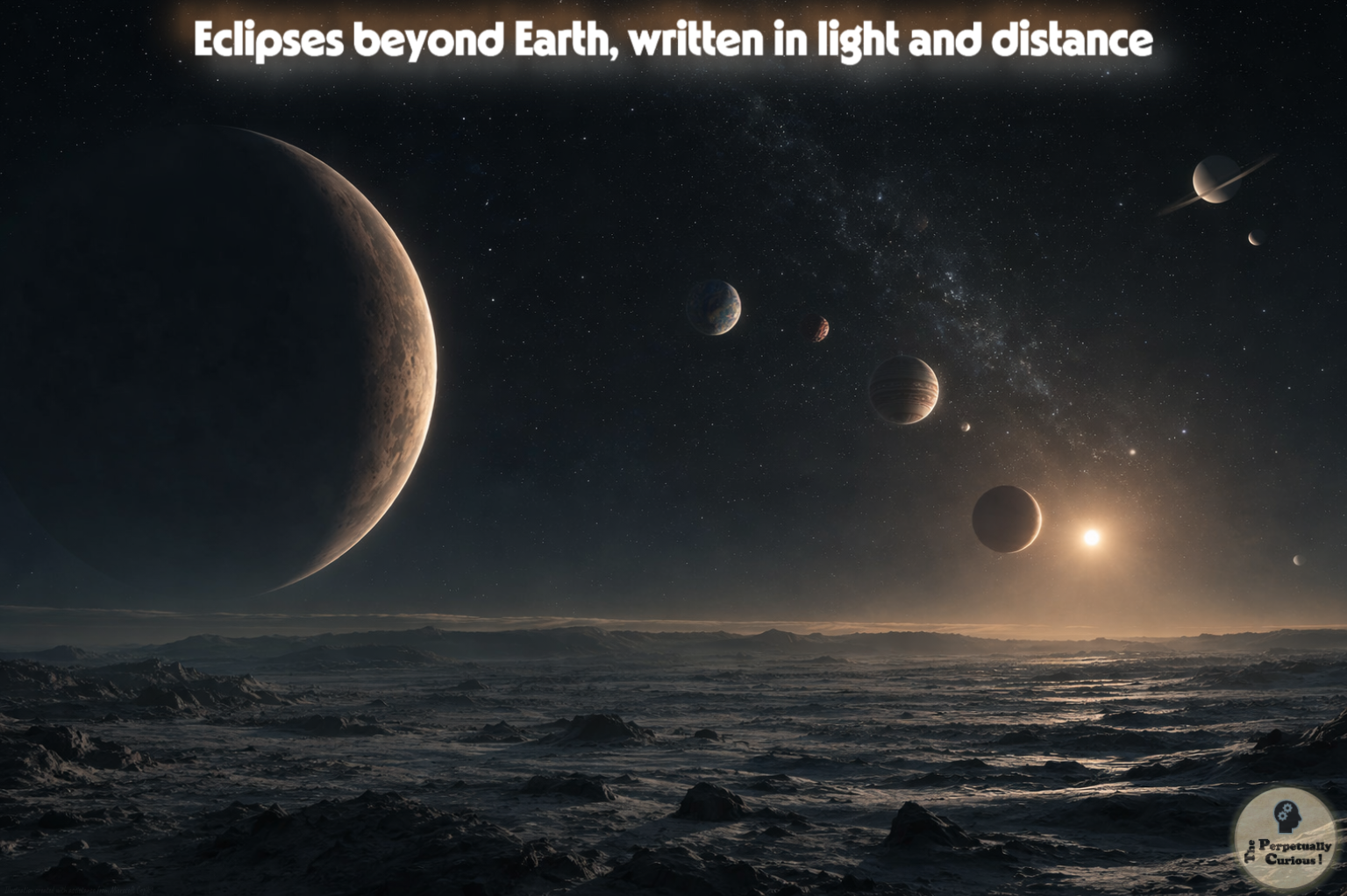
🌘 Eclipses Across the Solar System: When Shadows Travel
An eclipse can feel like a rare celestial exception, but the underlying arrangement is simple. A light source shines, one world blocks that light, and another surface receives the shadow. On Earth, the Sun, Moon, and our planet create the examples we know best.
- The Perpetually Curious! › Archives › Planet EarthArticle
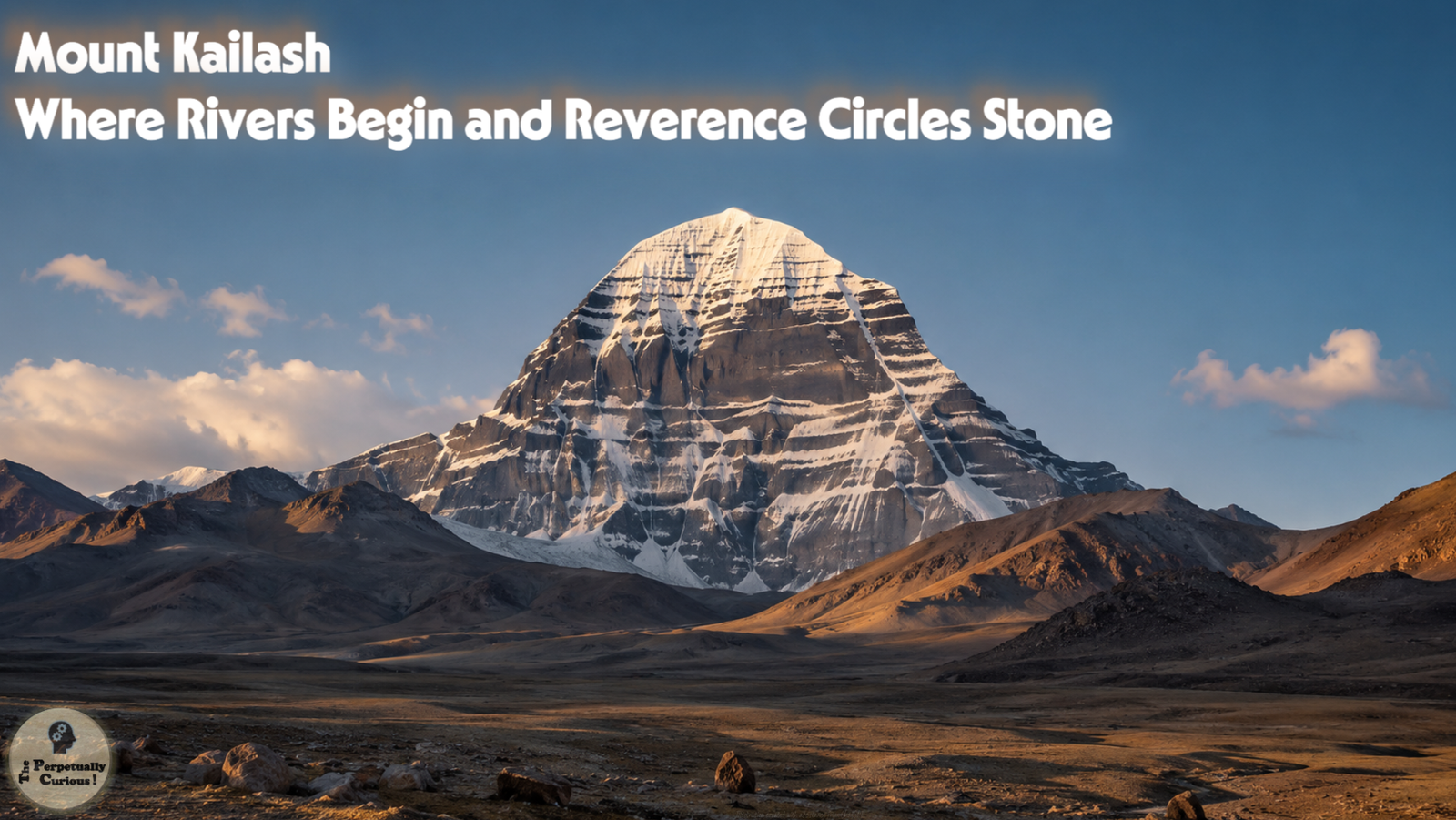
🏔️ Mount Kailash: Why a Sacred Summit Is Circled, Not Climbed
Mount Kailash is often described through reverence, but its power begins with geography. On the western Tibetan Plateau, the mountain rises as a sharply recognizable summit of snow, dark rock, and open sky. It is high, about 21,778 feet (6,638 meters), yet its significance does…
- The Perpetually Curious! › CanonicalGateway
🌌 Cosmic Exploration | 🎞️ Visual Roll
This Cosmic Exploration visual roll offers a quiet passage through astronomy and space science, from eclipses, solar activity, and planetary science to stars, galaxies, dark matter, and the distant edges of our solar system.