
Questions, observations, and insights from across The Perpetually Curious!, unfolding into wider patterns of understanding.
Curiosity moves by connection.
The Curiosity Stream brings together source-grounded ideas drawn from fuller explorations across science, nature, history, culture, technology, and everyday life. Each can be encountered on its own while pointing toward the article, reflection, video, or broader exploration from which it emerged.

A sheet of paper takes shape as water drains away. Plant fibers dispersed in water collect on a screen in an overlapping mat. Pressing removes more water, and drying draws neighboring fiber surfaces closer together.
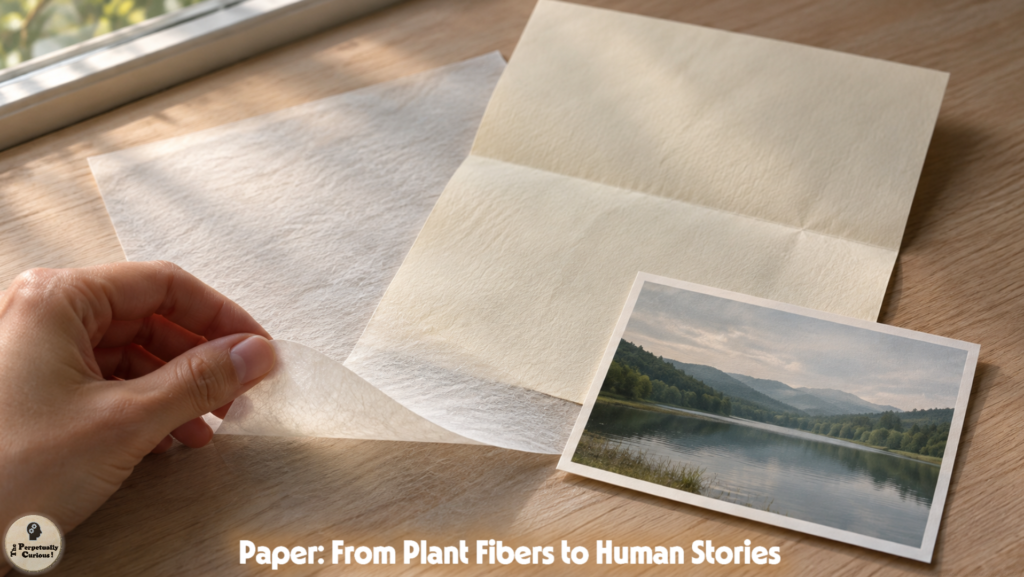
Continue with the full article📄 How Paper Is Made: From Plant Fibers to Human Memory
When the wind died down, the incandescent lamps in Charles F. Brush’s Cleveland home could stay lit. In the late 1880s, he used a wind-driven generator to charge batteries that supplied the lamps with electricity generated while the blades were turning.

Continue with the full article🌬️ The Turning Wind: How Wind Turbines Generate Electricity
Printing ink is not simply color laid on a page. Colorants, a vehicle-binder system, and additives are formulated to move as a fluid, then settle into a stable mark, turning material behavior into something that can carry memory, instruction, art, or identity.
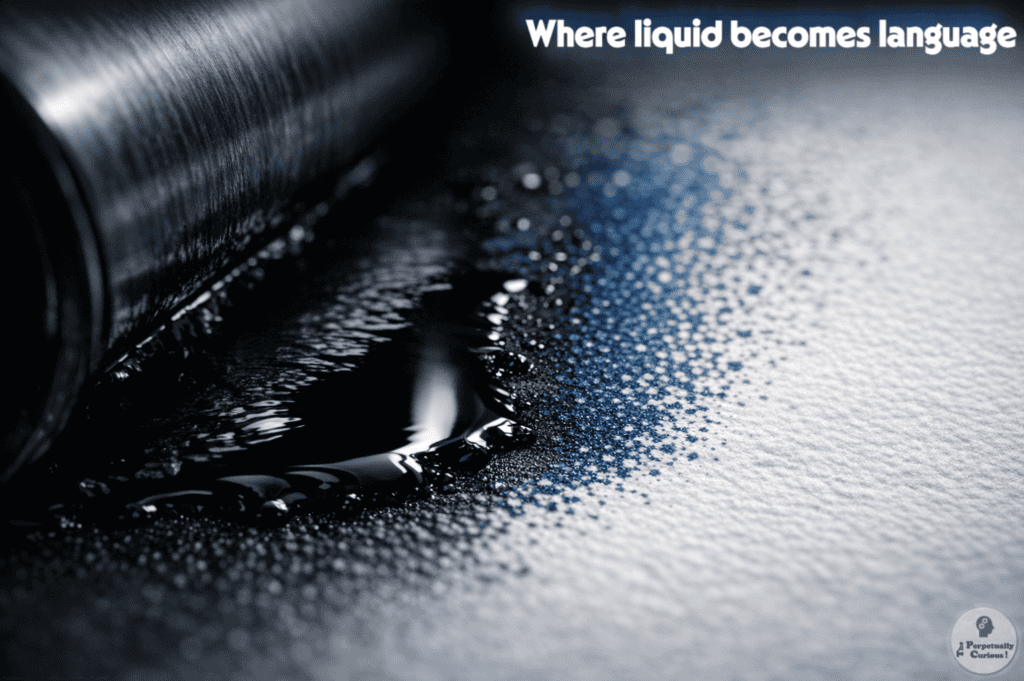
Continue with the full article🖋️ Printing Ink: The Science and Living History Behind the Printed Page
Before locomotives, early railways had already established the logic that engines would inherit: a fixed path, guided wheels, and a growing need for power that did not tire. Steam changed the source of that power, not the basic idea of the railway.

Continue with the full article🚂 Echoes of Steam, Currents of Steel: Train Engines and the Rise of High-Speed Motion
A pencil emerges from a careful balance of materials: more graphite produces a darker, softer line, clay adds hardness, and straight-grained wood protects the core while sharpening cleanly.
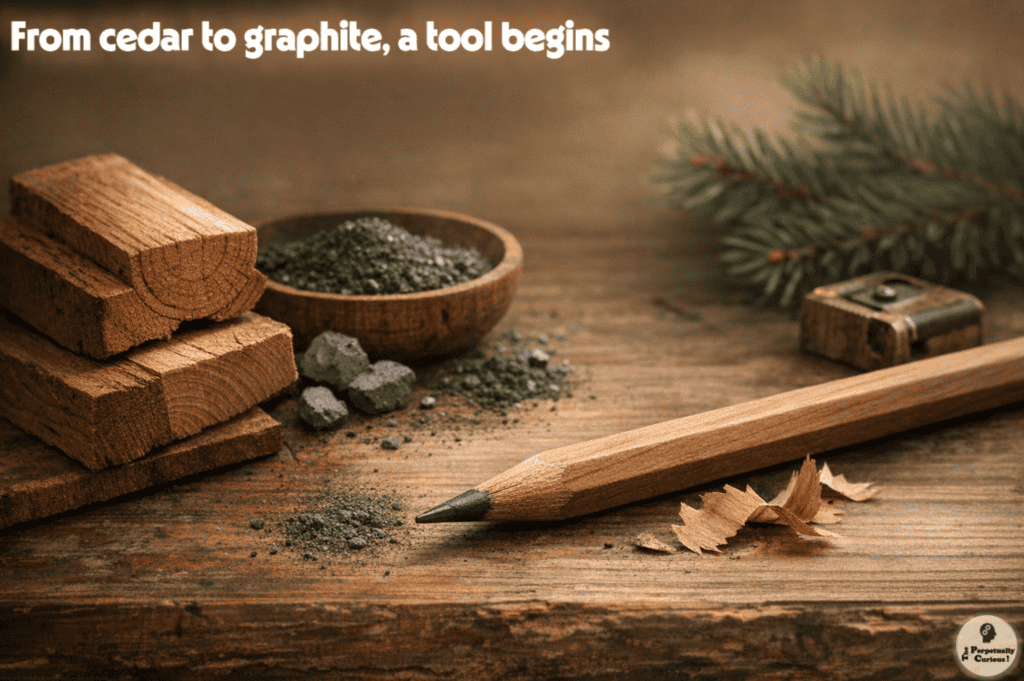
Continue with the full article🧪 The Quiet Alchemy of Pencil Making: How an Everyday Tool Comes into Being