Explore by topic, question, or idea. Find articles, reflections, videos, puzzles, and curiosity pathways gathered across the site.
Press Enter or select Search. A newly typed query starts globally; filters are applied only through the visible rail.
15 results for “beach sand”
- The Perpetually Curious! › Canonical › Planet EarthArticle
🌊 Where the Waves Leave Their Footprints: Why Beaches Carry Sand
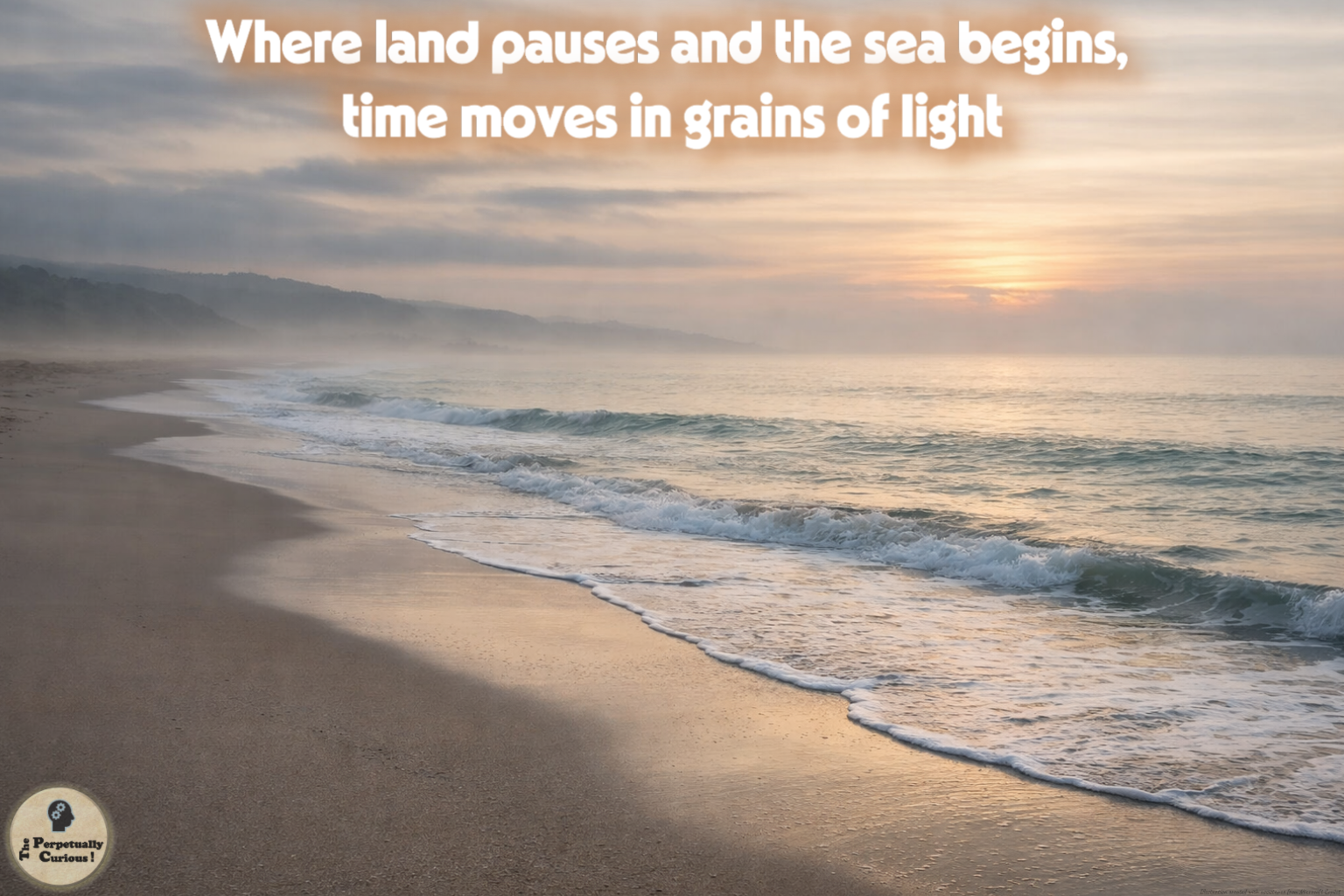
From section: 🏖️ The Character of Beach SandThese colors reflect the geological stories of the landscapes that feed each shore. In some regions, wind carries fine beach sand inland to form dunes, creating landscapes that continue the story of each grain far beyond the shoreline.
- The Perpetually Curious! › Archives › Planet EarthArticle
🌊 Why Beaches Have Sand
Much beach sand begins as part of a larger rock.
- The Perpetually Curious! › Archives › PhysicsArticle
⚗️ The Invisible Revolution: Understanding the Ancient Art and Modern Science of Glass Manufacturing
From section: Where Sand Becomes Transparent 🏛️Where Sand Becomes Transparent 🏛️ Glass surrounds us so completely that we rarely pause to consider its profound mystery.
- The Perpetually Curious! › Canonical › Botanical WondersArticle
🌿 When One Tree Remembered a Greener Sahara: The Quiet Story of the Tree of Ténéré
In the vastness of the Sahara, where the horizon often feels like a soft line drawn between sand and sky, stories tend to grow where trees seldom do. One modern retelling imagines that a solitary acacia endured heat, wind, and isolation so powerfully that its survival inspired…
- The Perpetually Curious! › Canonical › PhysicsArticle
🌟 When Light Learns to Answer Back: The Quiet Science of Mirrors
From section: ⚙️ From sand to reflection: how modern mirrors are madeWith glass and metal working together, the next question is how a sheet of sand-derived glass becomes a precise reflective instrument. The process typically begins with flat glass. …
- The Perpetually Curious! › Canonical › Planet EarthArticle
🌍 Why Mud Is Brown or Black: Where Earth Turns to Quiet Ink
From section: 🧪 Mud, sand, and why their colors divergeMud and sand often coexist along coasts and rivers, yet they frequently differ in color. Sandy beaches are commonly light beige or pale yellow, while nearby mudflats may appear dark brown or black. This contrast arises from differences in grain size, composition, and the ability to hold water and organic matter.
- The Perpetually Curious! › Canonical › Environment & SustainabilityArticle
🔄 Tides of Plastic: Microplastic Pollution in the Oceans and Its Journey Back to Us
… Today, it carries something else as well. It carries countless fragments of human life that have become small enough to slip between grains of sand and cells of plankton. These fragments, known as microplastics, are usually defined as plastic particles smaller than about 0.2 inches (5 millimeters). …
- The Perpetually Curious! › Canonical › Planet EarthArticle
🌍🌑 Where Two Soils Part Ways: Earth, Moon, and the Stories Written in Dust
From section: 🧭 Grain by Grain: Texture, Color, and Composition ComparedParticle size distribution differs as well. Lunar regolith can be extremely fine, sometimes comparable to talcum powder, while also containing larger rock fragments, including breccias. Earth soil, shaped by water and life, often contains mixtures of sand, silt, and clay that vary widely across different landscapes.
- The Perpetually Curious! › Canonical › Planet EarthArticle
🌫️ Mist Over Ancient Ridges: The Great Smoky Mountains as a Living, Breathing World
From section: 🌄 Roots in deep time: how the Smokies became mountains… Some of the oldest rocks associated with the park are metamorphic and igneous rocks more than 1 billion years old, while many of the rocks that help form the Smokies began as sand, silt, mud, and gravel deposited along ancient marine margins. …
- The Perpetually Curious! › Canonical › Planet EarthArticle
🌑 How Coal Is Formed: The Slow Birth of Black Stone Across Deep Time
From section: 🌿 Ancient swamps where coal beginsEventually, changes in rivers, sea level, or local climate caused these peat-rich swamps to be buried. Sediment from nearby rivers, coastal currents, or shallow seas covered the peat with layers of sand, silt, and clay. …