Explore by topic, question, or idea. Find articles, reflections, videos, puzzles, and curiosity pathways gathered across the site.
Press Enter or select Search. A newly typed query starts globally; filters are applied only through the visible rail.
229 results for “early morning light shapes the landscape”
- The Perpetually Curious! › Canonical › Biology & HealthArticle
🌙 Night Voices: The Quiet Science of Snoring and the Hidden Life of Sleep
From section: 🌙 Snoring as a window into sleep: The quiet complexity beneath a familiar soundSleep is an active state in which the body shifts through stages that each create a different airway landscape. Light sleep may preserve more muscle tone. …
- The Perpetually Curious! › Canonical › Wilderness & Homestead CreaturesArticle
🐾 Where the Wild Paths Divide: Wolves, Foxes, and Jackals in the Dog Family
At first light, the world reveals its quiet inhabitants. A wolf’s tracks appear along the edge of a frozen river, each print pressed into the snow with deliberate weight. In a distant field, a fox pauses beside a tangle of brambles, its ears turning toward the faint rustle of hidden prey.
- The Perpetually Curious! › Canonical › PhysicsArticle
💡 Listening to Matter When It Learns to Glow: How an Incandescent Light Bulb Works
From section: 🔧 Why tungsten, a coiled filament, and a glass bulb filled with quiet gasEarly incandescent lamps used carbon filaments, but tungsten could withstand higher operating temperatures and produce brighter, more stable light.
- The Perpetually Curious! › Canonical › Botanical WondersArticle
🌱 Why Leaves Have Different Shapes: The Science Behind Nature’s Geometry
From section: 🌤️ Climate, biomes, and the global sculpting of leaf formOnce a lineage has established a basic leaf architecture, climate and local environment begin to refine it. Temperature, light intensity, water availability, and wind patterns all influence which shapes are favored over many generations. …
- The Perpetually Curious! › CanonicalReflection
Empty Rooms and Ancient Light
Above us, the night sky offers an archive that does not require ink. Light from the nearest star, Proxima Centauri, takes about 4.24 years to reach Earth. When we see it, we see the star as it was years ago. …
- The Perpetually Curious! › CanonicalReflection
Light and Shadow: The Art of Seeing
Scientists studying vision have shown that our eyes contain two main types of photoreceptors for image formation. Cones detect color and fine detail in bright light. Rods see in dimness, trading color for sensitivity. …
- The Perpetually Curious! › Canonical › NatureArticle
❄️ Where Winter Holds the Light: Why Snow Is White
A snowfall can change the brightness of an entire street. Dark roofs turn pale, branches carry thin white lines, and the ground seems to gather light that bare soil would absorb. Yet the ice in a snow crystal can be as clear as a small piece of glass. How do so many transparent pieces become a white landscape?
- The Perpetually Curious! › Archives › Wilderness & Homestead CreaturesArticle
🐦 How Hummingbirds Hover: The Motion Inside Apparent Stillness
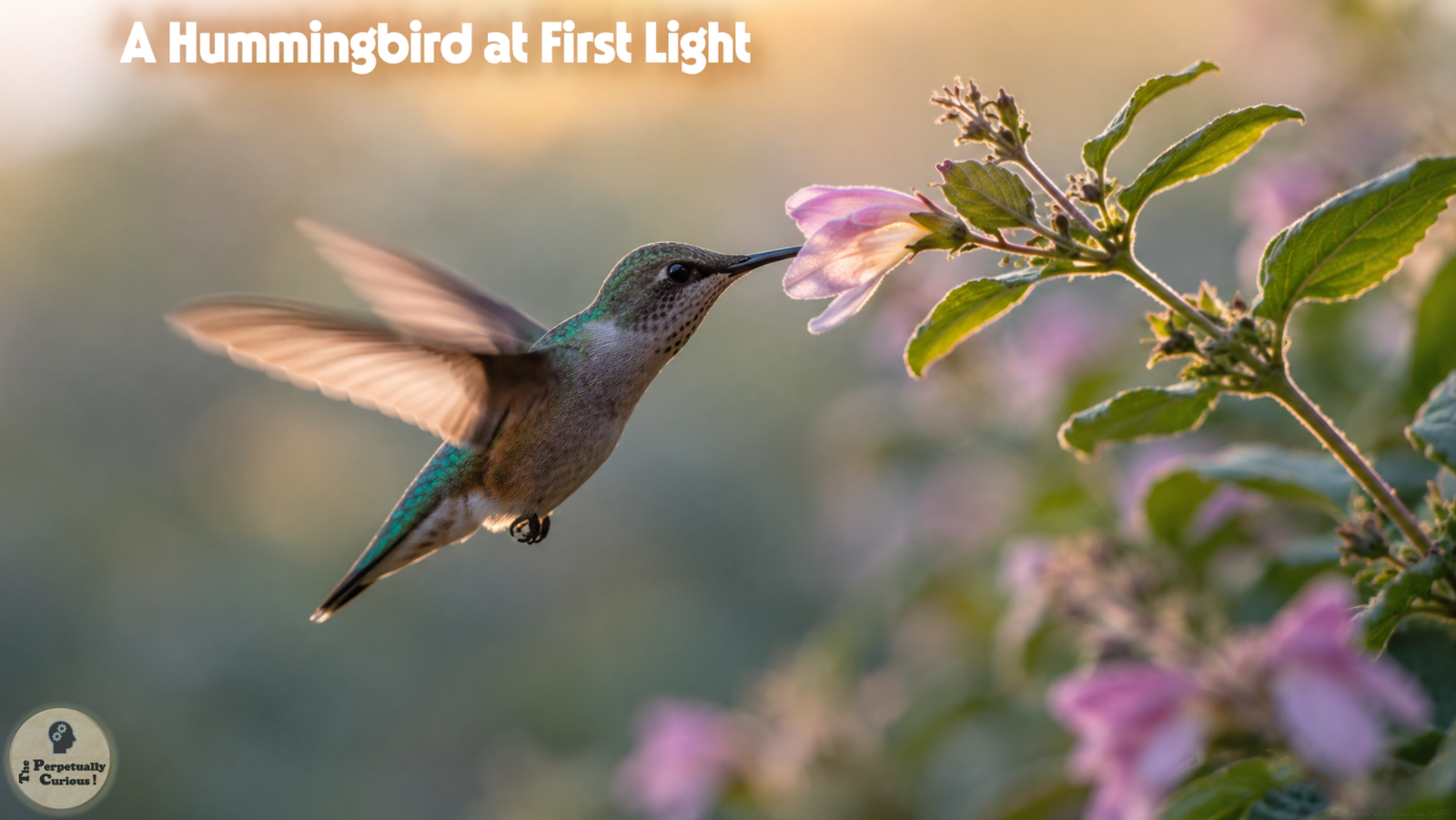
A hummingbird at a flower can look almost motionless. Its head remains aligned with the bloom, its body hangs at one point in the air, and only the blur beside it reveals the effort being made. The apparent pause is not a pause at all. It is a rapidly renewed balance between…
- The Perpetually Curious! › Canonical › Wilderness & Homestead CreaturesArticle
🐘 Minds Like Quiet Rivers: The Intelligence of Elephants
The minds of elephants move like slow rivers, carrying memory through the quiet distances of their world. Their steps trace old knowledge across shifting light and open space, guided by bonds that endure beyond a single lifetime. In their presence, the landscape itself seems to remember.
- The Perpetually Curious! › Canonical › Cosmic ExplorationArticle
🌙 Quiet Worlds, Vast Stories: Some Lesser-Known Moons of Our Solar System
Worlds turn in silence, carrying their hidden stories through shadow and light.Each surface holds a memory of what shaped it, waiting for the patient eye to see.