Explore by topic, question, or idea. Find articles, reflections, videos, puzzles, and curiosity pathways gathered across the site.
Press Enter or select Search. A newly typed query starts globally; filters are applied only through the visible rail.
23 results for “from plant fibers to human memory”
- The Perpetually Curious! › Canonical › Cosmic ExplorationArticle
🌟 Brown Dwarfs: Between Giant Planets and the Smallest Stars
A brown dwarf drifts through the long night, carrying the quiet memory of a star that never came to be.Its light softens with age, yet its presence endures, a patient witness to the slow turning of the galaxy.In its fading glow, the boundary between what almost was and what still is becomes a gentle place to rest.
- The Perpetually Curious! › Canonical › Cosmic ExplorationArticle
🌍 When Worlds Pull: Gravity Across the Planets and What It Reveals About Them
From section: Frequently Asked Questions+… Yes, movement and supported weight would differ under different gravitational accelerations. Long-term human responses to gravity levels unlike Earth’s remain an active area of research, and conditions on giant planets cannot be reduced to a simple standing-weight comparison because they lack solid surfaces.
- The Perpetually Curious! › Canonical › Cosmic ExplorationArticle
🌌 Why Space Feels Cold Among So Many Suns: The Quiet Physics of Cosmic Warmth
From there, the explanation follows energy through radiation and radiative equilibrium, encounters the faint relic glow of the cosmic microwave background, and returns to the contrasting thermal environments near stars, planets, spacecraft, and human bodies.
- The Perpetually Curious! › Canonical › Cosmic ExplorationArticle
🌑 Shadows Across the Solar System: How Eclipses Unfold Beyond Earth
From section: 🌞 Solar eclipses across the Solar SystemThe remoteness of this region leads into the stillness of deep space, where sunlight becomes little more than a memory.
- The Perpetually Curious! › Canonical › Cosmic ExplorationArticle
🌌 Borrowing the Orbits of Giants: How Gravity Assists Carry Spacecraft into the Deep
From section: 🔥 Falling Toward the Sun: Using Gravity Assists to Slow DownParker Solar Probe passed within approximately 3.8 million miles (about 6.2 million kilometers) of the solar surface on December 24, 2024, the closest any human-made object has ever come to the Sun.
- The Perpetually Curious! › Archives › Cosmic ExplorationArticle
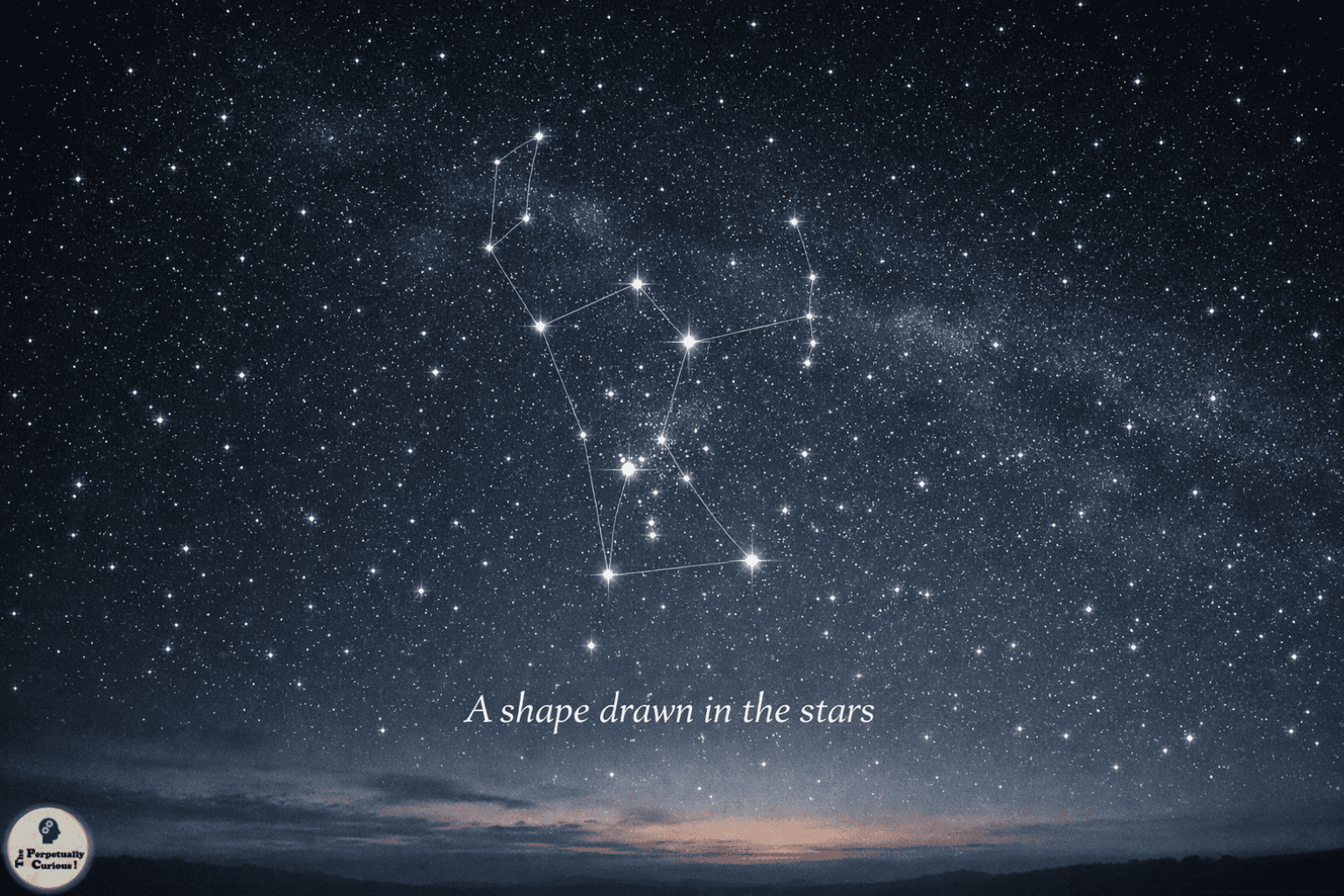
🌌 Constellations: How Star Patterns Help Us Find Our Way
From section: The quiet usefulness of an imperfect patternIt is a meeting point between sight and story, between Earth's motion and human memory, between the need to travel and the wish to understand.
- The Perpetually Curious! › Archives › Cosmic ExplorationArticle
💫 When Galaxies Feast: The Quiet Art of Cosmic Cannibalism
Many are subtle, patient, and almost imperceptible when seen on human timescales.
- The Perpetually Curious! › Archives › Cosmic ExplorationArticle
The Moon's Ancient Dance: Understanding Lunar Phases Through Science and Story 🌙
Every approximately 29.5 days, Earth’s sole natural satellite completes a shape-shifting performance that has captivated humanity since our species first gazed skyward.
- The Perpetually Curious! › Archives › Cosmic ExplorationArticle
🌌 The Silent Storm Above: Understanding Our Orbital Debris Challenge
The night sky appears serene and infinite, yet beyond our atmosphere swirls an invisible tempest of our own making. ESA estimates about 140 million debris fragments in the 0.04 to 0.4 inch (1 mm to 1 cm) range, plus about 1.2 million objects between 0.4 and 4 inches (1 to 10…
- The Perpetually Curious! › Archives › Cosmic ExplorationArticle
The Universe's Ancient Whisper: Decoding the Cosmic Microwave Background 🌌
When Static Revealed Creation 📡 In 1964, two radio astronomers at Bell Labs faced an irritating problem. Arno Penzias and Robert Wilson could not eliminate a persistent hiss from their horn antenna, no matter how meticulously they cleaned it or removed the pigeons nesting inside.