Explore by topic, question, or idea. Find articles, reflections, videos, puzzles, and curiosity pathways gathered across the site.
Press Enter or select Search. A newly typed query starts globally; filters are applied only through the visible rail.
22 results for “from plant fibers to human memory”
- The Perpetually Curious! › Canonical › Planet EarthArticle
🌊 Where the Waves Leave Their Footprints: Why Beaches Carry Sand
The shore holds the memory of distant mountains carried grain by grain to the edge of the sea. Each wave lifts the past into motion and sets it down again in a quiet rhythm that never repeats itself. In this meeting of land and water, every grain rests for a moment in the long story of the Earth.
- The Perpetually Curious! › Canonical › Planet EarthArticle
🌈 When Sunlight Paints the Rain: The Quiet Geometry of Rainbow Formation
From section: 🌦 Conditions for seeing a rainbow: timing, position, and subtle variationsMoonlight can produce the same underlying geometry, creating a lunar rainbow or moonbow when the Moon is bright enough. These bows often appear pale to unaided vision because human color perception becomes less sensitive under low illumination.
- The Perpetually Curious! › Canonical › Planet EarthArticle
🌇 When the Sky Becomes a Painting: Why Clouds Glow Red and Orange at Sunset on Earth
From section: 🌈 How the atmosphere filters colorAlthough violet light is scattered more efficiently than blue, the sky appears blue rather than violet because the solar spectrum contains less violet light at the surface, the human eye is less sensitive to violet, and some violet light is absorbed in the upper atmosphere.
- The Perpetually Curious! › Canonical › Planet EarthArticle
🌍 Why Mud Is Brown or Black: Where Earth Turns to Quiet Ink
From section: 🌿 Organic matter, humus, and the deepening of colorEven without strong contributions from iron sulfides, organic matter alone can make mud appear very dark. In wetlands, peatlands, and forested depressions, plant material may accumulate faster than it decomposes. …
- The Perpetually Curious! › Archives › Planet EarthArticle
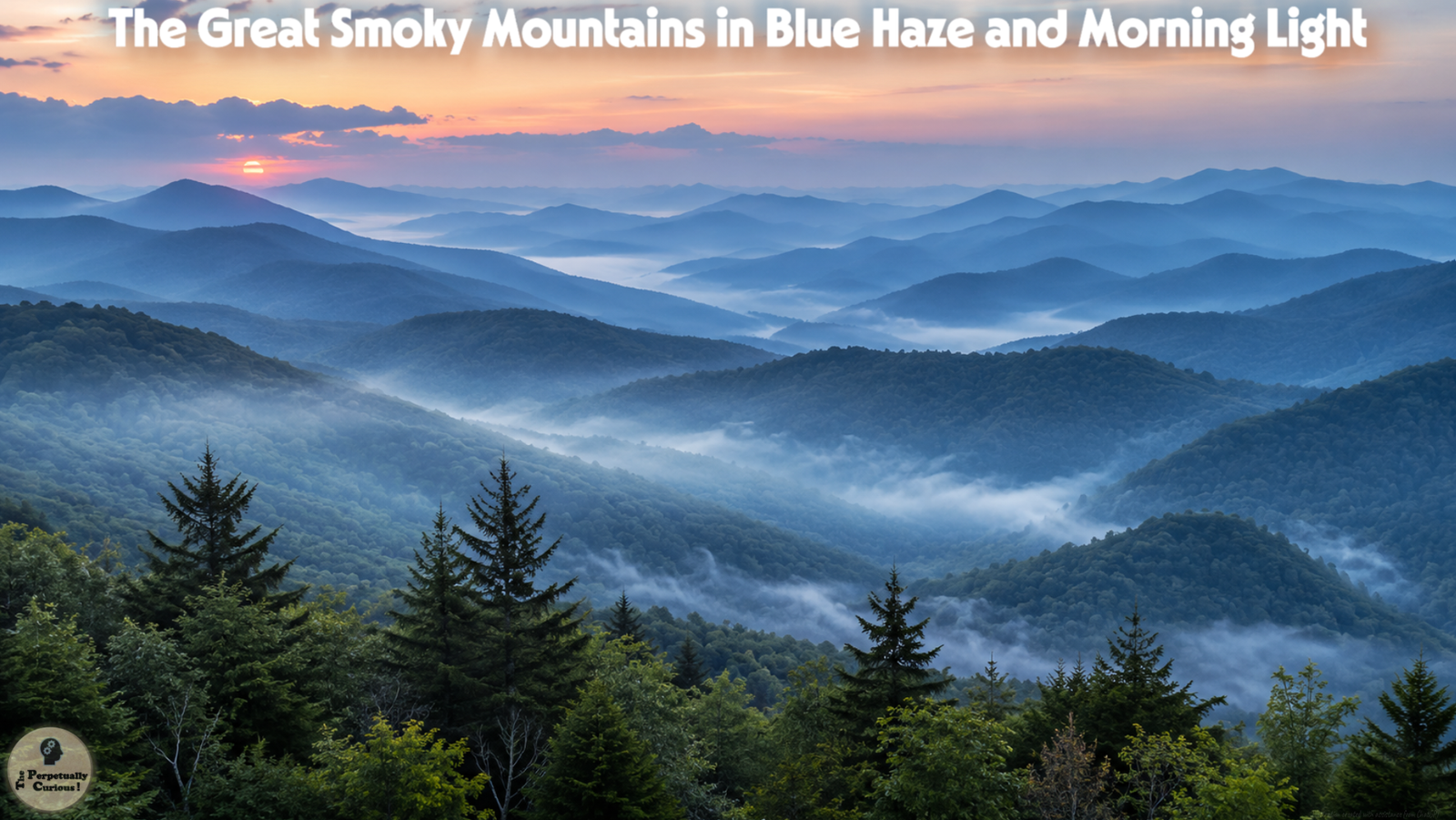
🌫️ Why the Great Smoky Mountains Fade into Blue Haze
From section: The forest helps make the hazeLeaves release volatile organic compounds as part of normal plant activity.
- The Perpetually Curious! › Archives › Planet EarthArticle
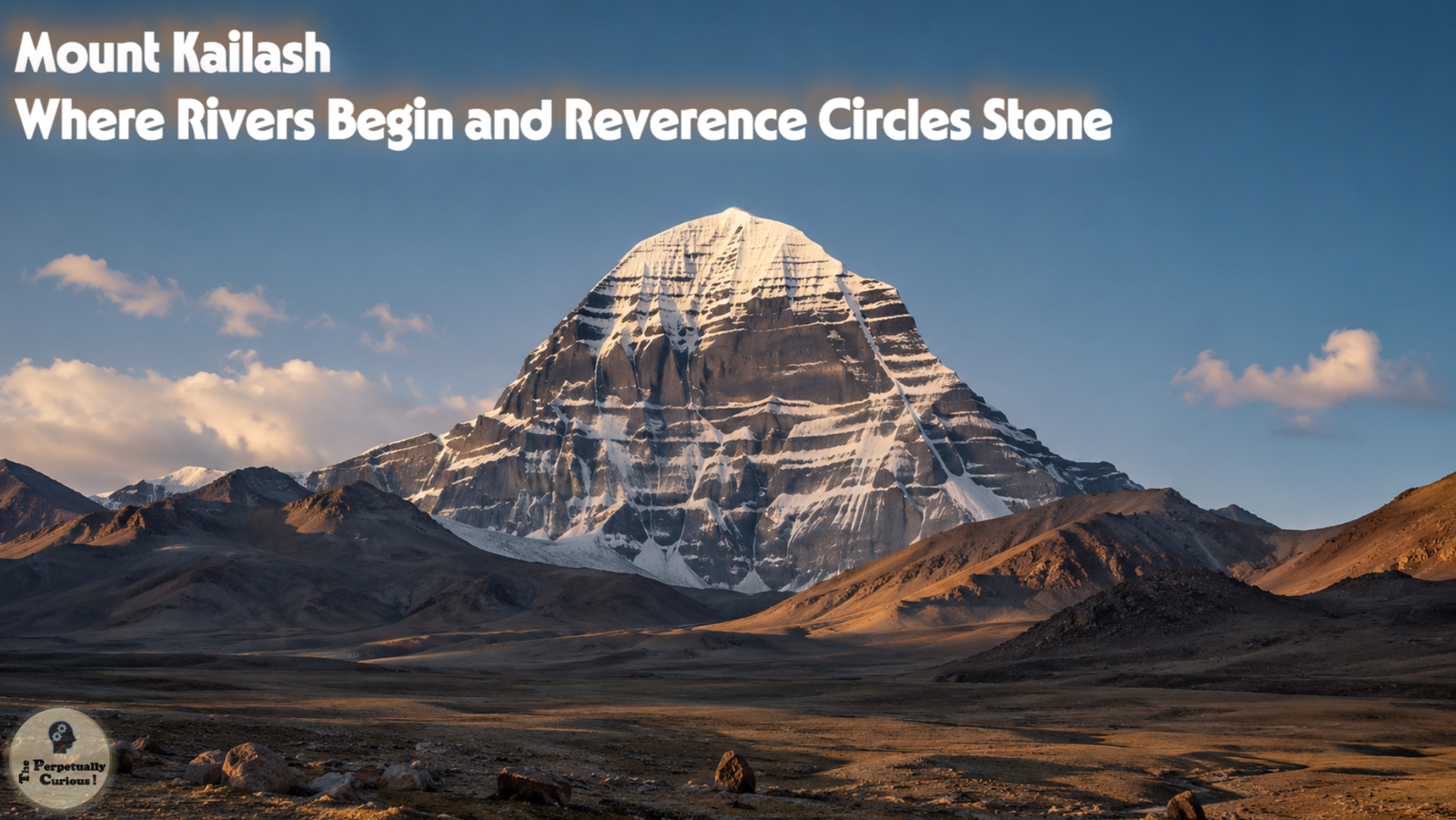
🏔️ Mount Kailash: Why a Sacred Summit Is Circled, Not Climbed
From section: Water moves outward, meaning gathers inwardThat cultural layer also connects with the broader History, Arts & Culture collection, where places are often shaped not only by terrain, but by memory, ritual, symbol, and inherited meaning.
- The Perpetually Curious! › Canonical › Planet EarthArticle
🌏 When the Pacific Breathes Warm: El Niño and the Changing Rhythms of Rain
How can a change in the tropical Pacific alter the prospects of rain thousands of miles away? El Niño begins when unusually warm surface waters spread across the central and eastern equatorial Pacific and the ocean and atmosphere reorganize together.
- The Perpetually Curious! › Canonical › Planet EarthArticle
🌌 Sky in Slow Layers: Understanding Earth’s Atmospheric Structure
The atmosphere surrounding Earth is often seen as a thin blue halo, yet this delicate envelope of gases and suspended particles is organized into regions that are both intricate and quietly beautiful.
- The Perpetually Curious! › Archives › Planet EarthArticle
❄️ Antarctica: Southernmost Continent’s Frozen Symphony of Silence and Light
From section: Where Silence Breathes and Light Dances: Antarctica's Living SymphonyFar from human paths, a stream of crimson water seeps from the tongue of Taylor Glacier.
- The Perpetually Curious! › Archives › Planet EarthArticle
Where Earth's Temperate Logic Ends: Understanding the Arctic Circle 🌐
The Arctic Circle marks more than a line on our maps. At approximately 66.5 degrees north latitude (about 66°30′ N), this invisible boundary transforms how our planet receives light, how ecosystems function, and how humans experience the passage of time itself.