Explore by topic, question, or idea. Find articles, reflections, videos, puzzles, and curiosity pathways gathered across the site.
Press Enter or select Search. A newly typed query starts globally; filters are applied only through the visible rail.
21 results for “how stars age”
- The Perpetually Curious! › Canonical › Cosmic ExplorationArticle
🌟 The Long Light: How Stars Age and What They Leave Behind
From section: 🔭 Reading a lifetime from scattered light… The more massive members use their core hydrogen faster and leave the main sequence first. The mass and luminosity of stars now reaching this turnoff therefore provide a clock: comparing their positions with stellar models helps estimate the cluster's age.
- The Perpetually Curious! › Archives › Cosmic ExplorationArticle
The Cosmic Clock: How Stars Age Through Billions of Years ⏰
Understanding how stars like our Sun age reveals one of nature's grandest stories, written across cosmic time.Read more »
- The Perpetually Curious! › Canonical › Cosmic ExplorationArticle
The Cosmic Recipe: Understanding the Physical Criteria for Star Formation 🌟
From section: 💧 The essential fuel: hydrogen… These reactions convert a small fraction of mass into energy and establish the long main-sequence chapter of a star's existence. Over cosmic time, differences in mass and fusion rate shape how stars age over billions of years.
- The Perpetually Curious! › Canonical › Cosmic ExplorationArticle
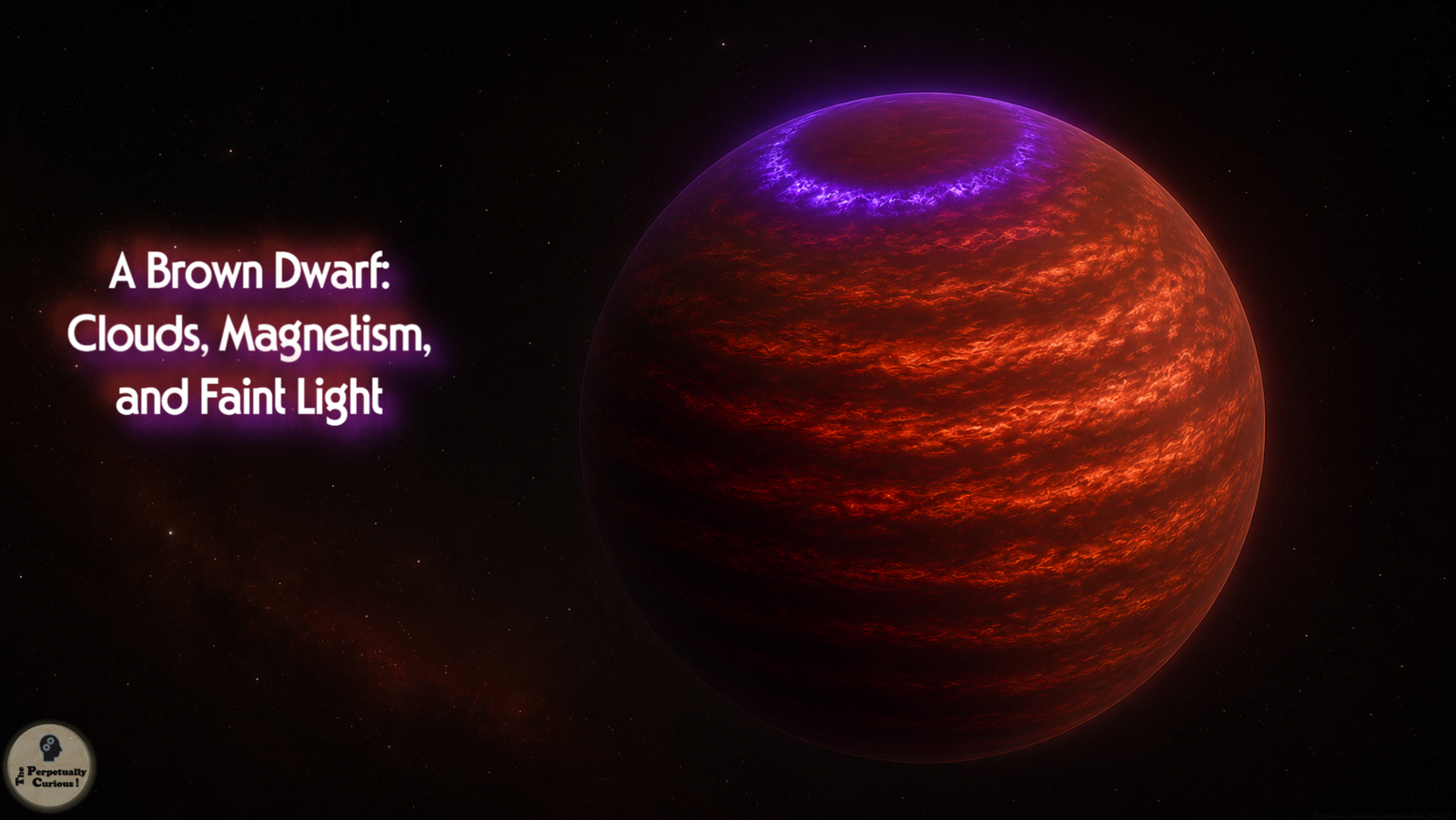
🌟 Brown Dwarfs: Between Giant Planets and the Smallest Stars
From section: 🌌 Formation, companions, and the galactic censusThe Galactic census matters, therefore, not merely as a count. Each well-characterized brown dwarf helps connect formation history, atmospheric change, mass, and age. Together, these objects reveal how densely and diversely the boundary between planets and stars is populated across cosmic time.
- The Perpetually Curious! › Archives › Cosmic ExplorationArticle
🌌 When Stars Become Worlds: A Journey Through the Largest Stars We Know
The largest stars in the universe are not simply scaled-up versions of the Sun. They are vast, unstable, and luminous structures whose outer layers drift in slow, turbulent motion. Their atmospheres are so extended that the idea of a clear surface begins to dissolve into gradients of thinning gas.
- The Perpetually Curious! › Archives › Cosmic ExplorationArticle
💥 Neutron Stars: Cosmic Heavyweights That Defy Imagination
What Is a Neutron Star, and Why Do They Matter? Imagine holding a teaspoon that weighs more than every skyscraper on Earth combined. Neutron stars are cosmic heavyweights, dense beyond anything we know and filled with mysteries at the frontier of physics. Read more »
- The Perpetually Curious! › Archives › Cosmic ExplorationArticle
🌟 Brown Dwarfs: Why Stellar Ignition Never Takes Hold
They occupy the substellar region between giant planets and the smallest hydrogen-burning stars.
- The Perpetually Curious! › Archives › Cosmic ExplorationArticle
🌌 The Cosmic Silence: Unraveling the Fermi Paradox in an Age of Discovery
In 1950, physicist Enrico Fermi posed a question that still feels disarmingly direct: “Where is everybody?” It was not a claim about what must exist, but a moment of clear reasoning in a universe that seems generous with stars and unexpectedly quiet with replies.Read more »
- The Perpetually Curious! › Archives › Cosmic ExplorationArticle
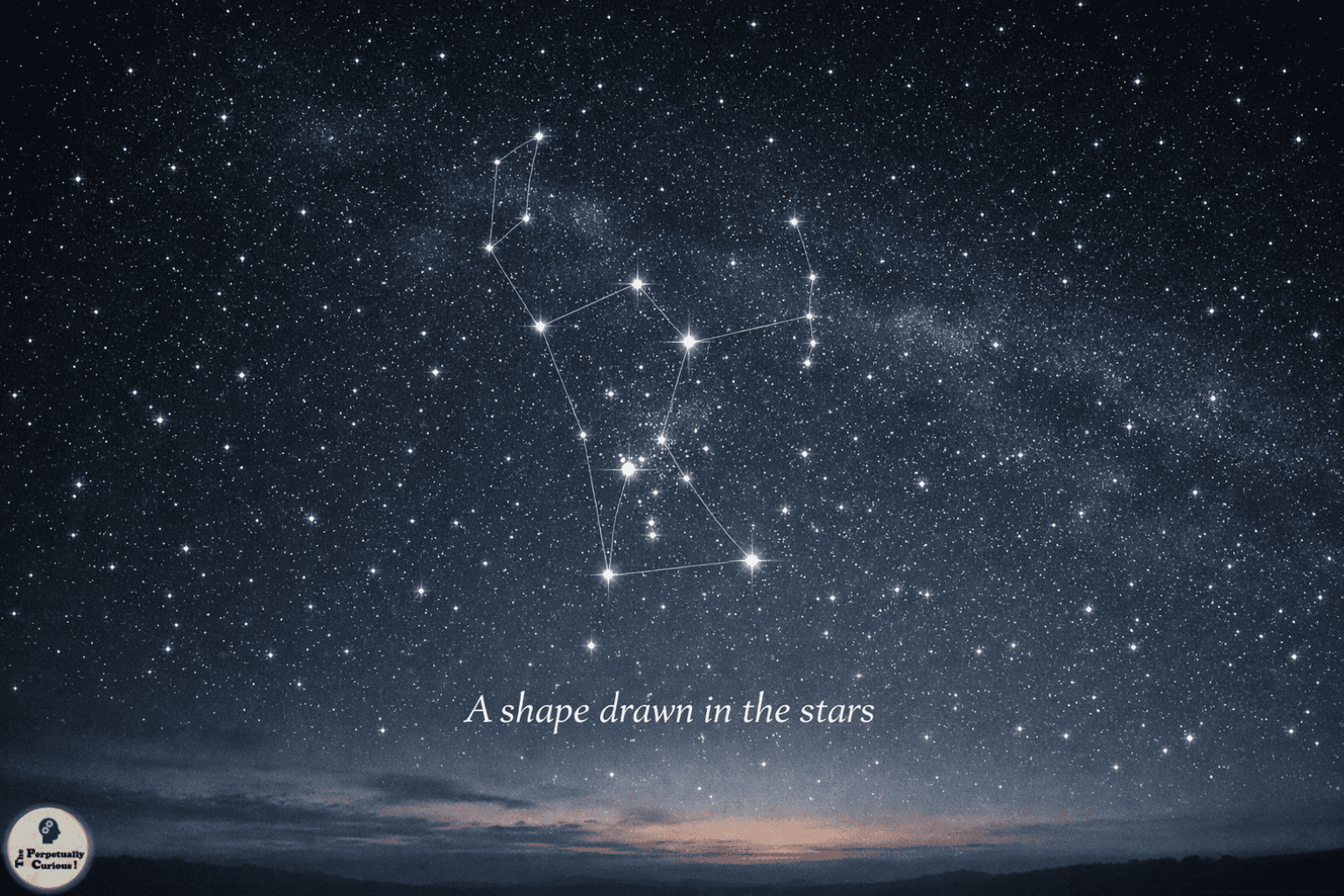
🌌 Constellations: How Star Patterns Help Us Find Our Way
From section: When scattered stars become a mapMany of the stars that seem close together from Earth are separated by enormous distances.
- The Perpetually Curious! › Archives › Cosmic ExplorationArticle
☀️ Our Sun’s Mass | Also Called the Solar Mass | The Celestial Mass Scale
In astronomy, our Sun’s mass is the definition of one solar mass, the standard unit used to compare the masses of stars and other celestial objects. This single measure anchors our understanding of the cosmos, allowing astronomers to place everything from small planets to…