Explore by topic, question, or idea. Find articles, reflections, videos, puzzles, and curiosity pathways gathered across the site.
Press Enter or select Search. A newly typed query starts globally; filters are applied only through the visible rail.
134 results for “origins of month names calendar history”
- The Perpetually Curious! › Archives › History, Arts, and CultureArticle
The Living Colors of Tradition: Where Chemistry Meets Cultural Wisdom in Natural Dyes 🎨
The transformation of white cloth into vibrant color represents one of humanity's oldest intersections between science and culture. Long before chemists understood molecular structures and electron orbitals, traditional dyers around the world were conducting sophisticated…
- The Perpetually Curious! › Archives › History, Arts, and CultureArticle
Vertical Worlds: Ancient Indian Models of Cosmic Architecture 🌍
Every culture faces the same profound question: what happens to consciousness after death? Where do our beloved ancestors dwell? Are they simply gone, or do they inhabit some unseen realm?
- The Perpetually Curious! › Archives › Botanical WondersArticle
🌳 The Baobab Tree: Nature’s Enduring “Tree of Life”
Scattered across the sweeping landscapes of Africa, Madagascar, and Australia stands one of nature’s most iconic and resilient wonders, the baobab. Admired for its surreal silhouette with branches reaching skyward like roots, the baobab is more than striking.
- The Perpetually Curious! › Archives › Cosmic ExplorationArticle
🌔 Lunar Eclipses: Earth’s Shadow on the Moon
🌕➡️🔴 The Allure of a Lunar Eclipse: Earth’s Shadow Play in the Night Sky Among the many wonders of the night sky, few spectacles are as enchanting as a lunar eclipse. On these special nights, our familiar Moon is transformed, slipping into Earth’s shadow.
- The Perpetually Curious! › Archives › Cosmic ExplorationArticle
☀️ Solar Eclipses Explained: The Dance of Shadow and Light
Solar eclipses are among the most captivating events in the sky. They reveal how a rare alignment of Sun, Moon, and Earth can transform the ordinary daylight landscape into something unfamiliar and striking. Daylight softens, shadows sharpen, and the familiar world takes on a new character.
- The Perpetually Curious! › Archives › Botanical WondersArticle
The Riverbank Architect: Discovering the Remarkable Arjuna Tree 🌊
Stand beneath an ancient Arjuna tree during monsoon season and you'll understand why riverside communities have revered these giants for millennia. Water droplets cascade from leaves that shimmer like green glass, while the smooth bark releases a subtle earthy fragrance after rain.
- The Perpetually Curious! › Archives › Botanical WondersArticle
🌿 The Neem Tree: Nature’s Evergreen Healer
🌳 A Living Landmark The neem tree (Azadirachta indica) is an evergreen native to the Indian subcontinent, instantly recognizable by its wide, spreading canopy, rough gray bark, and delicate, serrated leaves. It typically grows 15–25 meters tall and can occasionally reach 30 meters.
- The Perpetually Curious! › CanonicalGateway
🐸 Frog or Toad? Where Common Names and Classification Part Ways
At the edge of a pond, a smooth-skinned animal with long hind legs is usually called a frog. A stockier animal with bumpier skin, sitting farther from the water, is likely to be called a toad. The contrast seems obvious, but the two names do not define separate scientific groups.
- The Perpetually Curious! › Archives › Botanical WondersArticle
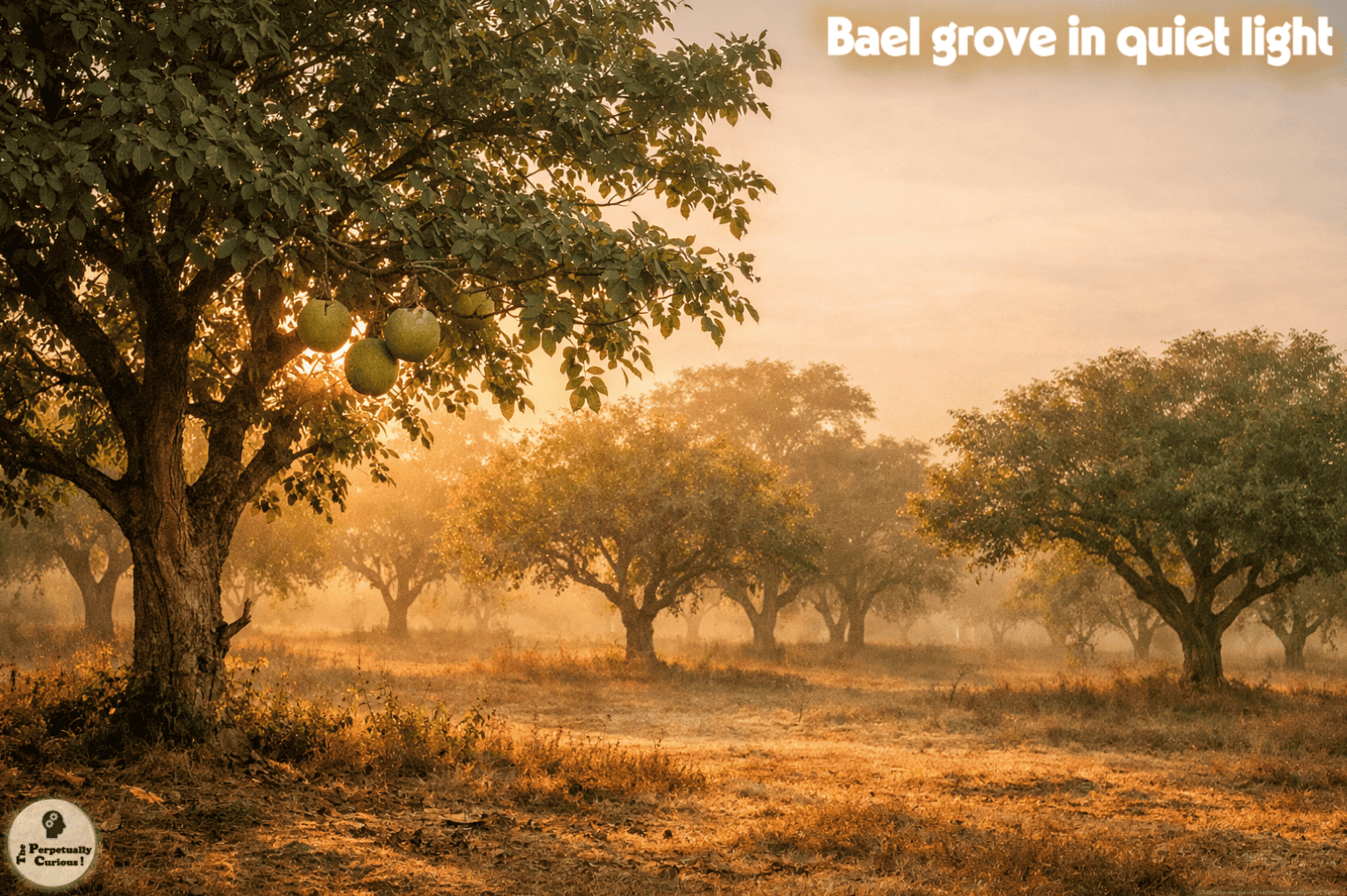
🍃 Bael Tree: Quiet Resilience in Leaf and Fruit
The bael tree, Aegle marmelos, is not a showy tree in the usual sense. Its strength is quieter. It grows across warm South Asian landscapes where dry seasons can be long, soils can be difficult, and survival often depends on patience rather than speed.
- The Perpetually Curious! › Canonical › Biology & HealthArticle
🌿 Why We Stretch When We Wake: The Quiet Reflex that Resets the Body
From section: Frequently Asked Questions+… Regular stretching is voluntary and often focuses on specific muscles. The two movements may look similar, but their purposes and origins differ.